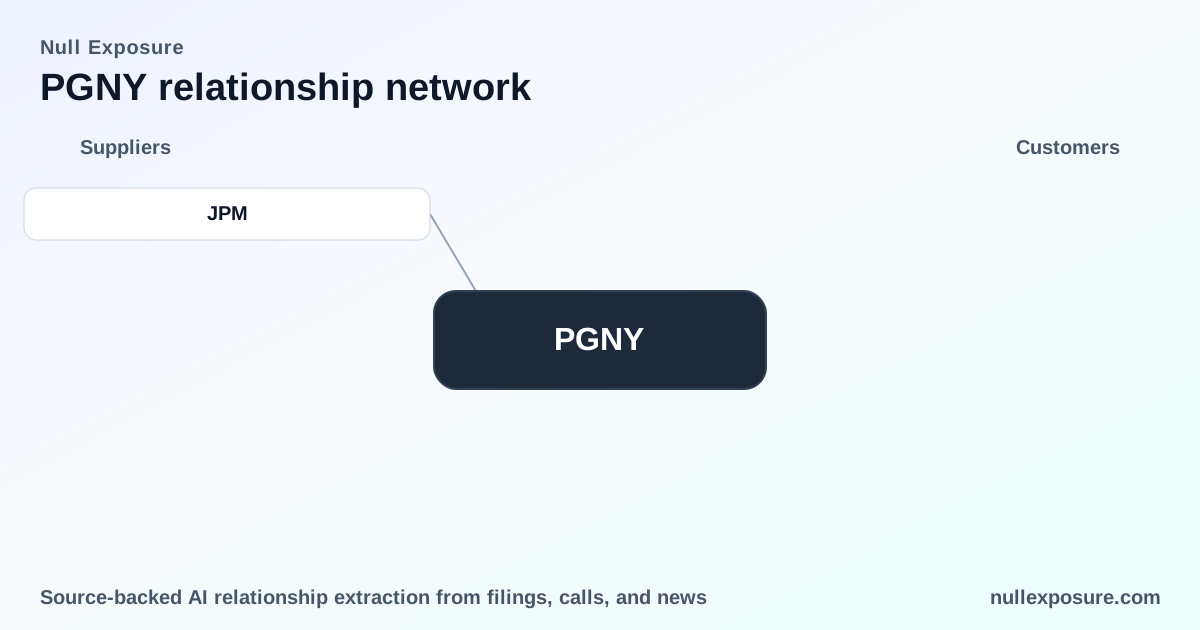
Progyny (PGNY) — supplier relationships and what they mean for investors
Progyny operates a B2B benefits-management platform that monetizes by selling fertility and family-building benefit solutions to employers, collecting fees for managing care, dispensing specialty medications, and coordinating a nationwide provider network. Revenue derives from employer contracts and related pharmacy and clinical services; the business model relies on recurrent contract renewals, care utilization, and ancillary services such as pharmacy fulfillment and care management. For investors and operators evaluating Progyny as a counterparty or supplier, the combination of recurring employer fees and outsourced pharmacy and clinic relationships defines both resilience and concentrated operational dependencies.
Explore more supplier intelligence at https://nullexposure.com/
Capital relationship: a five-year JPMorgan revolving credit facility
Progyny executed a $200 million revolving credit facility with JPMorgan Chase Bank, N.A., effective July 1, 2025, and maturing July 1, 2030. This facility provides liquidity backstop and balance-sheet optionality for working capital and potential strategic investments. According to a TradingView summary of Progyny’s SEC 10‑K reporting in FY2026, the revolving credit arrangement is explicit in the filing and constitutes the primary disclosed bank credit relationship for that period.
All disclosed counterparties in one view
- JPMorgan Chase Bank, N.A.: Progyny entered into a $200 million revolving credit facility on July 1, 2025, with maturity on July 1, 2030; this is the principal bank financing relationship disclosed in FY2026 filings and reported in March 2026 coverage. (TradingView coverage of Progyny SEC 10‑K, reported March 10, 2026.)
Operating-model constraints and what they signal for vendor risk
Progyny’s public disclosures and company excerpts surface several persistent operating characteristics that determine how suppliers and counterparties should evaluate engagement terms.
- Short-term contracting posture: Provider clinics and specialty pharmacies are contracted typically on one- to two-year terms, with specialty pharmacy contracts often set to one year. This signals a model built on frequent renegotiation and operational flexibility rather than long-term locked-in pricing. Short-term contracts benefit Progyny by allowing rapid network adjustments and cost management, but they also increase renewal risk and supplier churn exposure for counterparties who rely on stable volume projections.
- National geographic footprint: Progyny advertises a national network serving virtually every U.S. state, which indicates scale in distribution and a need for geographically distributed vendor capacity. Suppliers must be prepared for multi-state regulatory, logistics, and compliance requirements when engaging.
- Role as a service integrator and purchaser: Progyny acts predominantly as a service provider and integrator—contracting specialty pharmacies for medication fulfillment, engaging third‑party security consultants, and providing care management services that include formulary design and authorization management. This positions Progyny as a central buyer and coordinator of downstream services rather than a pure referral platform, which increases its bargaining leverage over pharmacy and clinic partners.
- Maturity signals: The existence of a multi-year revolving credit facility and positive profitability metrics (profit margin and EBITDA present in recent reporting) reflect corporate maturity and access to bank capital. That reduces immediate liquidity vulnerability but does not eliminate operational dependency on provider and pharmacy relationships for service delivery.
These constraints should be interpreted at the company level: contract durations, nationwide coverage, and Progyny’s role as a buyer/integrator are systemic features of the operating model and drive counterparties’ negotiation and operational planning.
What the JPMorgan relationship implies for counterparties
Progyny’s $200 million revolving credit line with JPMorgan is a corporate-level liquidity cushion rather than a supplier partnership. For vendors and service providers, the credit facility reduces the probability of near-term cash‑flow disruptions at the corporate level, supporting on‑time payments and financing of working capital as utilization scales. The bank facility also signals that Progyny has investment-grade-like access to capital markets for its size, which improves counterparty confidence but does not remove dependency on contractual renewals with clinics and pharmacies.
Source for the credit facility: TradingView coverage of Progyny’s SEC 10‑K filing for FY2026 (reported March 10, 2026).
Financial and strategic implications for investors and operators
- Revenue resilience is contract-driven. Progyny’s topline scales with employer renewals and utilization from its network and pharmacies; short contract terms provide pricing and network flexibility but concentrate execution risk around renewals and supplier management.
- Supplier negotiation leverage is asymmetric. As the platform purchaser and care manager, Progyny controls formulary and fulfillment design elements that influence pharmacy margins and clinic referral flows; suppliers must price for potential short-term displacement.
- Capital profile supports growth initiatives. The JPMorgan facility provides room to fund growth, absorb seasonality, and invest in platform enhancements—strengthening Progyny’s position when negotiating supplier terms.
- Operational complexity is multi-state. National coverage imposes regulatory and logistics burdens on counterparties, requiring maturity in compliance, distribution, and clinical operations.
Key takeaway: Progyny combines recurring revenue from employers with a highly managed supply chain of short-term specialty pharmacy and clinic contracts; its bank financing reduces corporate liquidity risk, but counterparties face concentrated renegotiation and delivery demands.
If you want a deeper counterparty risk review or a complete supplier map for portfolio diligence, visit https://nullexposure.com/ for tailored analysis.
Investment-risk checklist for counterparties and buyers
- Contract length exposure: plan for frequent renegotiations and volatile volume forecasts.
- Geographic capability: ensure multi-state compliance and logistics capacity.
- Pricing flexibility: expect downward pressure due to Progyny’s integrator role.
- Balance-sheet backstop: the JPMorgan facility reduces payment default risk but does not replace contract certainty.
For operators negotiating with Progyny, prioritize scalability, transparent unit economics, and quick onboarding to capitalize on short contract windows. For investors, the combination of short contract terms and access to bank capital creates a growth-with-discipline profile: growth upside is real, execution risk is concentrated in supplier relationships and renewal cycles.
Explore supplier coverage and scenario modeling for Progyny and peer benefit managers at https://nullexposure.com/ — actionable research for investors and procurement leaders.
Closing assessment
Progyny is a revenue-generating, capital-backed benefits manager that deploys a short-term, highly managed contracting model across a national network. The disclosed JPMorgan credit facility strengthens its liquidity position, but vendor and investor diligence should focus on contract renewal dynamics, network concentration, and the operational demands of multi-state service delivery. These are the levers that determine whether Progyny’s platform delivers durable margins or remains exposed to supplier churn and utilization variability.