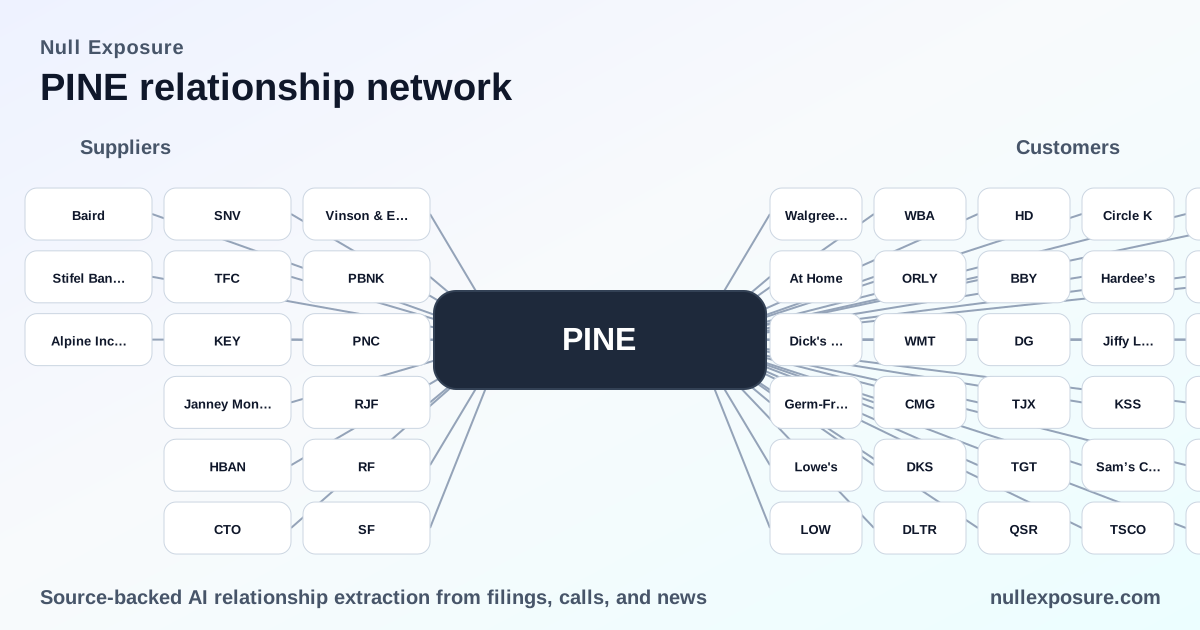
Alpine Income Property Trust (PINE): Who Gets Paid When PINE Raises Capital
Alpine Income Property Trust (PINE) is a net‑lease retail REIT that monetizes through long‑term rental cash flow from creditworthy tenants and active capital markets activity—issuing preferred stock and arranging syndicated bank facilities to refinance and smooth its leverage profile. The company’s operating model is externally managed and capital‑intensive: rental yield is the core revenue driver, but underwriting and counterparty execution on capital raises determine balance‑sheet durability and dividend coverage. For direct vendor mapping and counterparty risk monitoring, see https://nullexposure.com/.
Recent capital moves set the vendor map
In late 2025 and early 2026 Alpine executed two related financing programs that define its supplier relationships: a public offering of 8.00% Series A cumulative redeemable preferred stock, and a $450 million amended unsecured credit facility to retire prior debt. Those transactions bring a mix of investment banks, regional lenders and law firms into the company’s active counterparties list—an investor should treat these firms as critical execution partners for PINE’s near‑term liquidity and refinancing strategy.
- Vinson & Elkins advised Alpine on the Series A preferred offering, acting as legal counsel for the transaction; the firm’s advisory role is documented in the firm’s announcement on the engagement. (Vinson & Elkins press release, March 2026)
- Raymond James served as a joint book‑running manager on the preferred offering, leading marketing and placement efforts for the issuance. (GlobeNewswire/Yahoo Finance, November 5, 2025)
- Stifel acted as a joint book‑running manager on the same offering, sharing placement responsibilities with Raymond James and Baird. (GlobeNewswire/Yahoo Finance, November 5, 2025)
- Baird joined as the third joint book‑running manager for the preferred issuance, supporting institutional distribution. (GlobeNewswire/Yahoo Finance, November 5, 2025)
- Janney Montgomery Scott participated as a co‑manager on the offering, contributing distribution and trading support for the deal. (GlobeNewswire/Yahoo Finance, November 5, 2025)
- KeyBanc Capital Markets was a named co‑manager on the preferred stock placement, handling client allocation and market execution. (GlobeNewswire/Yahoo Finance, November 5, 2025)
- PNC Capital Markets LLC participated as a co‑manager on the offering, providing underwriting and distribution services. (GlobeNewswire/Yahoo Finance, November 5, 2025)
- Regions Securities LLC was listed among the co‑managers for the preferred issuance, helping institutional placement. (GlobeNewswire/Yahoo Finance, November 5, 2025)
- Synovus Securities Inc. acted as a co‑manager on the offering, supplying regional broker‑dealer distribution. (GlobeNewswire/Yahoo Finance, November 5, 2025)
- Truist Securities joined the syndicate of co‑managers to support the preferred offering’s execution and aftermarket liquidity. (GlobeNewswire/Yahoo Finance, November 5, 2025)
The bank syndicate that underwrites PINE’s debt capacity
Alpine’s $450 million unsecured credit facility was provided by a syndicate led by a major regional bank and co‑syndicated across national and regional lenders. These lending relationships are central to PINE’s cost of debt and covenant profile.
- Truist Bank, N.A. acted as the administrative agent and led the syndicate that provided the Credit Facility, positioning Truist as Alpine’s lead lending partner for this facility. (GlobeNewswire/ManilaTimes, February 5, 2026)
- KeyBank National Association served as a co‑syndication agent on the credit line, contributing balance‑sheet capacity to the facility. (GlobeNewswire/ManilaTimes, February 5, 2026)
- PNC Bank, National Association participated as a co‑syndication agent, providing committed capacity to the $450 million facility. (GlobeNewswire/ManilaTimes; QuiverQuant, February 2026)
- Raymond James Bank was included among the co‑syndication agents on the facility, supplying institutional bank underwriting. (GlobeNewswire/ManilaTimes; QuiverQuant, February 2026)
- Regions Bank joined the co‑syndication group, expanding regional lender support for the credit agreement. (GlobeNewswire/ManilaTimes; QuiverQuant, February 2026)
- The Huntington National Bank was reported as a co‑syndication agent, contributing to the facility’s collective funding. (GlobeNewswire/ManilaTimes; QuiverQuant, February 2026)
- Pinnacle Bank was listed among additional participating banks in the lending group that provided the amended unsecured credit facility. (QuiverQuant; ManilaTimes, February 2026)
- Stifel Bank & Trust participated as an additional lending bank in the syndicated facility, supporting Alpine’s secured liquidity objectives. (QuiverQuant; ManilaTimes, February 2026)
Who manages Alpine — and how that changes vendor risk
Alpine is externally managed, a structural feature that concentrates operational control and vendor dependence. According to independent profiles, Alpine Income Property Manager runs day‑to‑day operations and is owned by CTO Realty Growth, which establishes a two‑layer relationship between shareholder interests and the external manager.
- Alpine Income Property Manager is the external manager responsible for Alpine’s day‑to‑day operations under a Management Agreement. (SureDividend profile on PINE, FY2025)
- CTO Realty Growth is the owner of Alpine Income Property Manager, aligning external management economics with a parent company that is publicly listed. (SureDividend profile on PINE, FY2025)
Company disclosures also document the Management Agreement’s term structure as a corporate control signal: the agreement expires January 31, 2027 and automatically renews for successive one‑year periods unless terminated under its terms, which implies a long‑term contracting posture and a steady dependency on the external manager for staffing and operational capability. (Company management agreement disclosure, Management Agreement excerpt)
From the constraints analysis, Alpine’s manager functions as a service provider under long‑term contract arrangements, which compresses operational flexibility but stabilizes continuity of management services for investors.
Legal and advisory support around transactions
- Vinson & Elkins provided legal advisory services for the public offering of the Series A preferred stock, handling regulatory and documentation matters for the issuance. (Vinson & Elkins announcement, March 2026)
What the vendor map means for investors
- Counterparty concentration sits in two buckets: capital markets (investment banks and co‑managers) for equity and preferred placements, and a diversified bank syndicate for near‑term liquidity. That split shows Alpine balances distribution risk across multiple placement agents while centralizing debt risk in a multi‑bank facility.
- Management is externally concentrated: the management mandate and automatic renewal clause embed persistence of external governance and operational sourcing that investors must monitor as a counterparty risk.
- Execution partners are critical to dividend sustainability: the preferred issuance and credit facility materially affect cash‑flow coverage and leverage; banks and underwriters are not peripheral suppliers but systemic counterparties to PINE’s capital plan.
If you want a mapped, investor‑grade view of PINE’s counterparties and how they interact with balance‑sheet events, explore our platform for transaction‑level tracking: https://nullexposure.com/.
Diligence checklist for operators and investors
- Verify the Management Agreement termination rights and fees; external management creates contractor risk that can affect operating governance. (Company disclosure excerpt)
- Monitor covenant terms and amortization schedules in the $450 million unsecured facility—syndicate composition determines replacement risk and re‑pricing flexibility. (GlobeNewswire/ManilaTimes/QuiverQuant, February 2026)
- Assess wholesale distribution channels and aftermarket support from the co‑managers to understand liquidity for the Series A preferred security. (GlobeNewswire/Yahoo Finance, November 5, 2025)
For a deeper vendor exposure report and ongoing updates on these counterparties, visit https://nullexposure.com/ and request a tailored supplier‑risk brief.
Bold claim closing: Alpine’s near‑term credit profile and dividend outlook will be determined less by tenant operations and more by the effectiveness of its capital markets and bank counterparties—those suppliers are the operational levers investors should prioritize.