Packaging Corporation of America (PKG): Supplier Relationships and What They Mean for Operators and Investors
Packaging Corporation of America (PKG) manufactures corrugated packaging and containerboard and monetizes through the sale of packaging products and integrated containerboard production. The company captures margin by combining vertically integrated containerboard manufacturing with downstream box-making, translating stable volume demand and pricing pass-through into predictable cash flow and dividends. With a market capitalization near $19.3 billion and trailing revenue of roughly $9.0 billion, supplier strategy is a direct driver of margin stability and capital allocation. If you evaluate counterparty risk or supplier exposure as part of due diligence, review PKG’s supplier posture and long-term commitments closely. For deeper supplier analytics, visit https://nullexposure.com/.
One sentence on how supplier links influence value
PKG’s profitability hinges on securing long-duration inputs (energy, fiber, chemicals) under master agreements while absorbing integration costs from M&A that reshape capacity and supply chains.
The relationships in the record — the complete list
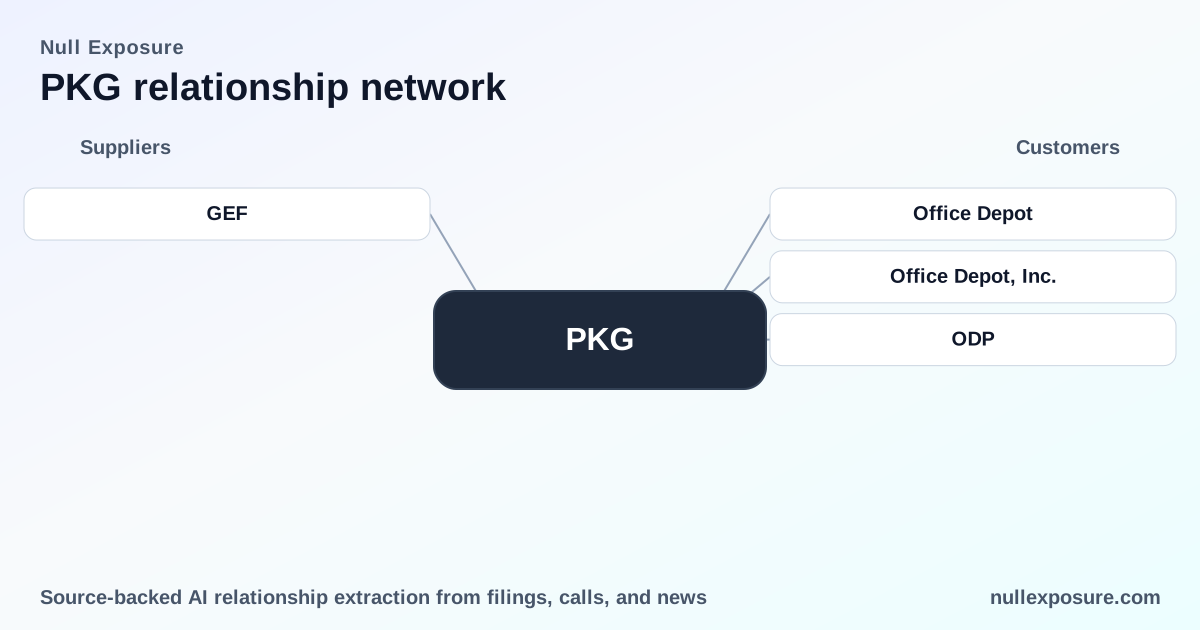
PKG’s supplier-scope results include one disclosed relationship. Below are plain-English summaries and source references for every item returned.
Greif — costs tied to an acquired containerboard business
PKG reported costs related to the acquisition and integration of the Greif containerboard business during its 2025 Q4 earnings commentary. This reflects transaction-related integration expenses rather than an ongoing buy/sell supplier contract. According to PKG’s 2025 Q4 earnings call remarks (first reported March 7, 2026), management identified these acquisition and integration costs as a line item connected to the Greif transaction. (PKG 2025 Q4 earnings call, March 2026)
What the company-level constraints reveal about PKG’s operating model
PKG’s supplier disclosures and constraint excerpts form a coherent picture of a capital- and contract-intensive manufacturing company.
- Long-term, multi-year contracting is core to the model. PKG disclosed purchase obligations for items such as energy, fiber, and chemicals under arrangements ranging from one year to as long as 27 years. This signals a contracting posture that locks in key input availability and price exposure over extended horizons.
- Framework/master agreements are used for commodities. The company specifically identified master supply contracts for natural gas at several manufacturing locations for the years ended December 31, 2024 and 2023, which reflects an operational reliance on framework agreements to secure energy flows and manage input cost volatility.
- PKG operates as a buyer on material spend lines. The company’s disclosures position it as the counterparty procuring large volumes of energy and commodities rather than as a reseller of those inputs.
- Spend concentration is meaningful. Under these purchase agreements, PKG recorded total purchases of approximately $403.5 million (2024), $432.6 million (2023), and $520.5 million (2022)—a clear signal that commodity and energy procurement is a multi-hundred‑million dollar recurring commitment that flows through gross margin and working capital.
These constraints are company-level signals drawn from PKG’s public filings and earnings communications rather than relationship-level assertions unless the excerpt specifically names a counterparty.
How those constraints shape risk and opportunity
PKG’s contracting profile creates a mix of defensive and structural exposures that investors and operators should parse.
- Defensive: Long-term purchase commitments reduce the risk of input shortages and give management negotiating leverage on volume and reliability. Framework agreements for natural gas help stabilize energy cost pass-through into finished product pricing.
- Structural: Large fixed or minimum purchase obligations amplify downside when demand softens; the company recorded material spend under these arrangements each year. For operators, this increases the importance of flexible operations and commercial discipline to offset fixed input commitments.
- M&A integration is an active lever. The Greif containerboard business integration costs recorded in the 2025 Q4 call underscore that PKG uses M&A to reshape capacity and access feedstock or geographic reach—but integration drives near-term cash and execution risk.
Key takeaway: PKG manages commodity exposure through long-dated contracts and master supply agreements, but those same arrangements concentrate spend and can exacerbate margin pressure during demand troughs or commodity spikes.
For more on supplier posture and how it influences valuation, consult our coverage at https://nullexposure.com/.
Strategic implications for investors and operators
- Margin sensitivity is tied to procurement terms. Given PKG’s disclosed spend bands and contract lengths, any model for margins should include scenario analysis for commodity cost pass-through and utilization shifts.
- Counterparty concentration and criticality matter. Long-term agreements with energy and fiber suppliers support operations, but they create counterparty dependency; sponsors and operators should stress-test supplier continuity and escalation clauses.
- Integration execution is a valuation swing. Acquisition-related integration costs, such as those linked to the Greif containerboard business, are likely to compress near-term free cash flow while aiming to deliver scale benefits over time.
Investor action: Model a range of outcomes for procurement costs and integration expenses; track PKG’s quarterly cadence for integration-related line items and supplier renegotiations.
Closing view and next steps
Packaging Corporation of America runs a supplier model that trades short-term flexibility for long-term input security. The combination of master supply contracts, multi-year purchase obligations, and meaningful annual spend creates both defensive supply certainty and leverage to commodity cycles. Integration activity—evidenced by the Greif containerboard transaction—adds a layer of execution risk that investors must monitor across quarterly results.
If you compile supplier risk into investment theses or operational playbooks, start with PKG’s procurement commitments and the company’s disclosures on integration costs. Learn more about supplier exposure analysis and how it feeds valuation at https://nullexposure.com/. For a tailored briefing on PKG supplier counterparties and contractual constraints, visit https://nullexposure.com/ and contact our research team.