Planet Green Holdings (PLAG) — supplier relations that shape a thin-margin industrial play
Planet Green Holdings Corp operates as a small-cap industrial conglomerate that sources and manufactures consumer and industrial products, monetizing through direct sales and manufacturing contracts supported by advance payments to suppliers and an international procurement network. The company reports $5.49M in trailing revenue with persistent operating losses, and its supplier posture—long-term, mature relationships across APAC and global channels—drives working capital dynamics and delivery risk for investors and operators evaluating PLAG as a counterparty. For a deeper look at supplier exposure and how it affects valuation and operations, visit https://nullexposure.com/.
What the uncovered supplier links actually are — short, actionable reads
Below I cover every supplier relationship returned in the review. Each entry is a plain-English, investor-facing summary with a short source note.
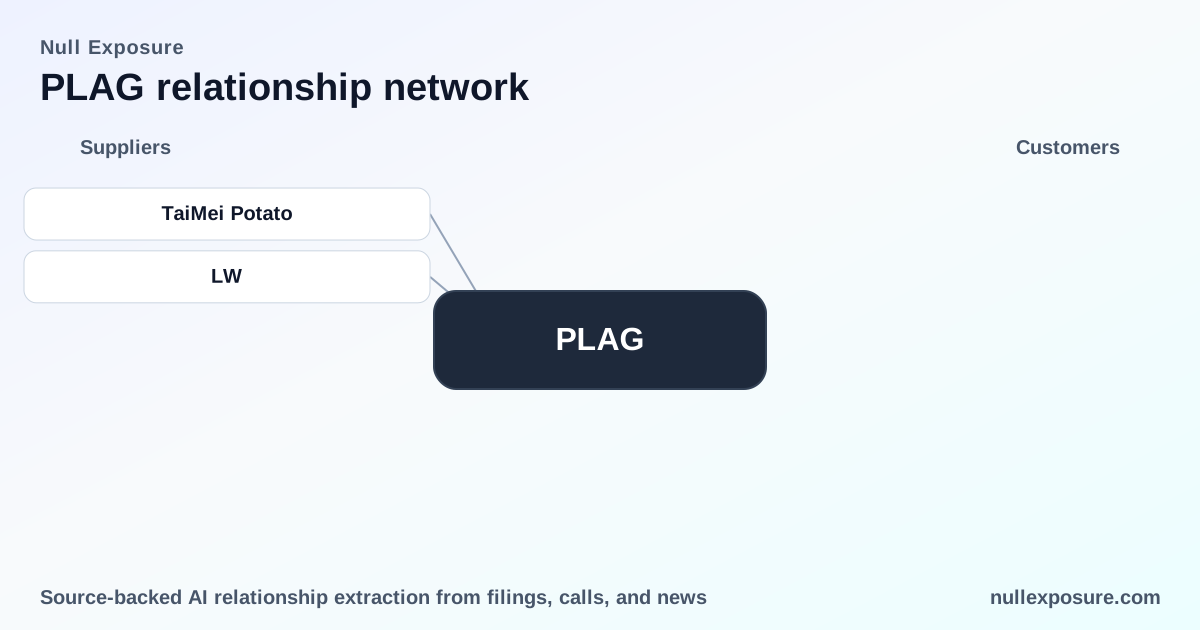
TaiMei Potato — manufacturing partner for branded fries
TaiMei Potato, identified as a Lamb Weston subsidiary, is reported to have undertaken manufacturing for the Lorain-branded french fries tied to American Lorain Corporation, indicating third-party production capacity in China that can be used by branded food clients. A PotatoPro article describing the arrangement cites the contract activity tied back to FY2019 (reported in March 2026). (Source: PotatoPro, March 2026.)
Lamb Weston — upstream brand and parent-of-supplier linkage
Lamb Weston is referenced as the parent of TaiMei Potato in the same news item, which ties PLAG’s supplier network into established international frozen-food supply chains when PLAG interacts with packaged-food manufacturers or distributors. The linkage was documented in the PotatoPro item that cites Lamb Weston’s subsidiary activity related to the Lorain brand (FY2019 activity, reported March 2026). (Source: PotatoPro, March 2026.)
How these relationships map into Planet Green’s operating model
The supplier evidence and company disclosures together create a coherent picture of how PLAG runs procurement and manufacturing exposure:
- Long-term contracting posture. Company disclosures indicate PLAG has "stable long term cooperative relationships" with its meat and raw-material suppliers, which translates to predictable volumes but also to locked-in cost and delivery commitments that matter when margins are thin.
- Mature relationship stage. The language describing suppliers as stable and long-standing signals low churn and operational continuity rather than short-term spot buying.
- Geography: APAC base with global reach. Procurement statements emphasize domestic sourcing for certain inputs alongside a "mature global purchasing network," implying a mixed exposure to local market idiosyncrasies and international supplier risk.
- Manufacturing-critical segment. Supplier excerpts reference prepayments for raw materials and manufacturing activity, so suppliers play an operationally critical role rather than being low-touch service vendors.
- Spend profile concentrated in mid-size bands. Extracted spend bands cluster in the $100k–$1M and $1M–$10M ranges, which points to multiple mid-sized supplier relationships that are individually meaningful but unlikely to be single-systemic counterparties.
These are company-level signals about PLAG’s supplier base rather than attributes tied to a single named supplier.
Financial consequences for investors and operators
Planet Green’s public financials and the supplier posture create a specific risk/reward profile:
- Small market cap and negative profitability: Market capitalization is roughly $24.8M with negative EBITDA and diluted EPS of -$1.45 through the most recent reporting period (latest quarter 2025-09-30). Revenue TTM sits at $5.49M with declining quarterly revenue growth (-47.2% YoY in the latest disclosure).
- Working capital sensitivity: The use of prepayments to secure raw material and manufacturing capacity locks up cash and amplifies sensitivity to supplier performance; given the company's thin revenue base, a single missed delivery or payment shock would materially impact operations.
- Shareholder structure and governance signals: Insiders hold ~27.6% of shares while institutional ownership is minimal (~0.4%), which indicates limited external governance pressure and potential concentration risk in strategic decision-making.
Collectively, these facts make supplier continuity and contract terms first-order investment considerations.
Visit https://nullexposure.com/ for a structured supplier-risk report tailored to these dynamics.
Due diligence checklist for operators and procurement teams
Operators assessing engagement with PLAG should prioritize the following, based on the supplier signals above:
- Verify contract tenure and termination provisions to understand the implications of the company’s long-term contracting posture.
- Confirm payment terms and prepayment exposure, since prepayments are explicit in disclosures and materially affect liquidity.
- Audit geographic supplier dependencies across APAC and global suppliers to quantify trade, logistic, and regulatory risk.
- Map spend concentration within the $100k–$10M bands to identify suppliers whose failure would meaningfully disrupt production.
- Validate manufacturing capacity and third-party relationships (for example, the Lamb Weston/TaiMei Potato linkage) to ensure continuity of branded-product production chains.
- Evaluate counterparty reputation and compliance for entities operating in cross-border food manufacturing.
Each bullet above is a practical step rooted in the reported operating characteristics and supplier excerpts.
Risk factors that materially affect valuation
- Liquidity risk from prepayments and working-capital drainage against a small revenue base.
- Execution risk tied to manufacturing partners in APAC; a failed supplier relationship directly affects production throughput.
- Concentration and governance risk given high insider ownership and near-zero institutional oversight.
- Demand-side exposure: the company’s revenue contraction and negative margins amplify the financial impact of any supplier cost inflation.
Bottom line and investor action plan
Planet Green’s supplier footprint is characterized by long-term, mature manufacturing relationships in APAC and a network that supports global procurement, but that same posture increases working-capital stress and operational dependency for a company with limited scale and negative profitability. For investors and operators, the immediate priorities are contract diligence, payment-term verification, and supplier continuity testing.
If you want a tailored supplier exposure summary and counterparty risk score for PLAG, check our platform: https://nullexposure.com/. For procurement teams preparing contract negotiations or investor teams modeling downside scenarios, a focused supplier audit is the highest-value next step — start your review at https://nullexposure.com/.
Sources: Planet Green public results through 2025-09-30 and company disclosures; PotatoPro reporting on Lamb Weston / TaiMei Potato manufacturing activity (PotatoPro, March 2026, referencing FY2019 arrangements).