Polibeli Group Ltd (PLBL): Legal suppliers and what they signal for investors
Polibeli Group Ltd operates a digital supply-chain and distribution-sales platform out of Jakarta and monetizes by charging fees for distribution, platform services and related logistics and sales support to merchants and retailers. The core business generates modest revenues today while market valuation and transaction activity have been driven by a high-profile corporate listing and associated legal work; investors should treat operating economics and transaction dynamics as separate value drivers when assessing supplier risk and partner criticality. For a focused supplier-risk view, see the company supplier map at NullExposure.
Snapshot: the financial and ownership backdrop that gives supplier links outsized importance
Polibeli reports roughly $30.2 million in trailing twelve‑month revenue with a gross profit of about $1.15 million and negative operating margins; the company is loss-making on current income statement metrics. Market capitalization stands near $3.3 billion, which produces an exceptionally high Price-to-Sales and EV/Revenue multiple (~109x) relative to operating scale. Ownership is heavily concentrated: insiders control over 83% of the stock while institutions own less than 1% and the public float is small (roughly 12.0 million shares vs 319.1 million shares outstanding).
These facts create two structural realities for supplier relationships: legal and strategic suppliers carry outsize influence during major corporate transactions, and concentration plus low institutional oversight amplifies governance and counterparty risk for external providers. For deeper mapping of these relationships, visit NullExposure.
Law firms named in coverage — the supplier relationships investors should note
The available supplier records cite two external law firms involved in Polibeli’s transaction activity. Both entries come from the same news report that covered the company’s Nasdaq-related listing and transaction value.
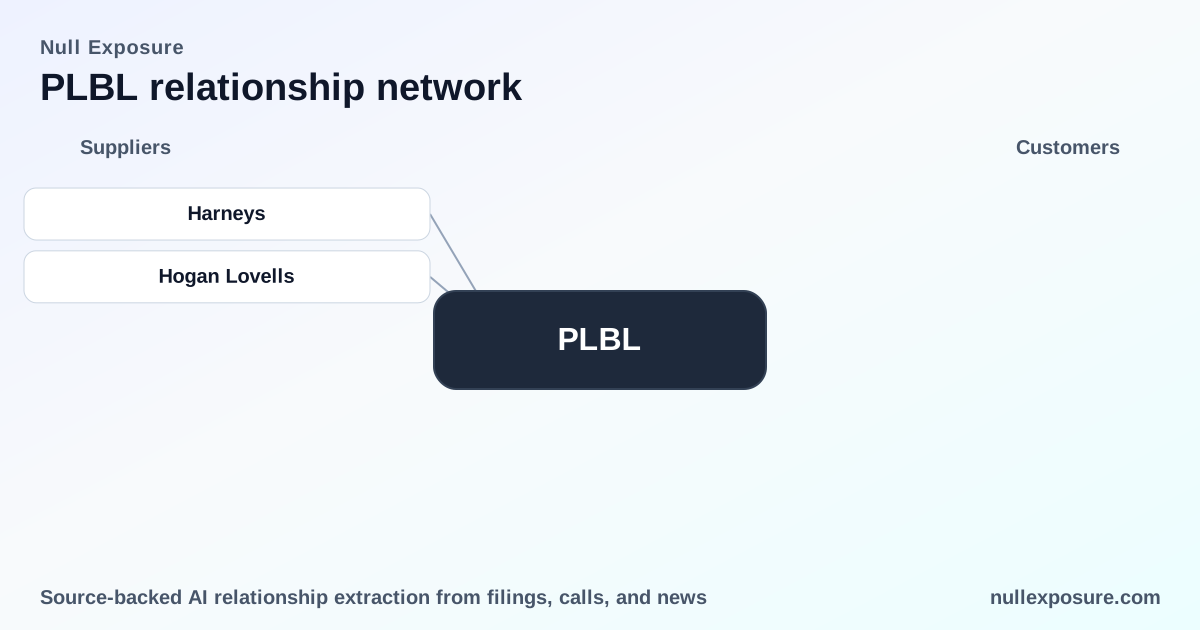
Harneys
Harneys is listed as one of the law firms involved in the transaction that the coverage valued around US$3.6 billion. According to a ts2.tech article first seen March 10, 2026, Harneys was explicitly cited among the legal advisors handling deal documentation and structuring. (ts2.tech, March 2026)
Hogan Lovells
Hogan Lovells is also named as a legal advisor for the same transaction, again with the article placing the deal value at approximately US$3.6 billion; the firm’s role aligns with cross‑border listing and regulatory work described in the coverage. The same ts2.tech piece (first seen March 10, 2026) lists Hogan Lovells alongside Harneys. (ts2.tech, March 2026)
What these legal relationships mean for investors and operators
Legal advisor selection is a high‑signal supplier relationship for a company in the middle of a significant listing or transaction process. When top-tier international law firms are engaged, it signals a deliberate strategy to manage cross-border corporate governance, regulatory filings and transaction structuring at scale. The cited transaction size — approximately US$3.6 billion per the coverage — further elevates the economic stakes for these suppliers and for shareholders.
Operationally, Polibeli’s supplier posture shows these characteristics:
- Contracting posture: Engaging Harneys and Hogan Lovells indicates a transactional, deal-focused contracting posture rather than routine operational outsourcing; legal services are project-based and critical leading into or after a listing.
- Concentration and criticality: Legal advice on a listing is highly critical and concentrated among a few advisors; failure or delay in these supplier relationships can materially affect timeline and regulatory outcomes.
- Maturity: The combination of loss-making operating metrics and high-value transaction work suggests a company in the growth/transactional stage—operational scale has not yet normalized relative to corporate finance activity.
There were no supplier constraints recorded in the available supplier records for PLBL; this company-level signal means there are no flagged contractual restrictions or covenants captured in these supplier fields that would limit supplier selection or create obvious supplier-side execution risk in the record set.
For a full review of supplier counterparties tied to corporate events, check NullExposure.
Risk and opportunity takeaways for governance and due diligence
Polibeli’s mix of small operating scale and large transaction valuation creates specific supply-side considerations:
- Risk: Deal execution is binary and concentrated. Top‑tier law firms are necessary but not sufficient; if legal counsel encounters regulatory friction, timelines and valuation can compress quickly.
- Risk: Insider control and small float increase single-party influence. With insiders holding ~83% of shares, supplier selection and contract terms can be negotiated with limited public-market oversight.
- Opportunity: High-profile advisors improve path-to-listing credibility. Engaging recognized international firms reduces execution risk on cross-border regulatory matters and enhances buyer/supplier confidence for subsequent counterparties.
A focused checklist for operators and procurement teams evaluating similar supplier relationships:
- Confirm scope and timeline for legal engagements and specific deliverables tied to closing milestones.
- Validate fee structure and any escrow/indemnity obligations that could affect cashflows.
- Map decision rights against insider governance to understand who can materially alter supplier terms.
Final read: how to use these signals in investment decisions
Polibeli’s supplier mentions are concentrated in legal advisory for a high-value transaction that dwarfs current revenue. Investors must differentiate between operational supplier risk — low given the few routine suppliers listed — and transaction execution risk, which is high given the stakes and concentrated advisory roles. The lack of recorded supplier constraints is a neutral company-level signal; it does not eliminate the need for focused diligence on engagement terms with Harneys and Hogan Lovells, especially fee contingencies and regulatory deliverables.
For a granular supplier map tied to corporate events and to monitor changes as filings and press coverage evolve, see the platform at NullExposure.
Bottom line: treat Polibeli’s legal suppliers as transaction-critical partners whose performance will strongly influence near-term valuation outcomes, while recognizing that operational scale and governance concentration create persistent execution and oversight risk that investors should underwrite separately from the deal narrative.