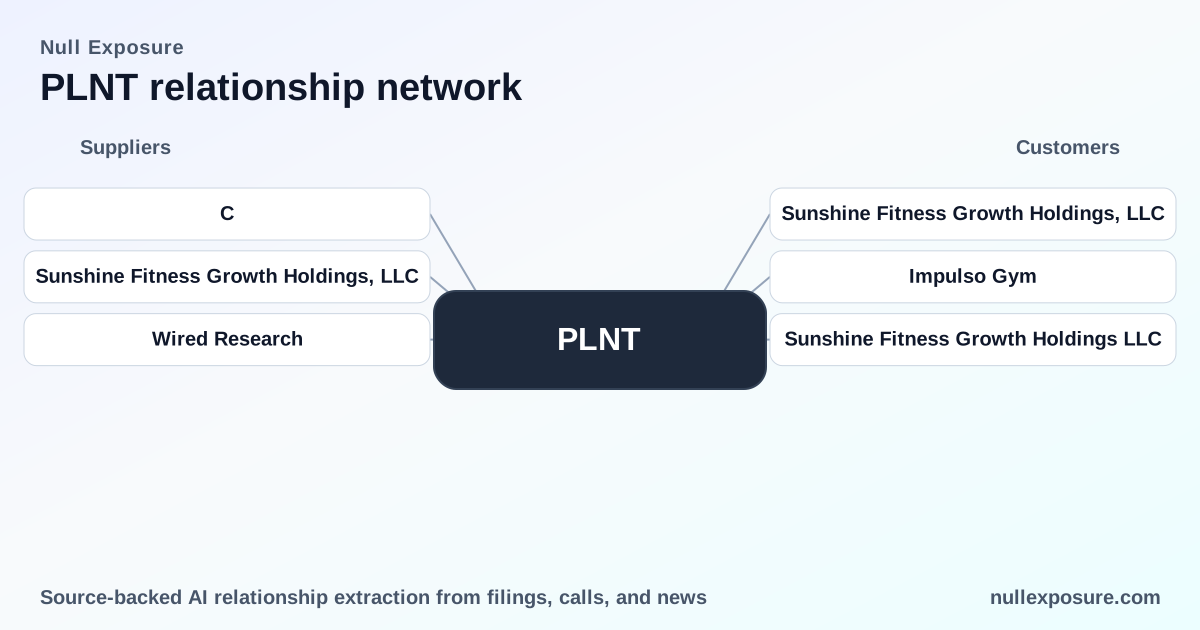
Planet Fitness (PLNT) — Supplier relationships, capital partners, and operational constraints investors should price in
Planet Fitness franchises and operates fitness centers and monetizes through membership subscriptions, franchise fees and royalties, and ancillary sales to its franchisees (equipment and services). The company funds growth and returns capital via market instruments and bank facilities while relying on a small set of third‑party manufacturers and service providers for equipment, point‑of‑sale hardware, and its digital onboarding stack. For investors, the key lens is how supplier concentration and capital partners interact with franchise economics and member acquisition — both revenue drivers and potential failure points.
Learn more about supplier intelligence at https://nullexposure.com/.
Why the parties named in the media matter for valuation and risk
Planet Fitness’s public relationships reveal two distinct operational themes: capital markets execution (accelerated share repurchases with major banks) and operational scale transactions (franchisee portfolio M&A and third‑party market research for promotions). The bank transactions signal capital allocation choices that affect free cash flow and share count; the franchisee acquisition and vendor disclosures speak directly to supply concentration and service criticality that can influence margins and growth pacing.
Relationship-by-relationship: what the public record shows
- Citibank, N.A. — $350 million accelerated share repurchase (ASR). CityBiz reported that Planet Fitness entered a $350 million ASR with Citibank, N.A. as an executed capital‑return mechanism tied to FY2025 activity; this is a direct expression of the company’s capital allocation toward buybacks rather than dividends or increased franchise capex (CityBiz, reporting on the FY2025 ASR).
- Citibank, N.A. — company release reporting the same $350 million ASR. A corporate press relay on SAHM Capital described the identical $350 million ASR agreement with Citibank, N.A. in the company’s FY2025 disclosure, reinforcing that Citibank is a counterparty for large equity repurchase programs (SAHM Capital news, Dec 2025/FY2025).
- Citibank, N.A. — prior $280 million ASR (FY2024). A separate industry news piece documents that on June 12, 2024 Planet Fitness entered a $280 million ASR with Citibank, N.A., indicating a multi‑year relationship between Planet Fitness and Citibank for structured share repurchase activity (SGB Online, noting FY2024 ASR).
- Sunshine Fitness Growth Holdings, LLC — strategic club acquisition. Planet Fitness announced a definitive agreement to acquire 114 clubs from Sunshine Fitness Growth Holdings in a cash‑and‑stock transaction valued at $800 million, consolidating a significant franchisee portfolio and shifting locations from franchisee‑owned to company‑operated (CityBiz coverage of the FY2022 transaction).
- Wired Research — consumer survey partner for promotional programming. A Planet Fitness press release cited an online survey conducted by Wired Research of 1,000 parents and teens used to support a youth‑membership promotional program, showing reliance on third‑party research for targeted marketing and program validation (PR Newswire, FY2023 press release).
What the company’s supplier constraints reveal about operational posture
Company disclosures list several supplier‑related constraints that are material to operations and deserve investor attention:
- Geographic footprint of suppliers: Planet Fitness sources equipment and hardware from manufacturers with operations in North America, APAC, EMEA and LATAM, exposing the company to cross‑border tariffs and geopolitical supply‑chain risk. This is a company‑level signal driven by vendor manufacturing locations disclosed in filings.
- Supplier concentration is material: The company acknowledges dependence on a limited number of suppliers for equipment and key services, making supply disruption a potential material negative to revenues and gross profit. Treat supplier concentration as a substantive operating leverage point rather than a marginal cost issue.
- Mixed vendor roles: manufacturer and service provider: Planet Fitness purchases exercise equipment from third‑party manufacturers while also relying on external service providers to manage its websites and online join processes; both roles are critical to member flow and to franchisee product supply.
- Segment exposure: Supplier relationships span hardware (exercise equipment, POS hardware), software (point‑of‑sale and digital content) and services (website and onboarding operations). These cross‑segment dependencies create compound risk if disruptions occur simultaneously.
How these relationships and constraints translate to investor risks and opportunities
- Capital allocation and shareholder returns: Repeated ASRs with Citibank in FY2024 and FY2025 show management prioritizing share repurchases as a return mechanism. That reduces outstanding shares and signals confidence in EPS expansion but also consumes liquidity that could otherwise fund capex or buffer supply‑chain shocks (CityBiz; SGB Online). Investors should model buyback cadence and cash‑flow tradeoffs into valuation multiples.
- Concentration risk in the supply chain: The company’s admissions about reliance on a small number of suppliers for equipment and the international footprint of vendor manufacturing create exposure to tariffs, localized shutdowns, and lead‑time variability. Operational margin is sensitive to a supplier disruption or tariff shock.
- Operational integration and criticality of services: With approximately 85% of new members joining online through PLNT’s sites and mobile app (filings), third‑party service providers that run the digital onboarding stack are mission‑critical; outages or contract disputes would materially affect membership growth and near‑term revenue.
- Franchisee consolidation risk/opportunity: The Sunshine Fitness acquisition converts a large franchisee base into company‑operated assets, concentrating operational control but raising integration execution risk; payback and margin profiles will influence cash flow and leverage metrics (CityBiz coverage of the Sunshine deal).
Practical takeaways for investors and operators
- Monitor Citibank ASR activity as a leading indicator of share‑count mechanics and near‑term cash deployment. The FY2024 and FY2025 ASRs demonstrate an ongoing bank counterparty relationship that should be incorporated into cash flow models (SGB Online; CityBiz; SAHM Capital).
- Stress test margins for tariff and supplier‑failure scenarios given the disclosed manufacturing geographies and supplier concentration. Treat equipment procurement as a potentially lumpy, high‑impact cost center.
- Assess digital vendor SLAs and franchisee integration plans as operational levers: digital onboarding availability directly affects new member revenue, and franchisee consolidations like the Sunshine deal change capital intensity and margin mix (CityBiz; PR Newswire).
Learn more about how these supplier signals affect valuation and operational risk at https://nullexposure.com/.
Final verdict and next steps
Planet Fitness runs a capital‑efficient franchise model supported by targeted acquisitions and active capital returns, but the business is materially exposed to supplier concentration, cross‑border manufacturing risk, and the execution of digital services and integration of large franchisee portfolios. For investors, the key questions are whether management’s buyback cadence and M&A strategy enhance long‑term ROIC and whether supplier diversification or contractual protections sufficiently mitigate tariff and service‑outage risks.
If you want an integrated supplier risk view tied to valuation and scenario modeling, start a deeper review at https://nullexposure.com/ — the company‑level supplier disclosures and transaction history above are the inputs you should prioritize when stress‑testing PLNT.