Douglas Dynamics (PLOW): Supplier relationships that shape margins and optionality
Douglas Dynamics manufactures and conditions commercial work-truck accessories and upfits—plows, salt spreaders, truck-mounted cranes and related equipment—and monetizes through direct OEM and aftermarket sales, upfitting services, recurring parts and service revenue, and strategic tuck-in acquisitions that expand product breadth. Recent dealmaking and advisor relationships signal a deliberate push to diversify product categories while maintaining capital-light advisory engagement for transactions. Learn more on the homepage: https://nullexposure.com/
The business model in one line (and why supplier relationships matter)
Douglas Dynamics sells hardware and installation services into fleet and contractor customers; steel and chassis supply, long-term facility leases, and targeted acquisitions directly influence gross margins and working capital. The company captures value through product mix (higher-margin aftermarket and installed systems) and through bolt-on acquisitions that increase cross-sell and manufacturing scale.
Recent relationships that investors should track
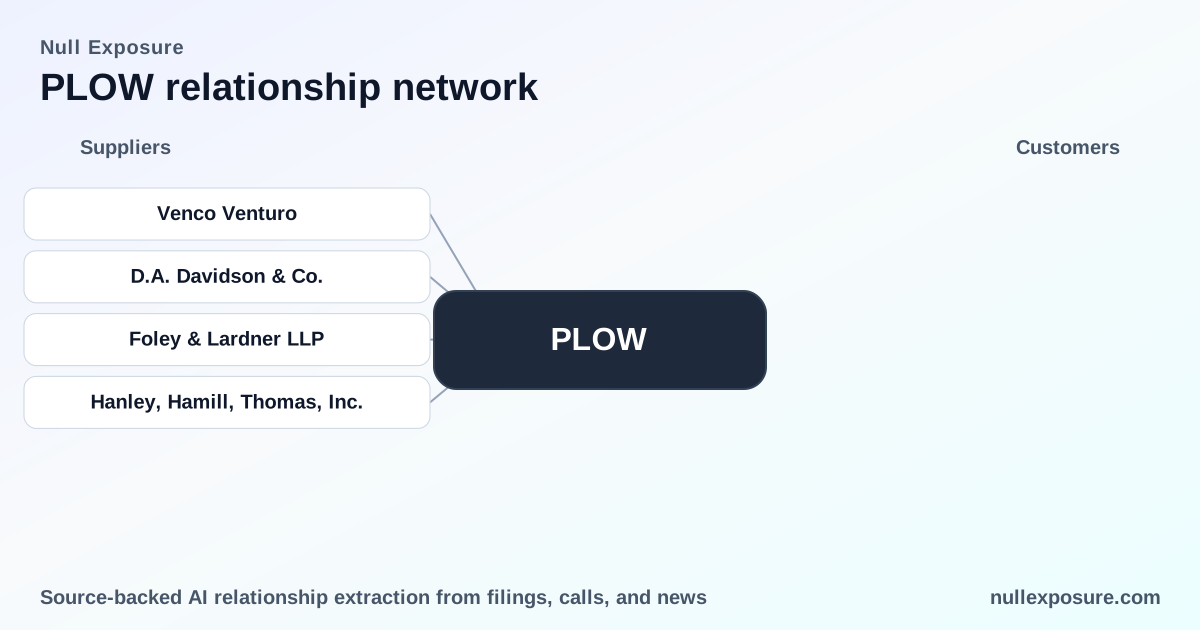
Below I cover every relationship surfaced in the supplier-scope results and tell you what each connection means for PLOW’s operating trajectory.
Venco Venturo — expanding the attachment portfolio
Douglas Dynamics announced the acquisition of Venco Venturo in November and highlighted it on the 2025 Q4 earnings call as a strategic add to the product set of truck-mounted cranes and dump hoists; the move diversifies revenue away from plow-centric seasonality into complementary attachments. (2025 Q4 earnings call, March 2026).
D.A. Davidson & Co. — financial advising on the transaction
D.A. Davidson & Co. served as a financial advisor to Douglas Dynamics on the Venco Venturo acquisition, indicating the company engaged external investment-banking expertise rather than handling the deal entirely in-house. Using established advisors suggests a conventional, market-standard approach to M&A execution and valuation discipline. (Quiver Quant news report covering the FY2025 transaction, March 2026).
Foley & Lardner LLP — legal advisor to Douglas Dynamics
Foley & Lardner LLP acted as legal counsel on the Venco Venturo acquisition, which is consistent with Douglas Dynamics’ use of national law firms for transaction documentation and regulatory/compliance support. Engaging a recognized law firm reduces execution and regulatory risk for the deal close. (Quiver Quant news report covering the FY2025 transaction, March 2026).
Hanley, Hamill, Thomas, Inc. — another financial advisor role
Hanley, Hamill, Thomas, Inc. also served as a financial advisor on the Venco Venturo deal; the presence of multiple financial advisors signals a structured sell-side/buy-side advisory process and the company’s willingness to pay for advisory depth. Multiple advisors imply the company prioritizes execution certainty and independent fairness input on strategic acquisitions. (Quiver Quant news report covering the FY2025 transaction, March 2026).
Company-level constraints that shape supplier exposure and contracting posture
The relationship evidence set contains several company-wide signals that inform how suppliers and buyers should view Douglas Dynamics as a counterparty:
- Long-term contracting posture: The company references lease agreements with an initial 15-year term and two optional 10-year renewals, which is a signal of long-horizon facility commitments and capital intensity in plant footprint.
- Material input exposure: Steel purchases are material—approximately 7% of 2024 revenue—and the company disclosed that inflation in materials, freight and labor materially impacted profitability in 2023–2024. This highlights concentration risk in commodity inputs and sensitivity of margins to raw-material inflation.
- Buyer orientation and inventory posture: Douglas takes title to truck chassis on receipt and performs upfitting during installation, establishing it as a buyer and integrator in the supply chain rather than a passive reseller.
- Use of service providers for control assurance: The company engages third parties for cybersecurity and control assessments, signaling outsourced assurance practices and reliance on specialist service providers for selected operational activities.
These are company-level characteristics: they describe how Douglas Dynamics contracts, where its cost pressures live, and how mature its governance practices are—information material to suppliers, lenders, and prospective partners.
Strategic implications and investor takeaways
The additions and advisor relationships form a coherent strategic picture:
- Diversification reduces seasonality but requires integration: The Venco acquisition broadens the product mix into cranes and hoists, which lowers winter-seasonality risk for plows but demands successful operational and cultural integration to realize synergies.
- Input concentration is a persistent margin lever: With steel purchases a material share of revenue and prior inflationary hits to margins, procurement strategy and supplier contracting on steel will be primary drivers of gross-margin stability.
- Long-term real estate commitments increase fixed-cost leverage: Extended lease terms lock in capacity and create operating leverage—good in growth, risky when demand softens.
- Advisory hires are conventional and de-risked: Using established financial and legal advisors for M&A suggests disciplined execution; investors should treat completed tuck-ins as deliberate portfolio management rather than opportunistic buys.
If you want transaction-level context, the deal coverage and advisor roster are summarized above. For a deeper supplier and counterparty risk assessment, visit our home page: https://nullexposure.com/
How this affects supplier and partner negotiations
Suppliers and service providers should price for: (1) commodity pass-through or indexation clauses given steel exposure; (2) long-term relationships with potential volume seasonality smoothing; and (3) integration requirements for acquired product lines that could change lead times and specifications. For investors, the mix of long leases and high institutional ownership (over 96%) points to stable governance but limited insider liquidity, influencing how quickly management can pivot capital allocation.
Next steps for investors and operators
- For investors assessing risk-adjusted upside, scrutinize steel procurement contracts and integration milestones for Venco Venturo as near-term catalysts for margin improvement.
- For suppliers and partners, prioritize negotiating clear escalation and renewal terms to align with Douglas Dynamics’ long-dated facility commitments.
Explore firm-level signals and relationship analytics further at https://nullexposure.com/ — our research focuses on operational counterparties and the supply-side levers that drive valuation.
Final read
Douglas Dynamics is evolving from a plow-focused OEM to a broader work-truck attachments platform. That evolution reduces seasonal revenue exposure but raises integration execution and commodity procurement as the dominant operational risks. Investors should watch raw-material sourcing, lease commitments, and the successful folding of Venco Venturo into the portfolio as the next material value inflection points. Learn more and track these supplier dynamics at https://nullexposure.com/