Pliant Therapeutics (PLRX): Supplier relationships, operational constraints, and what investors should price in
Pliant Therapeutics is a clinical‑stage biopharma that discovers and develops anti‑fibrotic therapies and monetizes through licensing, strategic collaborations and, ultimately, product commercialization if late‑stage trials succeed. The company carries no product revenue today, funds development through capital markets, and depends on third‑party partners for both intellectual property development and the manufacturing of clinical supplies—making supplier relationships core to delivery of clinical value. For a focused supplier-risk view, see more at https://nullexposure.com/.
Why supplier relationships are a central valuation lever
Pliant’s path to value runs through clinical readouts for bexotegrast (PLN‑74809) and other candidates. Because Pliant outsources all clinical manufacturing and relies on external labs and medical centers for trial execution, third‑party counterparty performance directly controls timelines, data quality, and regulatory readiness. With zero reported revenue, negative EBITDA and a market capitalization of roughly $80.5 million, investors must treat supplier concentration and geographic sourcing as potential value multipliers or de‑rating risks.
Counterparty snapshots: the explicit relationships on record
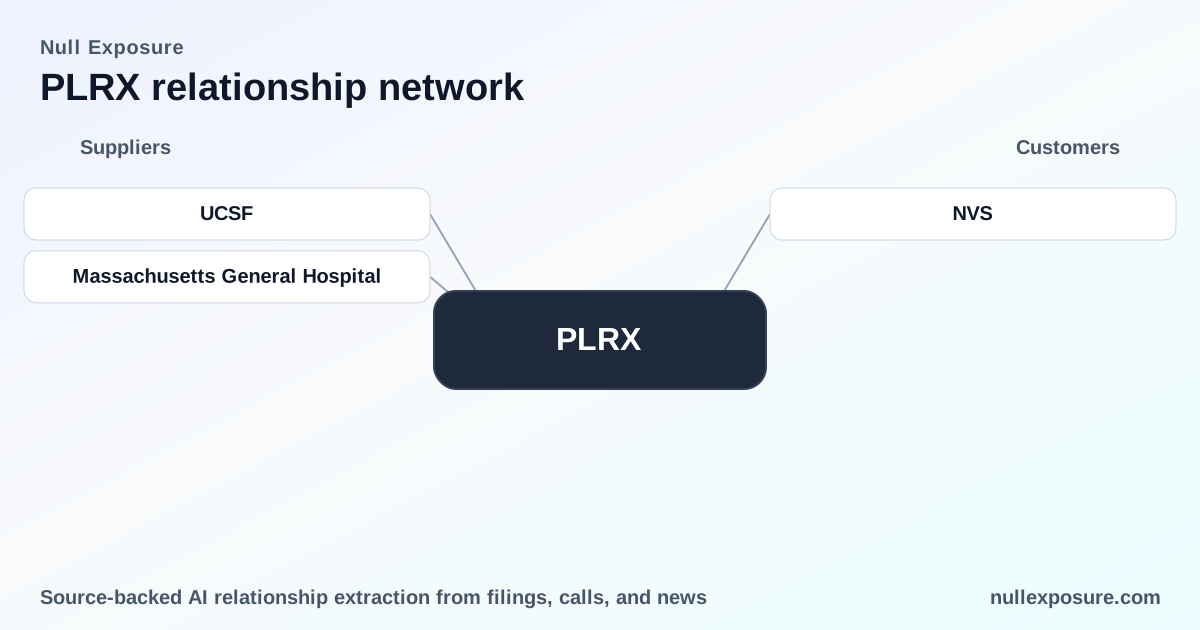
Pliant’s public relationship footprint in the supplied results contains two named counterparties. Each relationship below is summarized in plain English with the source noted.
- UCSF — Pliant expanded internal IP through a license agreement with the University of California, San Francisco to use UCSF technology as part of its research platform. This licensing relationship dates to the company’s early financing and technology consolidation efforts. According to a FierceBiotech report covering Pliant’s launch and Series A, Pliant “entered into a license agreement with UCSF to expand this technology” (FierceBiotech, coverage of Series A launch, FY2016).
- Massachusetts General Hospital (MGH) — MGH served as a clinical research site and analytic partner for a randomized, double‑blind, placebo‑controlled 12‑week trial of bexotegrast, where Pliant reported topline change in lung collagen in patients with idiopathic pulmonary fibrosis. A company filing on SEC.gov documents the trial topline results and cites MGH as the location for that study (SEC filing/exhibit, FY2024).
What the constraints say about Pliant’s operating model
The disclosed constraints paint a coherent picture of a small clinical‑stage operator that is materially dependent on external providers:
- Outsourced manufacturing posture. Pliant states that “all of our clinical manufacturing is outsourced to third‑party manufacturers,” defining a contracting model where the company buys manufacturing services rather than owning capacity. This drives vendor management as a core operational competency rather than plant operations.
- Geographic concentration in APAC for drug substance. Pliant confirms an “adequate supply” of drug substance from Asian CMOs and specifically notes reliance on vendors in China for clinical supplies, signaling supply chain exposure to Asia and attendant geopolitical and logistics considerations.
- Supplier concentration and critical single‑source risk. The company admits reliance on a sole supplier for bexotegrast manufacture and highlights the inability to quickly replace that supplier on acceptable terms if it defaults—an explicit criticality constraint.
- Service provider dependency for trials and research. Pliant depends on universities, hospitals, CROs and other third parties for preclinical and clinical execution, which places data integrity and timeline risk squarely in counterparty performance.
These constraints are company‑level signals about sourcing, concentration and criticality rather than attributes of any single named relationship unless the excerpts themselves name the counterparty.
How these supplier signals change the investment calculus
Pliant’s supplier posture creates concentrated operational risk that investors should incorporate into probability‑weighted scenarios:
- Clinical timeline sensitivity. With sole‑source manufacturing and an outsourced trial model, any manufacturing disruption or CRO/site failure directly delays data milestones and cashflow assumptions. Delay risk compresses the present value of future revenue under standard biotech valuation frameworks.
- Regulatory and quality execution risk. Reliance on foreign CMOs and a single supplier increases the regulatory diligence burden; any quality event in the manufacturing chain could force repeat studies or create clinical holds.
- Negotiation leverage and cost structure. As an outsourcing buyer with limited scale and no product revenue, Pliant has limited leverage to secure preferential lead times or capacity in a tight CDMO market, which creates potential margin pressure if commercialization proceeds.
- Diversification and maturity gap. The relationships with UCSF and MGH reflect standard academic collaboration and clinical site work appropriate for a company at this development stage; maturity is low and counterparty breadth is limited compared with later‑stage biotech peers.
For investors focused on operational risk, Pliant’s lack of owned manufacturing capacity and geographic sourcing in APAC are immediate variables to monitor. For a deeper supplier exposure analysis, visit https://nullexposure.com/ to see how these arrangements influence counterparty credit and operational scenarios.
Practical implications for operators and counterparties
Operators evaluating relationships with Pliant should plan for tight coordination around quality systems, regulatory documentation and contingency manufacturing options. Key operational actions include:
- Mapping single‑source nodes and establishing alternate supply routes for critical drug substances.
- Building contractual performance milestones with clear remedies and penalties for missed supply and quality targets.
- Ensuring clinical site contracts include data‑quality and audit provisions to protect trial integrity.
These actions reduce the probability that a single supplier event converts into a material enterprise value loss.
Bottom line and recommended next steps for investors
Pliant is a classical clinical‑stage story where supplier performance equals corporate progress. The UCSF license and the MGH trial relationship are consistent with an academic‑partnered R&D model, but company‑level constraints—sole supplier manufacturing and reliance on APAC CMOs—introduce concentrated operational risk that depresses the valuation multiple relative to peers with diversified supply chains.
If you are evaluating exposure to PLRX, prioritize these three actions:
- Reconcile reported supplier dependencies with third‑party audit evidence and contingency plans in SEC filings and investor presentations.
- Monitor manufacturing quality and supply announcements as leading indicators of timeline risk.
- Size any investment with explicit downside scenarios that assume a 3–12 month manufacturing or site delay given the single‑supplier disclosure.
For a comprehensive supplier‑risk briefing and continuous monitoring of counterparty events, view the full coverage at https://nullexposure.com/. For tailored reporting and ongoing alerts on PLRX supplier changes, engage with our platform at https://nullexposure.com/ — we track contractual posture, geographic sourcing, and concentration metrics that matter to investors.