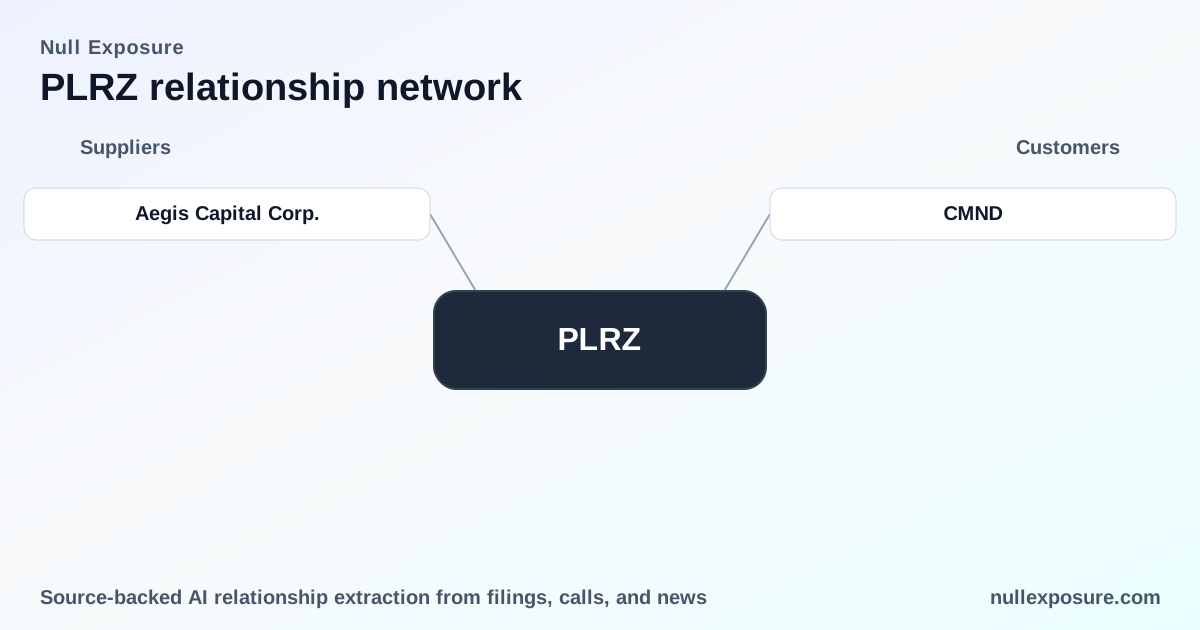
Polyrizon Ltd. (PLRZ): supplier relationships and what they tell investors
Polyrizon Ltd. develops medical-device hydrogels delivered as nasal sprays and monetizes through product commercialization and licensing or strategic partnerships that convert clinical-stage IP into regulated device revenue. The company is early-stage and pre-revenue, with a market capitalization near $14.8 million and no reported revenues through June 30, 2025; recent capital markets activity—an IPO that raised $4.2 million—provides the immediate operating runway. For investors and operators assessing supplier and capital-provider relationships, the facts in the public record point to a transactional supplier posture, concentrated capital sourcing, and high operational criticality of supplier performance. Learn more about supplier intelligence and relationship signals at https://nullexposure.com/.
How Polyrizon makes money today and plans to in the future
Polyrizon’s core product set is a platform of hydrogel-based medical-device formulations administered via nasal spray; commercialization converts laboratory IP into regulated device sales and recurring consumable revenue from patients and healthcare providers. The company currently reports zero revenue through mid-2025 and negative operating results (EBITDA and EPS negative), which means near-term value realization depends on successful regulatory clearance, partner commercialization, or milestone licensing that can monetize the underlying technology.
Key commercial drivers for investors:
- Cash and capital markets activity are the immediate levers for sustaining R&D and initial manufacturing scale-up.
- Partnering and licensing will be essential to get to volume manufacturing and distribution without assuming full commercial infrastructure.
- Supplier performance is operationally critical because device hydrogels and delivery systems require controlled manufacturing and regulatory-grade inputs.
Capital-provider relationship: Aegis Capital Corp.
Aegis Capital Corp. served as sole bookrunner on the IPO
Aegis Capital Corp. acted as the sole bookrunner on Polyrizon’s $4.2 million initial public offering in FY2026, reflecting a single-lead underwriter approach for the company’s market financing. This underwriting relationship is documented in market reports dated March 10, 2026 (Finviz citing Accesswire). Source: Finviz/Accesswire, March 10, 2026.
What the relationship set tells you about sourcing and vendor posture
Polyrizon’s public record contains a small number of identifiable supplier or capital-provider relationships in the sampled data; the only explicit, named partner in the current results is the IPO underwriter. From that limited relationship universe we draw company-level signals about contracting and operational posture:
- Contracting posture: capital-dependent and transactional. The presence of a single sole bookrunner for the IPO is consistent with an early-stage company that selects transactional capital partners for one-off financing events rather than maintaining large, multi-party syndicates or strategic banking relationships.
- Concentration of capital sources. The $4.2 million IPO led by a single firm signals concentrated capital access; investors should assume future raises will follow similar patterns unless formal strategic partners or larger institutional investors increase ownership.
- Operational criticality of suppliers. With no revenue and ongoing development needs, third-party manufacturers, raw-material suppliers and regulatory consultants (not named in the sampled results) will be highly critical to execution; any supplier failure would directly pressure timelines and cash consumption.
- Maturity and scale signals. The company is pre-commercial and small-cap, with limited institutional ownership (about 0.95%) and a sizable insiders percentage (~10%), indicating early-stage governance and potential insider-driven strategy.
(These are company-level signals derived from the public relationship record and financials through June 30, 2025. For deeper supplier mapping and risk scoring, visit https://nullexposure.com/.)
Risks that flow from the relationship profile
- Runway risk concentrated in capital markets activity. The IPO proceeds are the principal short-term source of funding; further development and commercialization will require additional capital or partnership deals.
- Single-source underwriting reflects modest market demand. A sole-bookrunner structure and small offering size indicate constrained access to broad institutional distribution and should be treated as a signal of tight public-market appetite until broader investor coverage or strategic partnerships develop.
- Execution risk tied to unnamed suppliers. Even though specific manufacturing or component suppliers are not publicly named in these results, the product type—nasal hydrogel devices—requires regulated manufacturing controls; the lack of disclosed manufacturing partners increases due diligence burdens on counterparties and acquirers.
- Limited institutional oversight. Very low institutional ownership suggests less external governance pressure and potentially higher execution risk for minority investors.
Practical due diligence questions for investors and operators
To convert the high-level signals into actionable assessments, ask counterparties and management for:
- Detailed supplier roster and contingency plans for primary materials and contract manufacturers, including lead times and quality certifications.
- Use-of-proceeds breakdown from the $4.2 million IPO and the expected timeline to next financing or revenue inflection points.
- Regulatory pathway milestones and anticipated cost to reach commercialization for each device indication.
- Customer and distribution go-to-market strategy if the company intends to self-commercialize versus licensing.
Three concrete next steps
- Review the underwriting and offering documents to confirm use of proceeds and lock-up arrangements with the IPO underwriter at https://nullexposure.com/.
- Request a supplier map and failure-mode analysis from management to validate manufacturing resilience and single-source exposures; if you need a structured supplier review, see https://nullexposure.com/ for services and methodologies.
- For operators considering vendor relationships, insist on audit rights, quality metrics, and dual-sourcing plans in contracts before committing capacity or prepayment terms.
Polyrizon is a classic early-stage bioscience supplier counterparty: pre-revenue, capital-dependent, and operationally vulnerable to supplier performance. The public relationship record identifies Aegis Capital as the IPO underwriter — a single but important capital provider — and signals that investors should prioritize financial runway, supplier resilience, and clear regulatory milestones in any ongoing evaluation. For tailored diligence and deeper supplier relationship mapping, visit https://nullexposure.com/.