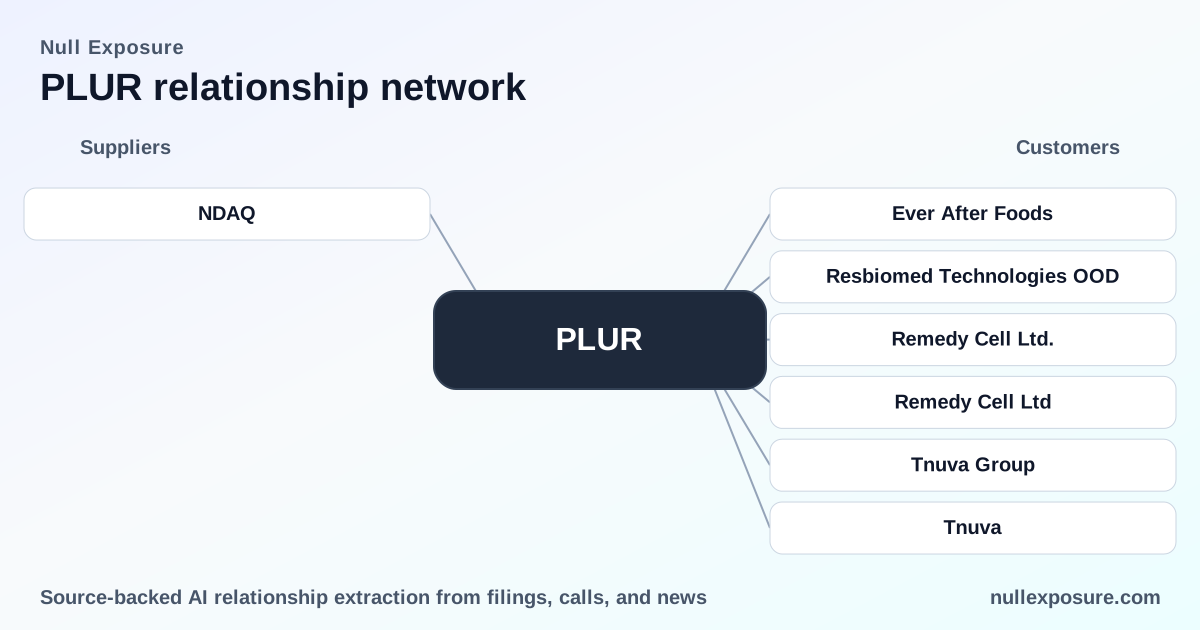
Pluri Inc. (PLUR): supplier profile and what counterparties should price into the relationship
Pluri Inc. develops cell-based regenerative medicine and immunotherapy platforms and monetizes primarily through partnerships, licensing arrangements and the future commercialization of therapeutic candidates; today the company operates as an early-stage biotech with a small revenue base and negative operating cash flow, so most counterparty value will derive from milestone, royalty and collaboration economics rather than steady product receipts. Investors and suppliers should underwrite relationships to reflect modest near-term revenue (TTM revenue ~$1.34M) and negative EBITDA, a concentrated insider ownership base, and the operational reality of a clinical-stage developer. For a concise supplier-risk dashboard and supplier mappings, visit https://nullexposure.com/.
Why the Nasdaq relationship matters to counterparties
A stable exchange listing is more than a market-access detail for a small public biotech—it is a governance and continuity signal that reduces transactional execution risk for suppliers and partners. According to a Globe and Mail press release dated March 10, 2026, Pluri regained Nasdaq compliance and restored listing stability after prior deficiencies, which directly impacts trading liquidity and the company’s ability to raise capital on short notice. (Source: Globe and Mail press release, March 10, 2026 — https://www.theglobeandmail.com/investing/markets/stocks/PLUR-Q/pressreleases/535615/pluri-regains-nasdaq-compliance-restoring-listing-stability/)
- Practical takeaway for suppliers: a compliant Nasdaq listing reduces counterparty settlement friction and makes equity-based compensation or warrants more practical for vendor arrangements.
The relationships you need to know (listed relationship in the results)
Nasdaq — exchange oversight that affects capital access and disclosure
Pluri is listed on The Nasdaq Capital Market and is subject to Nasdaq’s continued listing standards, including minimum market value and financial thresholds that determine its eligibility to trade; the company’s March 2026 disclosure confirms it has restored compliance and listing stability. Source: Globe and Mail press release (March 10, 2026) linking Pluri’s Nasdaq compliance notice — https://www.theglobeandmail.com/investing/markets/stocks/PLUR-Q/pressreleases/535615/pluri-regains-nasdaq-compliance-restoring-listing-stability/.
Why that matters to an operator or vendor: Nasdaq compliance materially reduces the probability of a disruptive delisting event that would complicate equity-based payments, credit lines tied to market value, or investor-backed milestone funding.
Contracting posture and supplier economics — how Pluri pays and procures
Pluri’s public disclosures and financial profile show a company that relies on a mix of small in-house commitments and outsourced professional services, with explicit examples of individual consulting arrangements and third‑party audit spend. The company discloses a consulting agreement for its Chairman, Mr. Aberman, paid approximately $116,000 per year plus VAT, demonstrating a willingness to engage high‑level individual advisors on small fixed-fee contracts as a governance practice. According to corporate disclosures, audit and related fees were modest (audit fees ~$130,511; total fees ~$150,844; other fees ~$14,333; audit-related fees ~$6,000), which signals outsourcing of compliance functions rather than heavy internal audit infrastructure.
- Contracting posture: Small fixed-value consulting contracts and outsourced compliance services indicate lean internal operations and preference for external specialists.
- Spend concentration: Professional services spending sits in a lower spend band (sub-$1M), so suppliers should expect modest transactional volumes but predictable retainer-style engagements.
- Criticality: Audit and governance services are operationally critical but not high-dollar; clinical and manufacturing partnerships (not enumerated here) would represent higher operational criticality when present.
- Maturity: Company-level signals (negative EBITDA, small revenue base, insider ownership >36%) point to an early-stage, capital-dependent corporate profile that will rely on capital raises and partner milestones.
For partners doing diligence, align contract terms to the company’s fiscal profile: prefer short-term retainers, milestone-triggered payments, and clear termination rights tied to financing events or regulatory windows. Learn how these supplier dynamics map across small-cap biotech at https://nullexposure.com/.
Governance, ownership and balance-sheet implications for suppliers
Pluri’s capitalization and operating metrics are material inputs into supplier credit and pricing models: market cap near $34.1M, TTM revenue approximately $1.34M, and EBITDA negative about $21.9M. Insider ownership (roughly 36%) and institutional ownership (~17%) create a governance configuration where founders and insiders have significant control over strategic decisions and financing choices. Suppliers should price for:
- Funding volatility: Early-stage biotech cash consumption and negative operating margins mean suppliers carry refinancing risk if milestone funding slips.
- Equity compensation exposure: Insider concentration increases the probability that equity is used conservatively—expect more cash or milestone mechanics than generous equity-for-service terms.
- Counterparty stability: The restored Nasdaq compliance reduces regulatory tail risk but does not eliminate capital-raise dependency.
Risk map and negotiation posture for operators
- Credit risk: Elevated—small revenue, negative operating cash flow, and clinical-stage spend profile.
- Operational reliance: Limited for general vendors (low spend bands) but potentially high for specialized clinical or manufacturing partners; negotiate performance milestones and firm termination rights.
- Governance leverage: Insiders’ control and modest institutional stake give management latitude in restructurings; include covenants protecting supplier priority where possible.
- Audit and compliance: Outsourced, modest spend—expect timely financial reporting but limited internal controls depth; require external audit deliverables in contract schedules.
Final assessment and action items for investors and suppliers
Pluri is a small, Nasdaq-listed biotech with a governance framework that uses individual consultants and external professional services, modest current spend levels on suppliers, and a capital-dependent operating model. For suppliers, structure agreements around short tenure, milestone payments, and protections against financing shortfalls. For investors, supplier relationships reflect a conservative contracting posture that preserves cash while outsourcing specialized functions.
- If you are evaluating a supplier or partner agreement, include milestone-triggered payment mechanics and termination rights tied to financing events.
- If you are monitoring counterparty risk, track liquidity and Nasdaq compliance notices as near-term signals of operational continuity.
Explore a focused supplier-risk dashboard and supplier relationship intelligence at https://nullexposure.com/ to operationalize these findings into contracts and exposure limits.
For bespoke analysis or to map Pluri’s supplier network into your portfolio stress tests, visit https://nullexposure.com/ and request a tailored report.