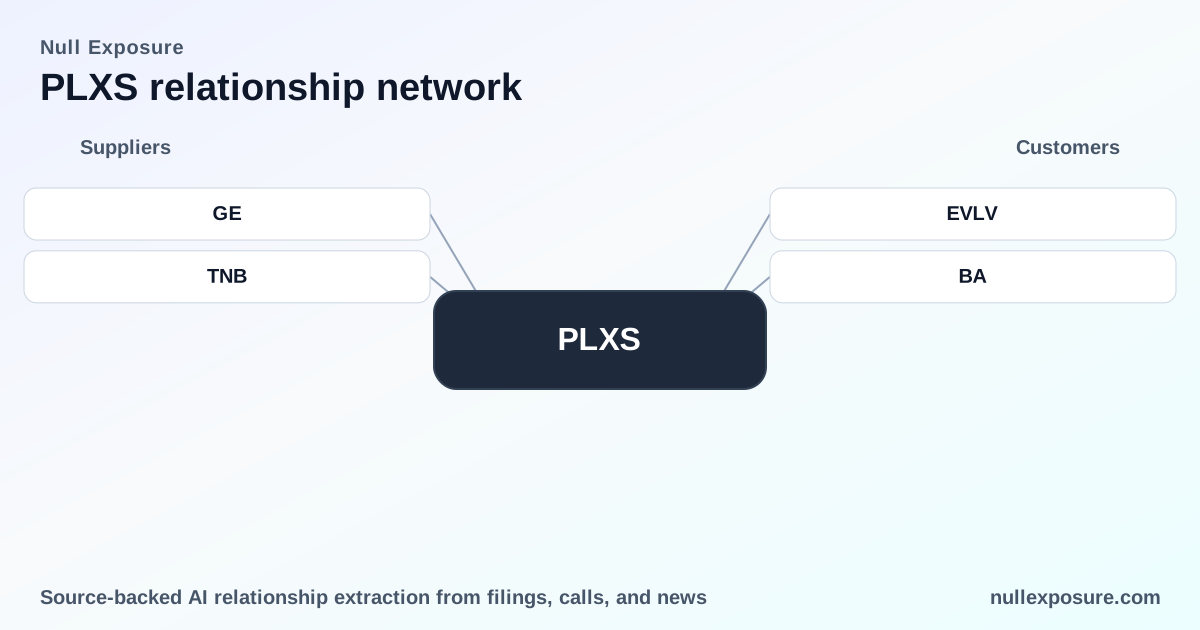
Plexus (PLXS) — supplier relationships and what they signal for investors
Plexus operates as a global electronics manufacturing services (EMS) company that designs, assembles and tests complex electronic products and monetizes through contract manufacturing and value-added engineering services tied to customer programs. The company generates revenue from recurring manufacturing contracts and aftermarket services, with trailing twelve‑month revenue of $4.13 billion and EBITDA of $287.3 million, which frames supplier relationships as an operational leverage point for margins and delivery performance. For a deeper supplier-risk view visit https://nullexposure.com/.
Why suppliers matter to Plexus’ economics right now
Plexus’ business is procurement‑intensive: the company buys printed circuit boards, semiconductors and power management modules and converts those inputs into higher-value assemblies sold under contract. That procurement posture is central to gross margins and delivery reliability; supply disruption or pricing pressure on key components directly reduces the company’s modest 4.28% net margin and 5.07% operating margin. Plexus is a buyer across a broad vendor base rather than a supplier-focused platform, which lowers counterparty revenue concentration risk but raises exposure to commodity pricing and component lead times.
A focused investor should track three operating levers tied to suppliers: component sourcing strategy (authorized distributors versus captive suppliers), supplier qualification and awards (which signal strategic supplier status with large OEMs), and energy / facilities inputs that affect cost competitiveness. Learn more about supplier intelligence at https://nullexposure.com/.
What Plexus’ recent supplier mentions reveal
The dataset includes two supplier-related relationships disclosed around the FY2025/FY2026 reporting window. Both items are operational signals rather than revenue line items, but they deliver distinct strategic reads for investors.
GE Vernova — supplier award that signals engineering credibility
According to Plexus’ Q4 FY2025 earnings call information (released March 2026), GE Vernova presented Plexus with a Supplier Innovation Award at the Gas Power Supplier Conference in Shanghai in September. That recognition functions as a qualitative endorsement from a major power OEM and signals Plexus’ ability to meet demanding engineering, quality and delivery standards in energy-sector programs. (Source: Plexus Q4 FY2025 earnings call, March 2026.)
TNB — green electricity tariff partnership in Malaysia
A news report on InsiderMonkey (March 2026) noted that Plexus partnered with TNB, a Malaysian utility provider, and joined its green electricity tariff program at the end of fiscal 2025. This is a corporate-level sustainability action that reduces Scope 2 emissions exposure and insulates the company from part of future energy‑cost volatility in Malaysian operations. (Source: InsiderMonkey coverage of Plexus Q1 FY2026 earnings call, March 2026.)
How investors should read these two supplier signals together
The GE Vernova award and the TNB green tariff enrollment are complementary and translate into concrete investment implications:
- Commercial validation and program access: The GE award signals access to capital‑intensive, engineering‑heavy end markets (power/gas) that typically carry multi‑year contracts and higher technical requirements, which improves Plexus’ revenue visibility for those programs.
- Operational cost and ESG management: The TNB partnership directly addresses energy input costs and ESG compliance — both relevant for long‑term total cost of ownership in Asian manufacturing hubs.
- Margin and risk trade-offs: Engineering wins can expand higher‑margin work but require up‑front qualification investments; energy partnerships lower input volatility but do not eliminate component price risk for semiconductors and passives.
Key takeaway: combined supplier signals point to a company strengthening both its technical credibility with major OEMs and its operational resilience on energy costs — two levers that support margin improvement if sustained.
Operating-model constraints that drive supplier strategy
Plexus’ disclosed procurement posture and purchasing categories provide company-level constraints investors should treat as structural:
- Contracting posture — buyer: The company consistently acts as a buyer of electronic raw materials and components, purchasing from a wide variety of manufacturers and authorized distributors. That buying role implies Plexus negotiates pricing and availability rather than relying on captive upstream margins.
- Product segment — hardware: Primary purchases include advanced semiconductors, microcontrollers, memory, power supplies, interconnects and passive components. These categories are both commodity‑priced and occasionally capacity‑constrained, which makes lead‑time management and distributor relationships strategically important.
From an investor perspective, these constraints imply Plexus’ supplier strategy focuses on supplier diversification, qualification rigor, and regional energy optimization rather than upstream margin capture.
Risks and opportunities linked to supplier dynamics
Plexus’ supplier posture creates a specific risk / reward profile:
-
Opportunities
- Awards from customers like GE Vernova provide commercial referenceability that accelerates bid-to-win ratios in complex programs.
- Energy program participation (TNB) lowers operating cost volatility and supports ESG disclosure that can expand access to sustainability‑oriented customers and capital.
-
Risks
- Concentrated shortages in advanced semiconductors or spikes in commodity prices compress margins quickly because Plexus is not the upstream price setter.
- Rapid shifts in end-market demand (medical, industrial, power) create working capital and capacity allocation trade-offs with suppliers.
Investors should balance these factors against Plexus’ financials: a forward P/E of 15.36 versus trailing P/E 29.68, revenue growth (quarterly revenue growth YOY 9.6%), and modest profitability metrics that are sensitive to procurement execution.
Practical next steps for investors
- Monitor Plexus’ program announcements with GE Vernova and other OEMs for revenue recognition timing and margin profiles tied to those programs.
- Track energy procurement disclosures and regional cost impacts following the TNB green tariff enrollment to quantify operating savings.
- Review supplier‑related commentary in upcoming earnings calls for signs of component lead times, distributor disputes, or qualification delays that would affect margins.
For ongoing supplier-risk intelligence and to track how these relationships evolve, visit https://nullexposure.com/.
Investors should treat the GE Vernova award as a commercial validation signal and the TNB partnership as an operational resilience move; together they improve Plexus’ strategic positioning, but procurement execution remains the chief driver of near‑term margin outcomes. For continued reporting and tailored supplier analysis go to https://nullexposure.com/.