Polaryx Therapeutics (PLYX): Supplier relationships that define an early‑stage clinical play
Polaryx Therapeutics operates as a clinical‑stage biotech focused on small molecule and gene therapies for lysosomal storage disorders. The company monetizes primarily through intellectual property licensing and value creation tied to clinical milestones and eventual commercialization—today that value is driven by R&D progress and strategic partnerships rather than product sales. For investors and operators, the relevant signal is simple: external partners supply critical IP, financing and investor communications while internal cash flow is effectively zero. For a concise view of relationship risk and concentration, see NullExposure for supplier mapping and diligence support: https://nullexposure.com/.
How Polaryx runs the business and where suppliers matter
Polaryx is pre‑commercial and research driven. The firm’s financial profile shows no recorded revenue and negative earnings, consistent with a company that monetizes through licensing, equity events and future royalties rather than recurring sales. External suppliers therefore fulfill three functions that determine valuation and operational risk: (1) IP sourcing and licensing for core programs, (2) capital markets and advisory services to access public funding, and (3) investor relations and clinical operations support to run trials and manage market narrative.
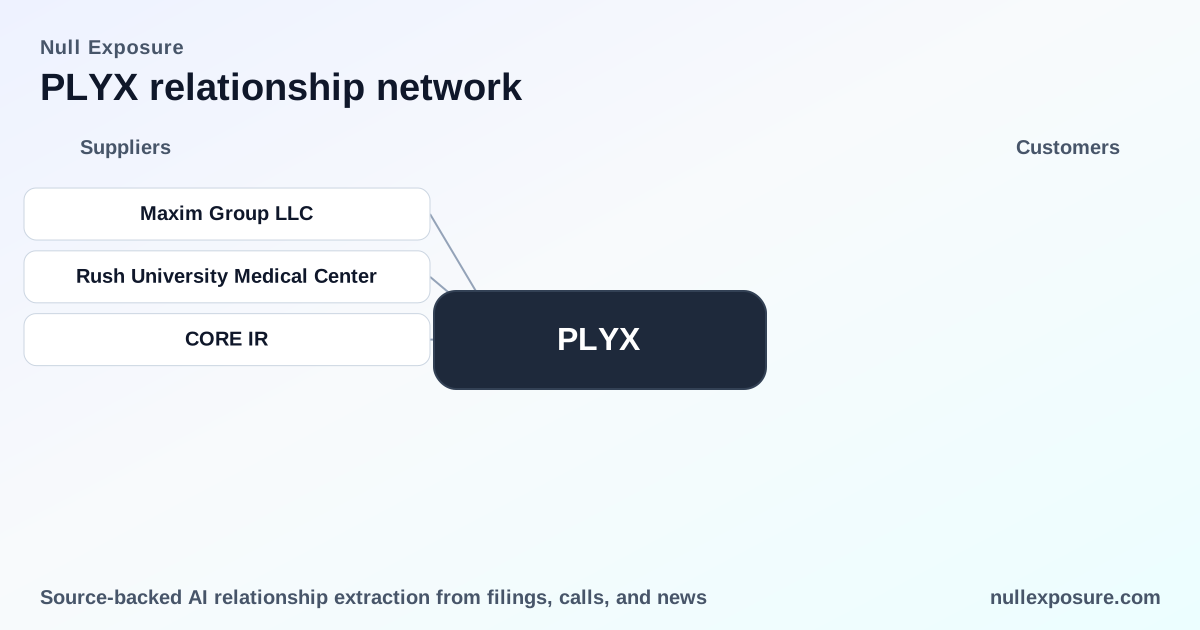
A small roster of named partners in public announcements indicates a concentrated supplier posture: the company relies on a few high‑impact relationships rather than a broad vendor base. Given Polaryx’s status as a clinical‑stage biotech with zero revenue TTM and heavy insider ownership (about 52.8%), these supplier ties are functionally critical to de‑risking development and funding next clinical milestones. Explore supplier intelligence and counterparty profiles at NullExposure: https://nullexposure.com/.
The named relationships and what they mean for investors
Maxim Group LLC — adviser for Nasdaq Capital Market listing
Maxim Group LLC is serving as financial advisor for Polaryx’s listing process, with trading expected to begin February 2, 2026. This is a capital‑markets advisory engagement that directly affects Polaryx’s access to public equity and liquidity. According to a TradingView news summary of the company’s FY2026 filing, Maxim was named for the direct listing/listing advisory role (TradingView, March 2026).
Rush University Medical Center — exclusive license partner
Polaryx holds exclusive licenses with Rush University Medical Center for technologies that underpin its therapeutic programs, a relationship that secures rights to foundational IP and enables clinical development. TradingView’s coverage of Polaryx’s FY2026 filing lists the Rush University license as an explicit partnership, indicating the university is a source of core discovery assets (TradingView, March 2026).
CORE IR — investor relations contact
Investor communications are routed through CORE IR, which is listed as the investor contact in press materials announcing clinical trial CRO selection and program updates. A GlobeNewswire release republished by The Manila Times in February 2026 identified CORE IR as the point of contact for investors, signaling the company’s reliance on an external IR firm for market outreach and disclosure (GlobeNewswire/The Manila Times, Feb 2026).
What these relationships reveal about the operating model
- Contracting posture: Polaryx contracts selectively for strategic functions—IP commercialization (exclusive academic licenses), capital markets advisory, and investor communications—rather than outsourcing broad operations. This reflects an in‑house research focus paired with targeted external support.
- Concentration and criticality: The supplier base is concentrated and each named partner is mission‑critical: IP from Rush underpins programs, Maxim controls access to public capital markets, and CORE IR handles investor messaging. A failure or discontinuity with any one partner would materially impact program progression or financing pathways.
- Maturity: Company metrics (zero revenue, negative EPS, heavy insider ownership, only a small public float) mark Polaryx as early stage. Supplier relationships therefore carry outsized influence on valuation and dilution risk as the company raises funds for Phase 2 work.
- Commercial leverage: With no product revenues, monetization is contingent on clinical success and effective capital market access; supplier performance — especially the execution of licensing obligations and advisory support for listings — directly translates into financial runway and investor confidence.
Investment implications — risks and upside
Polaryx’s supplier footprint creates a clear risk/reward profile for investors:
- Upside: The exclusive Rush licenses provide a defensible scientific starting point; a successful listing or capital raise advised by Maxim could fund pivotal trials and compress downside from cash scarcity.
- Risks: Concentration risk is elevated — loss of a single supplier relationship or delays in CRO execution could meaningfully derail timelines. Funding risk is also central; with zero revenue and negative EPS, execution depends on public markets and continuing advisor support.
- Governance and liquidity: Insider ownership above 50% and negligible institutional ownership indicate control is tightly held, which can accelerate strategic decisions but also raises concerns about minority liquidity and oversight.
Key questions for diligence: contract duration and exclusivity clauses with Rush, fees and scope of Maxim’s advisory engagement, and the terms governing CORE IR’s disclosure responsibilities. For operational diligence, see NullExposure’s supplier dossiers and counterparty risk scoring at https://nullexposure.com/.
Tactical takeaways for operators and procurement teams
- Prioritize verifying licensing milestones and reversion terms in the Rush agreements—these determine program continuity if funding pressures emerge.
- Confirm the scope and deliverables in Maxim’s advisory engagement to understand financing timelines and dilution risk.
- Audit investor communications controls with CORE IR to ensure messaging aligns with clinical timelines and regulatory milestones.
Final assessment and next steps
Polaryx is a classic early‑stage biotech investment: highly dependent on a few strategic supplier relationships that are central to IP control, market access, and investor relations. For investors, the value case rests on the integrity of those relationships and the company’s ability to convert research license assets into clinical progress and public capital.
If you need structured supplier intelligence, counterparty scoring, or a compact procurement checklist for biotech operators, NullExposure provides tailored reports and monitoring tools to track partner performance and contractual risk: https://nullexposure.com/. Monitor the Rush license terms and Maxim’s market execution as primary watchpoints; for a deeper supplier map and impact analysis, visit NullExposure: https://nullexposure.com/.