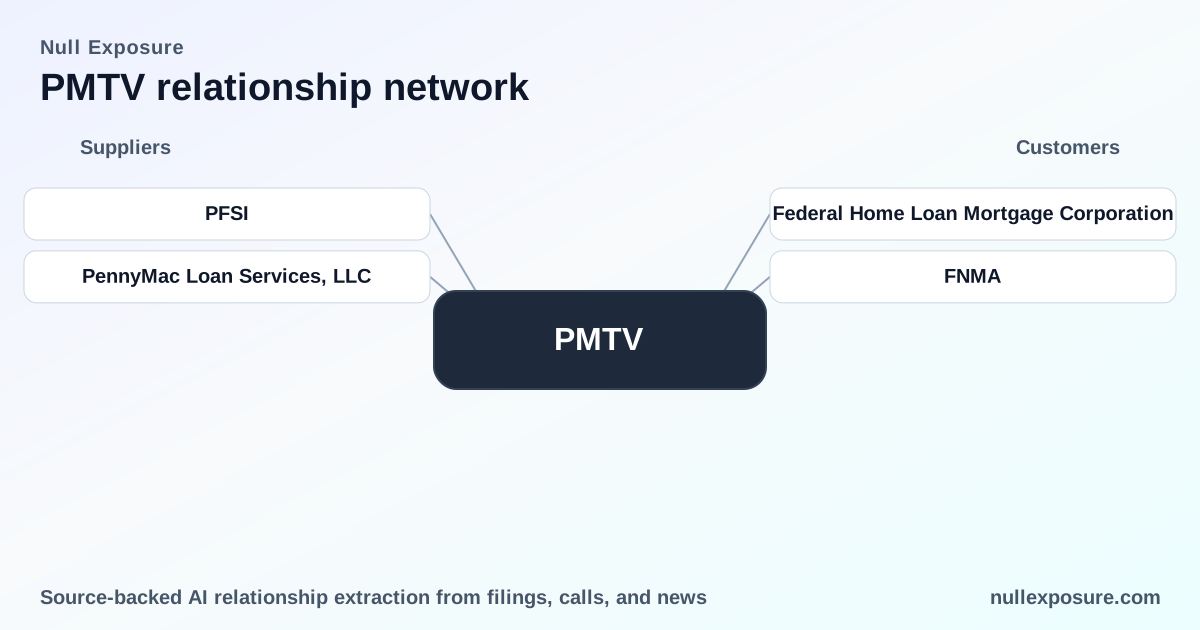
PMTV: Supplier relationships drive the economics and risks behind the 9.00% senior notes due 2030
PennyMac Mortgage Investment Trust’s PMTV issuance finances a portfolio of residential mortgage loans and mortgage‑backed securities while outsourcing day‑to‑day portfolio management and loan servicing to affiliates of PennyMac Financial Services. PMTV monetizes through interest spread on acquired assets and structured funding (including repurchase facilities and securitizations), while paying management and servicing fees to PennyMac subsidiaries — a model that concentrates operational and counterparty risk with its external managers. For investors evaluating PMTV’s credit and operational profile, the supplier relationships with PNMAC Capital Management and PennyMac Loan Services are the primary drivers of performance and operational continuity.
Explore deeper supplier intelligence at https://nullexposure.com/.
Why the supplier relationships are the fulcrum for PMTV’s performance
PMTV is not vertically integrated: investment decisions, portfolio execution and loan servicing are executed by PennyMac affiliates, so counterparty capability and contractual terms are the locus of both upside and risk. The structure gives investors exposure to mortgage spread and financing dynamics while leaving execution and operations dependent on third‑party service providers.
Key operating signals:
- Contracting posture is predominantly long‑term for core services: management and servicing agreements extend through December 31, 2029 with automatic renewal provisions, indicating continuity but also creating renewal‑cycle scrutiny.
- Funding is supplemented by short‑term facilities: the trust uses relatively short‑term financing until longer‑term finance is available, which creates roll‑over risk tied to market liquidity.
- Scale and spend concentration are meaningful: repurchase facilities show substantial average balances and fee lines to PennyMac affiliates are material to operating expense.
These are company‑level characteristics that frame supplier criticality and counterparty exposure.
PNMAC Capital Management, LLC — the manager that steers portfolio strategy
PNMAC Capital Management (PCM) is PMTV’s external manager and is a wholly owned subsidiary of PennyMac Financial Services (PFSI). PCM handles investment selection, portfolio management and receives management and incentive fees under a formal Management Agreement that was renewed and amended effective January 1, 2025. According to a Yahoo Finance release reporting on the pricing of the notes (March 10, 2026) and disclosure in company filings, PMTV is externally managed by PNMAC Capital Management, LLC. (Source: Yahoo Finance, March 10, 2026; company filings, December 2024.)
Why it matters: PCM sets risk appetite, securitization cadence and hedging policy; changes to incentive fees in the December 2024 amendment shift the economics of manager alignment and are therefore central to net returns.
PennyMac Loan Services, LLC — the servicer executing day‑to‑day loan operations
PennyMac Loan Services (PLS) is PMTV’s servicer and provides both prime and special servicing, subservicing for MSRs and loan fulfillment work, and earns loan servicing and recapture fees under a Servicing Agreement that was also extended and modified effective January 1, 2025. The same Yahoo Finance coverage that identified the external management arrangement also called out PMTV’s dependence on the Manager and Servicer and the potential conflicts of interest with these affiliates. (Source: Yahoo Finance, March 10, 2026; company filings, December 2024.)
Why it matters: Servicing quality affects delinquencies, recoveries and MSR economics; PLS’s operational performance and fee structure feed directly into PMTV’s net yield and loss mitigation capability.
Constraints, contract mechanics and what they imply for investors
PMTV’s filings and related reporting crystallize several operational constraints that shape supplier risk:
- Long‑term anchor for core services: The Management Agreement and Servicing Agreement both legally expire December 31, 2029 and include automatic 18‑month renewals, creating a long window of contractual stability but a finite renewal horizon for counterparty selection (company filing excerpts, December 2024). This is evidence of a deliberate, multi‑year outsourcing posture that concentrates dependency on PFSI affiliates.
- Short‑term financing overlay: The trust commonly uses short‑term facilities to bridge financing until longer‑term capital is available, increasing sensitivity to market funding conditions and repo market availability (company filing language).
- Service provider criticality and concentration: PMTV is externally managed and serviced by PFSI subsidiaries; the relationship role is explicitly service_provider in multiple disclosures and is the operational backbone of the trust’s activities.
- Scale of repurchase funding and fee spend: Filings report sizable average repurchase balances and material management/servicing fee lines, indicating meaningful ongoing cash flows between PMTV and its PennyMac affiliates (reported balance and fee line items in filings).
- Geographic and counterparty focus: The business is focused on the U.S. mortgage market and interacts with large financial counterparties for derivatives and funding, meaning counterparty credit across a small set of large counterparties is a core risk (filing excerpts).
Together these constraints show a mature, externally managed operating model with concentrated counterparty exposure and reliance on short‑term market funding — factors investors should weigh against the coupon and structural protections of the notes.
Explore supplier risk profiles and filings at https://nullexposure.com/.
Investment implications: what to watch and how to size the risk
- Operational dependency is the main single‑point risk. The manager and servicer are essential to portfolio construction and loss mitigation; any deterioration in PennyMac affiliates’ capacity or conflicts of interest could have outsized effects on PMTV’s net returns.
- Funding fragility versus coupon: PMTV benefits from spread capture but also relies on repurchase and short‑term facilities; a stressed funding market would compress performance even with a high nominal coupon.
- Contract renewals are both stabilizing and decision points. The December 2024 renewals extended continuity and adjusted incentive economics, but future renewals will be moments where fees, governance and counterparty alignment are re‑tested.
- Monitor fee flows and servicing performance metrics. Servicing fees and management fees are material and have direct bearing on distributable cash flow and note coverage.
Actionable monitoring checklist
- Watch upcoming quarterly filings for servicing performance statistics (delinquencies, cure rates) and management fee disclosures.
- Track repurchase facility balances and roll schedules for signs of funding stress.
- Follow PFSI’s consolidated credit profile and regulatory developments that could affect its subsidiaries’ ability to serve PMTV.
For a systematic review of these supplier linkages and ongoing alerts, visit https://nullexposure.com/ — we publish relationship‑level summaries and filing highlights that support credit diligence.
Bottom line
PMTV’s economics are attractive on coupon, but the investment thesis is inseparable from the health and incentives of its PennyMac suppliers. PNMAC Capital Management steers the portfolio while PennyMac Loan Services executes operations; both relationships are contractually entrenched through 2029 and materially affect performance. Investors should price the credit and liquidity risks associated with short‑term financing, concentrated counterparty exposure and fee leakage into affiliate service providers when underwriting PMTV paper.