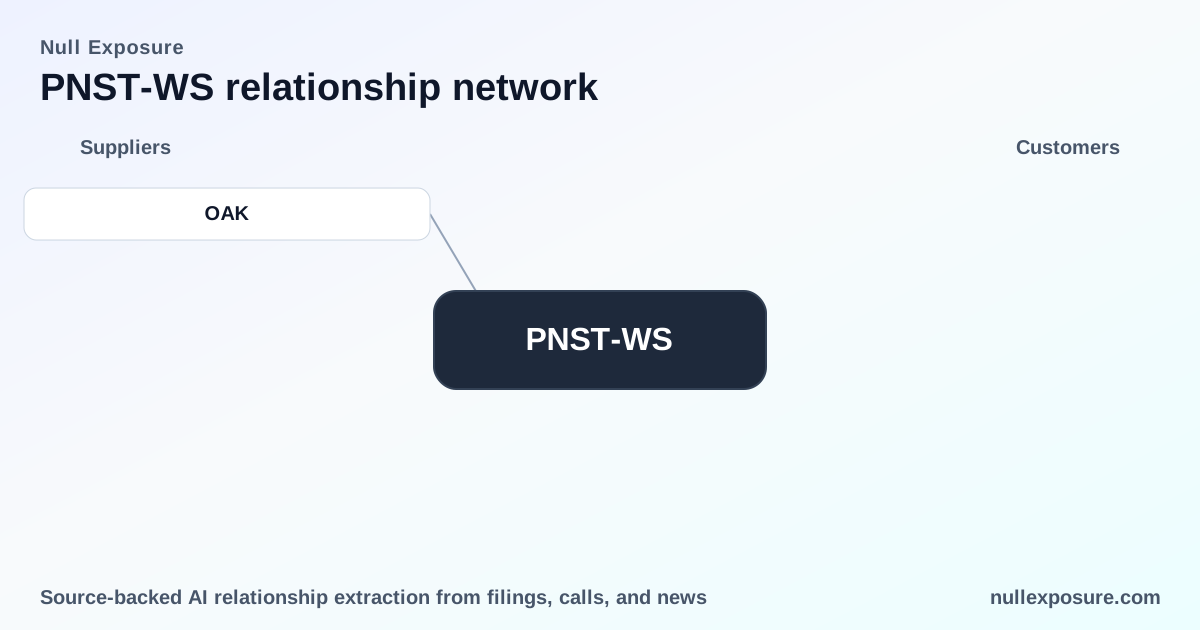
PNST-WS supplier relationships: what the Oaktree loan reveals about capital and counterparty risk
PNST-WS surfaces supplier-side financing relationships for the underlying Pinstripes business and shows how the company funds operations and growth: the firm is monetized through its operating venues and relies on institutional credit as a structural source of capital, which directly affects liquidity, governance and counterparty risk. For investors and operators assessing supplier relationships, the single visible supplier financing relationship here is material to near-term refinancing and covenant dynamics. For a broader view of counterparties and supplier exposures, visit https://nullexposure.com/.
Quick take: the headline relationship and why it matters
According to a March 2026 report on SPACInsider, Pinstripes secured a $50 million senior secured loan due 2028 from funds managed by Oaktree. That financing is not a trade payable; it is a secured credit facility that sits high in the capital structure and therefore changes the balance of power between management, unsecured creditors and equity holders. See the SPACInsider coverage here: https://www.spacinsider.com/news/de-spac-votes-redemptions/banyan-byn-completes-pinstripes-deal.
Visit https://nullexposure.com/ for a consolidated view of supplier counterparties and related financing signals.
One-by-one: the relationships you should know
Oaktree — senior secured lender (funds managed by Oaktree)
- According to SPACInsider reporting in March 2026, Pinstripes secured a $50 million senior secured loan due 2028 from funds managed by Oaktree. The loan’s senior secured status gives lenders priority against collateral and typically includes affirmative and negative covenants that constrain operating discretion.
- Oaktree’s role as a secured creditor positions it as a governing counterparty in any stress scenario and elevates the importance of cash flow coverage and covenant compliance for near-term credit stability. Source: SPACInsider, March 10, 2026 — https://www.spacinsider.com/news/de-spac-votes-redemptions/banyan-byn-completes-pinstripes-deal.
What the single visible financing relationship implies for operating posture
- Contracting posture: The presence of a senior secured loan signals that the company accepted restrictive creditor terms to secure capital. That contracting posture implies lenders have enforceable remedies and monitoring rights that constrain operational flexibility.
- Concentration: With the only disclosed supplier-side financing relationship tied to a $50 million facility from a single institutional manager, there is concentration risk in the capital base: a sizeable portion of near-term funded debt exposure is associated with one creditor group.
- Criticality: Because the financing is secured and senior, it is critical to liquidity and solvency framing; repossession or enforcement would materially affect ongoing operations.
- Maturity and timing: The 2028 maturity creates a finite refinancing horizon. For investors this imposes a clear timetable for cash-flow generation or access to replacement liquidity.
Note: No supplier-constraint entries are listed in the supplier-scope constraints, which itself is a company-level signal indicating limited public disclosure of supplier contract mechanics under this scope.
Operational and investment implications investors should digest now
- Refinancing risk is front-loaded. With a 2028 maturity, the company will face refinancing decisions within a narrow window; investors must value the likelihood of covenant waivers, extension terms, or replacement capital on realistic market terms.
- Priority of claims matters. Senior secured debt will be repaid ahead of unsecured creditors and equity in a stressed outcome, modifying recovery expectations for different stakeholder classes.
- Counterparty governance is elevated. Large institutional credit providers like Oaktree often insist on reporting, covenants and reserved remedies — operational decisions and capital allocation will reflect that governance overlay.
- Concentration creates negotiating leverage for the lender. A single disclosed major lender increases the probability that negotiated amendments or workouts will be lender-led, not management-driven.
What to ask management and what to read next
- Request recent covenant schedules, the collateral description and any waiver or amendment history; these items directly determine near-term default risk.
- Obtain a cash-flow bridge to maturity, including committed but undrawn facilities, to model refinancing needs.
- Audit supplier payment cycles and working capital relationships to determine whether trade suppliers are materially affected by the lender’s enforcement rights.
For an investor-ready breakdown of counterparty exposures and to track supplier relationships as they evolve, visit https://nullexposure.com/.
Bottom line and recommended actions
The Oaktree $50M senior secured loan is the primary supplier-financing signal in the PNST-WS supplier profile and it materially shapes capital structure, governance and refinancing risk. Investors should treat this secured facility as a leading indicator of operating flexibility and a determinant of near-term liquidity choices. Operators should prioritize covenant compliance, transparent lender communication and contingency refinancing plans.
To stay current on changes to supplier financing and counterparties for this issuer, check updates at https://nullexposure.com/.