Pinnacle West (PNW) — supplier relationships and what they mean for investors
Pinnacle West Capital operates as a regulated utility holding company that monetizes through regulated retail electricity sales (via Arizona Public Service) and generation asset returns (including Bright Canyon Energy). Revenue is driven by authorized rate-base returns, long-term power purchase agreements and merchant energy sales; capital structure and credit facilities underpin near-term liquidity and project funding. Investors should evaluate supplier linkages for fuel and capacity security, contracting posture, and how third-party infrastructure projects alter operating flexibility. For a deeper supplier-risk view, visit https://nullexposure.com/.
The supplier map: one relationship that matters today
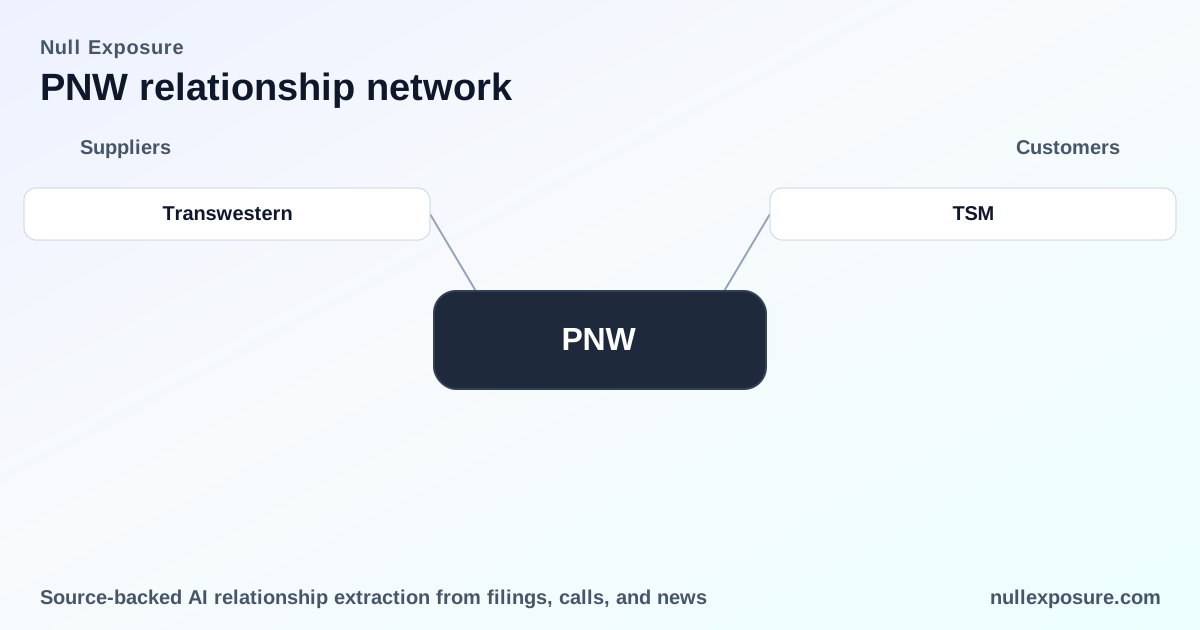
PNW’s public disclosures list a limited set of supplier touchpoints in the sampled results. The most actionable supplier mention in the latest quarter involved a regional pipeline project.
- Transwestern — Pinnacle West is actively monitoring the Southwest Desert Pipeline expansion, which was upsized from 42 to 48 inches to accommodate stronger regional demand. This expansion is a capacity event on a regional gas artery that the company tracks for fuel and delivery implications. According to the 2025 Q4 earnings call transcript (comment captured March 7, 2026), management cited the upsizing as a direct response to demand in the region.
Why a single pipeline mention matters for a utility investor
Pinnacle West’s generation and dispatch economics depend on reliable fuel and transmission inputs. A material increase in pipeline capacity downstream or upstream of PNW’s served territory changes marginal fuel basis, congestion risk, and dispatchable capacity economics. The Transwestern expansion upsizing from 42 to 48 inches is thus relevant to near-term fuel availability and to medium-term planning for gas-fired peakers or combined-cycle operations in the region.
Contracting posture, concentration and maturity — company-level signals
Company-level documentation and excerpts show that Pinnacle West runs a mixed contracting model:
- The firm maintains long-term instruments as core plumbing: several excerpts reference a Five-Year Credit Agreement dated April 10, 2023 and long-term power purchase agreements for wind farms, indicating reliance on multi-year financing and long-dated supply contracts that stabilize cash flows and reduce short-run market exposure.
- Management also discloses a short-term component: the company states it holds a mix of long-term and short-term purchased power agreements for marginal capacity needs, which gives operational flexibility to respond to price signals and load variability.
These signals imply a balanced contracting posture: long-term contracts and credit facilities provide capital and revenue stability, while short-term purchases preserve operational agility. The April 10, 2023 five-year credit agreements provide explicit evidence of multi-year financing maturity that underpins capital spending and working capital needs.
How to read criticality and concentration in PNW’s supplier base
PNW’s public supplier mentions in the sampled period are not extensive, which is typical for integrated utilities where key dependencies (fuel pipelines, transmission owners, fuel suppliers) are concentrated and often bilateral. Concentration is a structural feature: a small number of physical infrastructure providers (like regional pipeline operators) can have outsized operational impact. At the same time, contract maturity and regulated rate recovery mechanisms reduce revenue volatility, transferring a portion of operational risk away from equity.
The Transwestern pipeline: operational impact and risk profile
The Transwestern relationship is transactional and infrastructure-focused: management is monitoring an external pipeline expansion rather than reporting a new PPA or supplier contract. The practical implications for Pinnacle West include:
- Increased regional gas throughput capacity that supports dispatchable generation and reduces short-term fuel scarcity risk.
- Potential changes in locational basis and fuel price dynamics, which influence dispatch economics for gas-fired units and short-term purchased power decisions.
Reference: management discussion in the 2025 Q4 earnings call (March 2026) noted the upsizing of Transwestern’s Southwest Desert Pipeline due to strong demand.
What investors and operators should do next
- Evaluate exposure to gas-basis and congestion risk in rate-case testimony and plant-level dispatch models; confirm whether projected pipeline capacity changes are reflected in near-term fuel-cost assumptions. For a supplier-focused screening tool, see https://nullexposure.com/.
- Scrutinize contract schedules: long-term PPAs and multi-year credit agreements provide a structural hedge, but short-term purchased power exposures can amplify earnings volatility during fuel dislocations—investors should model both.
- Monitor project timelines and third-party filings: pipeline completion dates and operational capacity ramps are the proximate drivers of any material change in generation economics.
For an investor-facing supplier risk dashboard and ongoing monitoring, check https://nullexposure.com/ for coverage and alerts.
Final takeaways
- PNW operates as a regulated utility with diversified monetization through rate-base returns and generation asset operations; its supplier posture blends long-term contracts and short-term purchases.
- The Transwestern pipeline expansion is the primary supplier-related event called out in the latest earnings commentary and changes regional gas capacity dynamics that affect PNW’s generation economics.
- Company-level contracts (notably a five-year credit agreement dated April 10, 2023 and long-term PPAs) anchor financing and revenue stability, while shorter-term purchased power agreements provide operational flexibility.
Investors should prioritize fuel-basis exposure, PPA mix, and credit facility terms when assessing Pinnacle West’s supplier risk and earnings sensitivity. For tool-driven supplier intelligence and to subscribe to updates, visit https://nullexposure.com/.