PONX: Supplier Profile and Strategic Relationship Analysis
PONX operates as an investment vehicle listed under the ticker PONX and monetizes through fund-management economics: management and administration fees, investor servicing, and ancillary revenue such as securities lending or sub-advisory arrangements. For investors and operators evaluating supplier and provider relationships, the primary commercial dynamic is the manager–fund nexus: the named manager controls distribution, fee-setting and operational resilience, which directly drives revenue and counterparty concentration risk. Learn more about supplier relationship risk tools at https://nullexposure.com/.
How PONX is structured and how it earns cash
PONX’s commercial model follows the standard fund/ETF playbook: a manager collects predictable recurring fees from assets under management and delegates custody, trading, and back-office execution to third-party service providers. This structure creates a revenue profile driven by AUM trends rather than product-level unit economics, and it concentrates operational risk in the manager and key service vendors (custodian, transfer agent, authorized participants in the ETF context). For counterparties and investors, fee schedules and contractual clauses in the prospectus determine long-run economics; active governance and transparent reporting are the lines of defense against fee compression and liquidity stress.
What the public record shows about partners
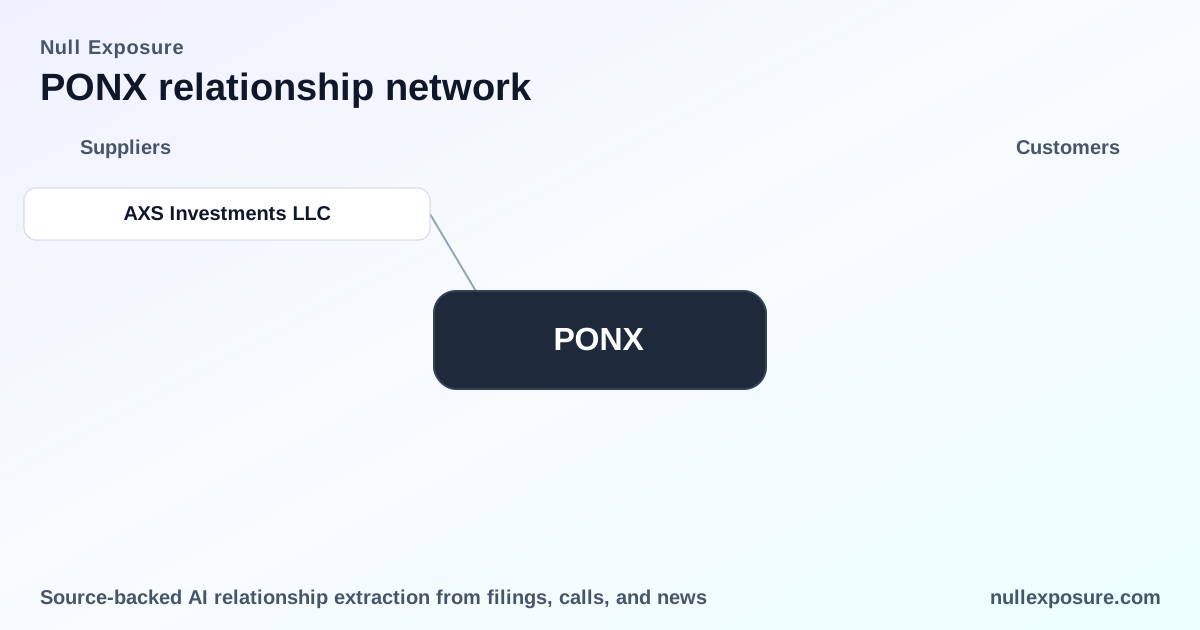
The public relationship data on PONX is compact but materially useful: AXS Investments LLC is identified as the fund manager. A news listing on Investing.com from March 10, 2026 states, “The fund is managed by AXS Investments LLC.” That single relationship is the operating center of gravity for the product and governs distribution strategy and investor economics.
Relationship-by-relationship detail (complete list)
- AXS Investments LLC — The fund is managed by AXS Investments LLC, which means AXS is the primary commercial and operational counterparty for PONX; management responsibilities include portfolio construction, fee-setting, and vendor oversight. Source: Investing.com ETF page for PONX, March 10, 2026.
Operating-model constraints and company-level signals
There are no explicit contractual constraint excerpts provided for PONX in the available record. At the company level, the observable signals are:
- Contracting posture: The fund structure implies a prospectus-driven contracting posture where fee schedules and service scopes are standardized and disclosed rather than individually negotiated. That creates predictability for counterparties but limits bargaining leverage for smaller vendors.
- Concentration: The record shows single-manager concentration with AXS Investments LLC explicitly named; concentration risk is therefore elevated because AXS controls core decisions affecting distribution and operations.
- Criticality: The manager relationship is mission-critical — if AXS changes strategy, exits, or is sanctioned, fund continuity and investor liquidity could be jeopardized absent robust contingency or successor-manager provisions.
- Maturity: A market listing and coverage on public platforms indicate a market-ready product; maturity is sufficient to attract institutional attention but the lack of multiple disclosed service relationships suggests concentrated vendor reliance.
These are company-level signals derived from the supplier profile and public listing; they are not derived from contractual excerpts naming other vendors.
Risk implications for investors and vendors
For investors evaluating exposure or for vendors considering a commercial relationship, the following risks and action points deserve emphasis:
- Concentration risk: With AXS as the named manager, underperformance or operational failure at AXS translates directly into sponsor risk for PONX. Underwrite manager stability and succession arrangements.
- Operational dependency: Key functions (trading, custody, compliance) will be outsourced or controlled via the manager’s contracts; request copies of service-level agreements and the prospectus to confirm counterparty limits and liability allocations.
- Fee and liquidity sensitivity: Revenue flows are AUM-driven; monitor flows, redemption mechanics, and authorized participant pathways to stress-test liquidity under outflows.
- Governance quality: Confirm board independence, audit arrangements, and any side letters that affect investor rights.
If you want a rapid view of supplier concentration and counterparty exposure, visit https://nullexposure.com/ for tools and supplier mapping.
What investors and operators should do next
- Request the fund prospectus and the manager’s Form ADV or similar regulatory filings to validate fee structure and manager commitments.
- Assess AXS Investments LLC’s track record across comparable strategies to quantify execution risk and client-service continuity.
- Negotiate clear service-level and contingency terms if entering a vendor relationship where the manager’s role creates single points of failure.
Bold takeaway: PONX’s commercial fate is tightly coupled to AXS Investments LLC; investors should treat the manager relationship as the primary credit and operational exposure when assessing the fund. For a structured supplier-risk assessment, see https://nullexposure.com/.
Closing summary
PONX presents a concentrated, manager-centric supplier profile where AXS Investments LLC is the pivotal counterparty according to public reporting on March 10, 2026. That configuration simplifies diligence — focus on the manager’s financial health, governance, and vendor ecosystem — but also concentrates risk. Investors and vendors should demand prospectus-level transparency and clear contingency plans before increasing exposure.