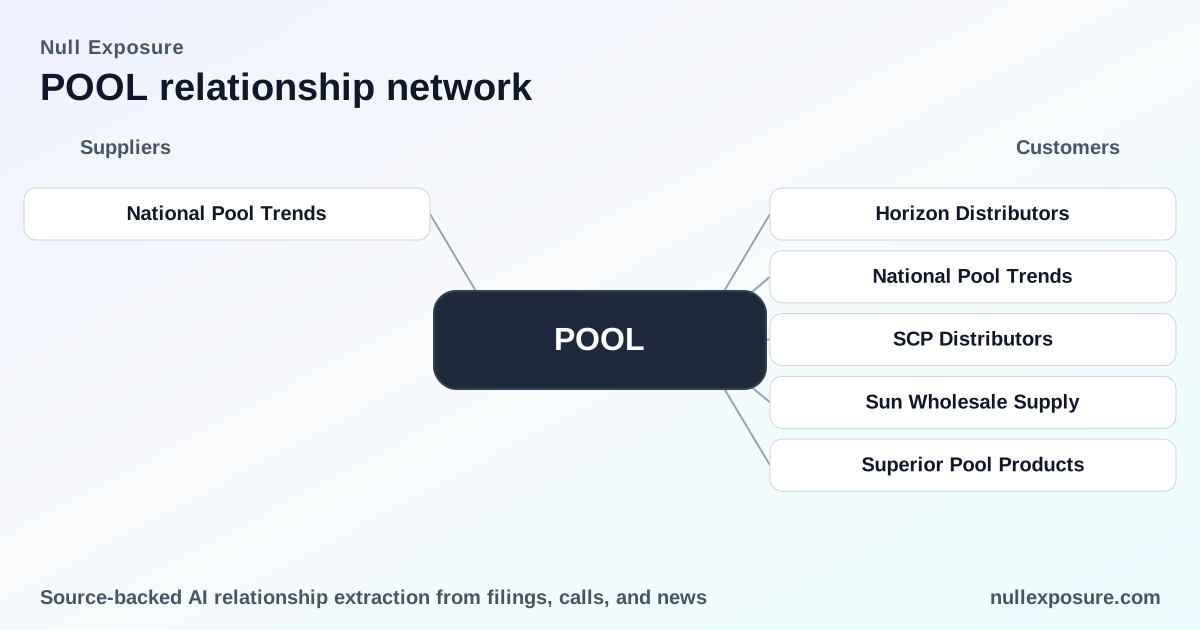
Pool Corporation (POOL): Supplier Relationships and Operational Constraints — a supplier-focused investment brief
Pool Corporation distributes swimming pool supplies, equipment and outdoor products through a nationalized wholesale network, monetizing by buying from manufacturers and selling to dealers and retailers at scale while capturing vendor rebates and negotiated pricing to protect margins. The company earns margin through distribution scale, proprietary and exclusive brands, and vendor program economics that reduce cost of goods sold, making supplier relationships central to both revenue stability and cost control. For an investor or operator assessing counterparty risk and negotiating posture, this supplier view is actionable. See the full supplier mapping at Null Exposure.
The business model in plain terms: distribution with vendor economics baked in
Pool Corporation operates as a high-service industrial distributor: it purchases finished goods from many manufacturers, warehouses and ships them through a broad footprint, and sells to independent pool dealers and specialty retailers. Revenue is derived from product sales at scale, while profitability is supported by negotiated pricing, exclusive brands and vendor programs that effectively lower inventory costs. The company’s trailing twelve-month revenue of roughly $5.29 billion and EBITDA of about $631 million underscore a sizable wholesale business supported by a gross profit pool of over $1.57 billion. Valuation metrics (trailing P/E ~19.2; EV/EBITDA ~14.3) imply investors price stable cash flow and durable vendor relationships into POOL’s stock.
The public supplier evidence — every relationship surfaced
Below I cover the single supplier relationship surfaced in the available results and what it signals to operators and investors.
National Pool Trends
National Pool Trends is identified as an exclusive brand within Pool Corporation’s assortment, used in building-materials categories; the brand helps the company insulate margins against commodity price swings (notably chemicals) by leveraging proprietary SKUs and negotiated sourcing. According to a tikr.com blog post in March 2026, National Pool Trends contributes to Pool’s ability to reduce exposure to commodity-driven input cost volatility. (tikr.com, March 10, 2026)
What the revealed constraints say about POOL’s operating posture
The extracted constraints paint a coherent company-level picture of how Pool manages supplier relationships and commercial risk. These are not tied to any single supplier unless explicitly named; they are firm-wide signals.
- Framework contracting dominates: Vendor arrangements include volume- and price-based programs that generate specified vendor consideration when Pool hits purchase-volume or cost targets. This indicates Pool negotiates standing frameworks rather than one-off spot buys, securing predictable rebates and price concessions.
- Buyer and value-added distributor role: Pool’s primary function is to buy finished goods from manufacturers and then distribute them to customers, suggesting high purchasing volume and centrality in manufacturer go-to-market plans.
- Manufacturer breadth and active supply base: The company purchases from a large number of manufacturers and actively holds inventory, implying mature, ongoing supplier engagements and operational dependency on timely replenishment.
- Vendor program accounting: Vendor programs are recognized as reductions to inventory cost and then to cost of sales, which means commercial incentives from suppliers flow directly to gross margin mechanics rather than into other operating lines.
Together, these constraints imply a contracting posture where Pool leverages scale for negotiated frameworks, operates with high supplier concentration in the sense of many manufacturer relationships but concentrated commercial leverage, and runs mature, binding vendor programs that are financially material and auditable.
See more on supplier footprints and analytical tooling at Null Exposure.
Investment and operational implications — where risks and edges live
The supplier profile generates clear investment signals and negotiation levers for operators:
- Margin resilience from vendor programs: Because supplier rebates and pricing concessions reduce inventory and cost of goods sold, Pool’s gross margin is less exposed to short-term commodity shocks than a pure pass-through distributor. This is a tangible operational moat.
- Dependence on manufacturer cooperation: Pool’s model requires ongoing manufacturer willingness to offer frameworks and rebates; loss of key frameworks or a shift in manufacturer pricing discipline would pressure margins.
- Negotiation power stems from scale: Pool’s national scale and large purchase volumes create leverage that supports exclusive-brand strategies like National Pool Trends, which in turn reduces direct commodity exposure.
- Maturity and auditability reduce contingency risk: Recognition of vendor programs in inventory accounting suggests well-established processes; investors should view vendor programs as recurring, measurable contributors to profitability rather than ephemeral items.
Operationally, procurement teams should prioritize preserving framework agreements and expanding exclusive-brand penetration to protect margins. From an investor point of view, monitor vendor-program disclosures in filings because these programs directly affect gross profit recognition.
Near-term watchlist: what to track in filings and market updates
- The scale and terms of vendor rebate programs and any change in recognition policy — these move gross margin.
- Shifts in manufacturer concentration among the top suppliers; greater concentration raises counterparty risk.
- Volume trends into exclusive brands such as National Pool Trends; growth here is margin-accretive.
- Any public commentary from key manufacturers about pricing, capacity, or contract renegotiations.
Key risk: concentrated dependency on manufacturer willingness to sustain rebate frameworks. Key upside: greater penetration of proprietary SKUs and continued high service levels that entrench dealer relationships.
Bottom line and next steps for investors and operators
Pool Corporation runs a classic scale-distributor business where supplier frameworks and vendor programs are principal profit levers. The emergence of exclusive brands like National Pool Trends confirms a strategic push to internalize margin and reduce commodity sensitivity — a win for both operational stability and valuation support. Investors should focus on vendor-program disclosures, exclusive-brand growth, and any signs of manufacturer contract re-pricing.
For deeper supplier mapping and to benchmark these supplier dynamics against peers, review the platform tools and supplier analytics at Null Exposure.
If you’re assessing POOL for a buy/hold/sell decision or negotiating supplier terms as an operator, prioritize diligence on vendor-program economics and exclusive-brand SKU performance; those are the primary levers that determine long-run margin sustainability.