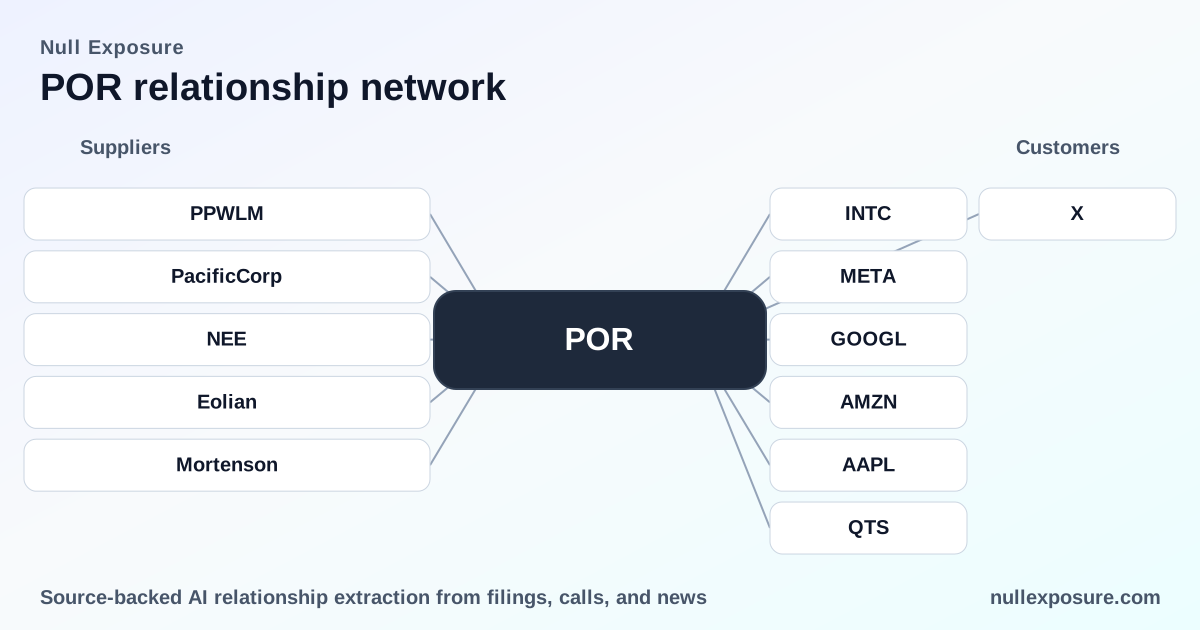
Portland General Electric (POR): supplier relationships and what investors should price in
Portland General Electric is a vertically integrated, regulated electric utility that earns revenue by owning generation, operating transmission and distribution, and retailing electricity to Oregon customers while managing commodity exposure through a mix of short‑ and long‑term contracts and strategic asset transactions. Recent activity — including a large Washington‑state asset acquisition and follow‑on equity — changes both the company’s geographic footprint and its counterparty mix, and therefore the supplier risk profile investors should evaluate. For more supplier intelligence and relationship mapping, visit https://nullexposure.com/.
How PGE runs the business and where it makes money
Portland General Electric monetizes through regulated rate base returns on owned assets, merchant or contracted generation sales, and retail electricity margins. The core revenue driver is regulated distribution and transmission, supported by an owned and contracted generation fleet; purchased power and fuel represent a material operating expense line that exceeded $1.4 billion in recent periods, demonstrating scale in commodity purchasing and supplier exposure.
Key operating characteristics shape procurement and capital allocation: PGE runs a combination of short‑term market purchases (months to a year) to manage load volatility and long‑term power purchase and capacity contracts extending into the 2050s that secure future supply. These dynamics create a hybrid contracting posture — active day‑to‑day trading plus long‑dated counterparties — and make supplier relationships both operationally critical and strategically important to rate case outcomes.
Material supplier and partner relationships — what to watch
Below are every relationship noted in public reporting and the press coverage reviewed, with a concise plain‑English summary and source reference for each item.
-
PacifiCorp
Portland General agreed to acquire select Washington state generation, transmission and electric utility operations from PacifiCorp for roughly $1.9 billion, broadening PGE’s service footprint and adding generation and thousands of miles of lines to its asset base. Source: press coverage and advisory notices in March 2026 (Latham & Watkins, IREI, TradingView). -
PacifiCorp (alternate press mentions)
Multiple outlets reported the same transaction and linked it to demand themes such as data‑center and generative‑AI load growth; the acquisition was also discussed in the context of PGE’s recent equity raise to fund the purchase. Source: market commentary and valuation pieces from March 2026 (Simply Wall St, NBC Right Now). -
PacificCorp (spelled differently in one article)
Regional news outlets described a nearly $2 billion agreement to transfer Washington operations to PGE; coverage indicates the transaction was widely reported under both spellings in March 2026. Source: NBC‑affiliated local reporting (March 2026). -
NextEra Energy Resources
PGE operates battery storage capacity under a 20‑year storage capacity agreement with NextEra Energy Resources, which functions as the long‑term operator of developer‑built facilities and contributes contracted capacity rather than merchant exposure. Source: ESS‑News report on completed battery storage in Oregon (August 2025). -
Eolian
Eolian was the investor‑developer that delivered a large battery storage project to PGE under a fixed‑cost Build‑Transfer Agreement (BTA), meaning PGE took ownership at completion under pre‑agreed transfer terms. Source: ESS‑News coverage of PGE’s storage projects (August 2025). -
Mortenson
Mortenson served as the engineering, procurement and construction contractor on the storage project that reached commercial operation in late 2024, indicating PGE relies on third‑party EPC contractors for capital project execution. Source: ESS‑News report (August 2025).
How contractual constraints shape PGE’s supplier posture
The company’s disclosures and press excerpts deliver a clear set of operating constraints that inform procurement strategy and supplier risk:
- Contracting posture: PGE maintains both short‑term contracts (monthly to one‑year delivery periods for firm energy) and long‑term PPAs and capacity contracts that run into the 2040s and 2050s. This mix forces an active commodities desk while preserving long‑dated certainty for a portion of supply.
- Counterparty mix and criticality: Long‑term agreements include public utility districts and other institutional counterparties, signaling high criticality and regulatory sensitivity for those relationships.
- Geographic focus: Fuel and power purchases span the U.S. and Canada for natural gas procurement, but the company’s regulated retail footprint remains concentrated in Oregon with incremental expansion into Washington via the PacifiCorp deal.
- Spend scale and maturity: Purchased power and fuel represent a >$100 million annual spend band, and many commitments are recorded as active and material to cost of goods sold.
- Buyer/seller roles: PGE functions as both buyer (wholesale power and fuel) and seller (generation output and contracted capacity), requiring flexible counterparty terms and credit arrangements.
These characteristics create a procurement environment where contract tenor, counterparty credit, and regulatory treatment directly impact earnings volatility and capital recovery.
For a full supplier relationship map and enterprise exposure analysis, visit https://nullexposure.com/ to see how this transaction set reconfigures PGE’s counterparties.
Investment implications and operating risks investors should price
The PacifiCorp acquisition is transformational in scale relative to PGE’s historical footprint and will be financed in part by recent equity issuance (about $480 million of follow‑on equity noted in market reports). Positive drivers include rate‑base growth and diversification of generation resources; key risks are integration execution, regulatory approval and the potential lag between capital deployed and rate recovery. The company’s dual dependence on short‑term market purchases and long‑dated PPAs creates cash‑flow smoothing but also leaves residual merchant exposure during extremes in natural gas markets.
The company’s move into battery storage through developer and operator partners (Eolian, Mortenson, NextEra Energy Resources) is strategically positive for managing peak capacity and integrating renewables, but it also increases reliance on EPC and O&M counterparties whose delivery and performance matter to commissioning schedules and rate case testimony.
Bold risk factors for modeling:
- Regulatory timing and treatment of the Washington asset purchase in future rate cases.
- Integration costs and synergy realization for acquired assets.
- Commodity price shocks affecting short‑term purchase costs despite long‑term hedges.
- Counterparty performance on storage and EPC contracts, which affect project commissioning and revenue recognition.
Bottom line and next steps
Portland General is executing a deliberate expansion strategy that transforms its supplier footprint and raises the stakes on procurement, capital allocation and regulatory engagement. Investors should re‑price PGE for larger, long‑dated counterparties, higher absolute purchased‑power spend, and integration risk associated with the Washington acquisition.
If you evaluate supplier concentration, contract tenors, or counterparty credit for regulated utilities, start with the portal at https://nullexposure.com/ for structured exposure views and relationship signals. For a targeted review of how these counterparties affect cash flow and rate‑case sensitivity, check our homepage and subscribe for alerts: https://nullexposure.com/.
This analysis synthesizes public reporting and company disclosures; use it as a directional input when modeling PGE’s regulatory outcomes and supplier risk premium.