Purple Biotech (PPBT) — supplier relationships that matter for a cash‑burning clinical-stage biotech
Purple Biotech develops and intends to commercialize pharmaceutical drugs out of Rehovot, Israel; the company currently generates no product revenue and monetizes through clinical progress, licensing, and capital markets activity while depending on third‑party service providers for depositary, communications, and other operational needs.
If you evaluate supplier exposure for a small clinical biotech, focus on counterparty criticality and cash flows. For an up‑to‑date supplier map and supplier risk intelligence, visit https://nullexposure.com/.
Why two seemingly mundane suppliers are strategic for PPBT today
In large pharmaceutical companies supplier lists are extensive; in micro‑cap clinical biotechs a small number of counterparties can be operationally critical. Purple Biotech is a pre‑revenue, capital‑dependent company (RevenueTTM = 0; EBITDA negative; Market Cap roughly $6.8M) that outsources key functions such as ADS depositary services and investor/media communications. Those outsourced relationships are not just administrative — they are gatekeepers to market access and perception.
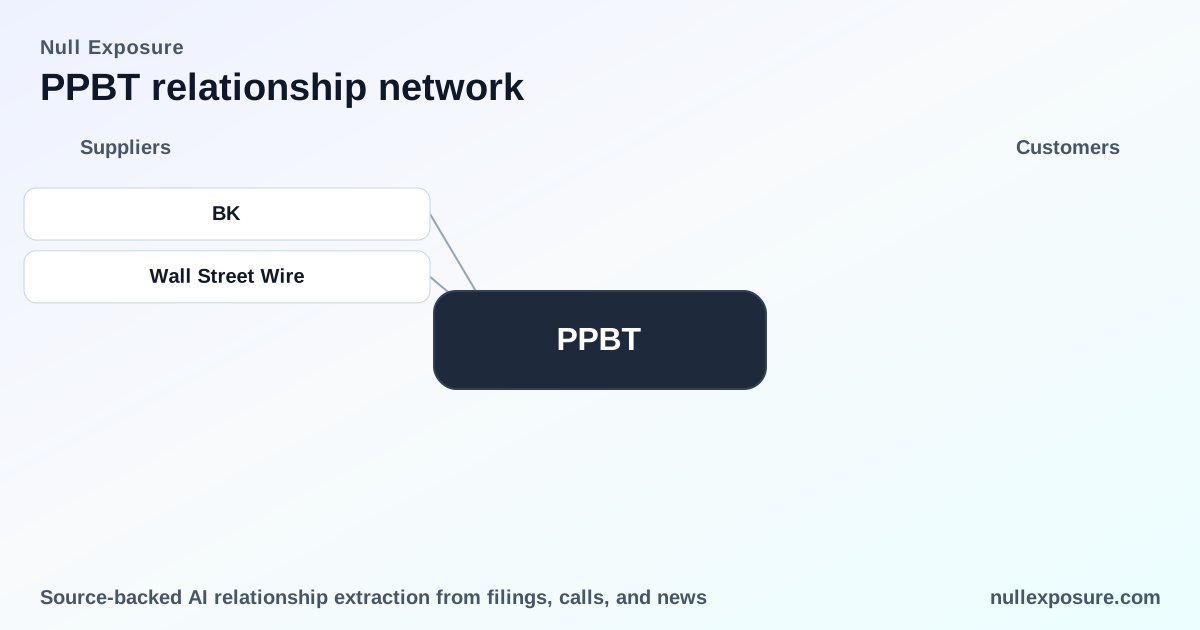
According to public filings and market reporting, two supplier relationships surface in recent public coverage: The Bank of New York Mellon as the ADS depositary and Wall Street Wire as a paid promotional media provider. Each has distinct operational and reputational implications.
For a consolidated view of supplier influence and third‑party risk, see https://nullexposure.com/.
The Bank of New York Mellon — depositary bank and ADS ratio change
The Bank of New York Mellon serves as Purple Biotech’s depositary bank for American Depositary Shares (ADSs). Purple Biotech implemented a mandatory ADS exchange, converting every ten existing ADSs into one new ADS, and instructed registered holders holding certificated ADSs to surrender old certificates to BNY Mellon for cancellation effective March 2, 2026. This is a regulatory and administrative action tied to Nasdaq compliance and the mechanics of the company’s capital structure. (Source: company notice reported via Quiver Quant, March 10, 2026.)
Why it matters: the depositary relationship is operationally critical — custody and conversion mechanics handled by BNY Mellon directly influence shareholder record‑keeping, transferability, and compliance with listing rules. Any disruption or error in depositary processing would have outsized effects for a thinly traded stock.
Wall Street Wire — paid promotional media services
TradingView republished a Wall Street Wire release noting that Wall Street Wire disclosed receiving cash compensation from Purple Biotech for ongoing promotional media services. This is an explicit commercial vendor relationship: the company pays for visibility and investor communications through a third‑party promotional outlet. (Source: TradingView/Wall Street Wire report, March 10, 2026.)
Why it matters: in a micro‑cap context paid promotions affect market visibility and liquidity, and they create reputational and regulatory sensitivity if not disclosed and managed precisely. Investors should treat paid‑media relationships as part of the company’s capital‑allocation and investor‑relations strategy.
What these supplier links tell you about PPBT’s operating model and business constraints
No supplier‑specific contractual constraints were reported in the available relationship records; that absence itself is a signal: there are no public long‑term supplier encumbrances disclosed in this feed. Company‑level financials and shareholder structure provide additional context:
- Pre‑revenue, negative profitability: RevenueTTM = 0; EBITDA negative; Diluted EPS deeply negative. Purple Biotech finances operations through capital markets and service contracts rather than product cash flows.
- Small market capitalisation and low institutional ownership: Market Cap ~ $6.8M with single‑digit institutional ownership percentage, indicating limited institutional buffer against adverse events or supplier disruption.
- High operational dependence on a few suppliers: With the depositary role concentrated at BNY Mellon and investor communications outsourced to paid media, supplier concentration is high and relationships are transactional in nature — not strategic procurement partnerships that deliver manufacturing scale.
- Regulatory criticality for the depositary: The ADS exchange to regain Nasdaq compliance exposes the company to process risk anchored to the depositary bank’s performance.
- Maturity and contracting posture: The vendor engagements visible are typical of an early‑stage clinical biotech: short‑term, compliance‑driven, and payment‑for‑service rather than embedded, long‑term supplier contracts.
These are company‑level signals rather than specific contractual constraints; no other supplier constraints appear in the public relationship feed.
Operational risks and investor implications — read this if you manage capital or operations
- Operational single points of failure: A single depositary handling ADS mechanics is standard, but for a thinly capitalized issuer, any processing error or delay has outsized consequences for trading, shareholder communications, and regulatory standing.
- Visibility vs. governance tradeoff on paid promotion: Paying media outlets increases investor attention but raises governance questions if disclosures or compensation arrangements are opaque; that tradeoff is material for valuation and reputational risk.
- Liquidity and capital risk: With no product revenue and negative operating metrics, PPBT’s ability to maintain supplier relationships depends on continued access to capital; supplier disengagement would accelerate funding pressure.
- Concentration of counterparties: Both visible suppliers are essential in different ways — one for corporate mechanics, the other for market perception — making supplier monitoring a priority.
Practical actions for investors and operators
- For investors: monitor the depositary communications closely (exchange mechanics, effective dates, and reconciliation notices) and verify that certificated ADS holders are receiving clear surrender instructions; these notices are operationally critical.
- For operators: codify service‑level and escalation clauses with depositary and communications vendors to ensure contingency handling for certificate surrender, failed transfers, or misstatements in promotional material.
- For both: track disclosure timing and compensation terms for paid media to manage regulatory and reputational exposure.
If you want a deeper supplier risk profile and monitoring dashboard for PPBT and similar small biotechs, visit https://nullexposure.com/.
Final takeaways and next steps
Purple Biotech’s supplier map is small but consequential. The depositary relationship with BNY Mellon is critical to corporate mechanics and Nasdaq compliance, while paid promotion through Wall Street Wire is material for market perception and governance. Combined with the company’s pre‑revenue status and limited market capitalization, these relationships create concentration and operational dependency risks that both investors and operators must actively manage.
For ongoing supplier tracking, alerts, and relationship intelligence on PPBT, go to https://nullexposure.com/.