Pilgrim’s Pride (PPC): Supplier Relationships, Constraints and Investor Implications
Pilgrim’s Pride is a vertically integrated poultry and pork processor that monetizes through large-scale production, wholesale distribution and value-added branded products sold to retailers, food service operators and international channels. The company’s margin profile depends critically on commodity feed costs, captive breeding and live-animal sourcing, and a mix of third‑party and related‑party procurement. For investors, the key question is how supplier concentration, related‑party purchasing and contract structures influence cash flow volatility and working capital needs. For a concise gateway to our supplier analytics and signals, visit https://nullexposure.com/.
Why supplier relationships steer Pilgrim’s economics
Pilgrim’s Pride operates on thin per-unit margins that scale through volume and fixed-cost absorption. Feed ingredients (corn, soybean meal, wheat) and live animal inputs are central cost drivers—the 2025 disclosures show these inputs compose the bulk of feed cost exposure. The company also reports material purchases from related parties and noncancelable forward purchase contracts, which create both firmness in supply and lock‑in risk on price.
- Contracting posture: The company discloses long-term noncancelable purchase contracts for capital equipment and commodities, with scheduled payables across multiple years—this is a deliberate hedging and continuity posture that reduces short-term supply disruption risk but increases exposure to locked-in price levels.
- Procurement mix: Pilgrim’s sources live pigs from numerous independent farmers in the U.K., and purchases one‑day old chicks from a small set of breeders—this is a hybrid model blending scale buying with distributed farmer supply.
- Related-party purchasing: Related-party purchases are material in absolute terms and warrant active monitoring for transfer pricing, operational interdependence, and counterparty credit risk.
For supplier monitoring and deeper counterparty intelligence, see https://nullexposure.com/.
The full supplier picture — every disclosed relationship and what it means
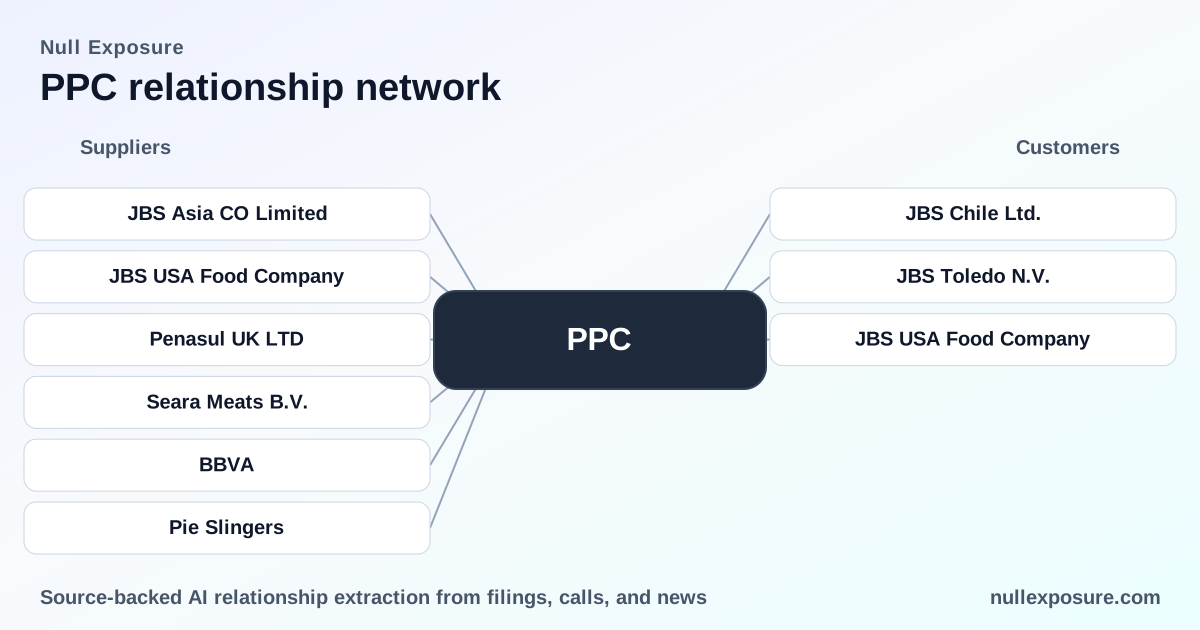
Below are the supplier and credit relationships cited in Pilgrim’s 2025 disclosure set and related reporting, with a brief plain‑English takeaway and source for each.
JBS Asia CO Limited
Pilgrim’s reported cost of goods purchased from related party JBS Asia CO Limited totaling 11,027 for FY2025, indicating cross‑border related‑party procurement within the broader JBS group. According to Pilgrim’s 2025 Form 10‑K, this is recorded under related‑party purchases in FY2025.
JBS USA Food Company
The company recorded cost of goods purchased from related party JBS USA Food Company of $145,324 in FY2025, showing large-scale internal supply flows with the parent/affiliate cluster that are material to procurement. This figure is reported in Pilgrim’s 2025 Form 10‑K.
Penasul UK LTD
Pilgrim’s lists cost of goods purchased from related party Penasul UK LTD at 41,804 for FY2025, reflecting European related‑party sourcing for its UK and European operations. This is disclosed in the FY2025 Form 10‑K.
Seara Meats B.V.
The company shows cost of goods purchased from related party Seara Meats B.V. of 89,131 in FY2025, signifying intra‑group meat and ingredient flows affecting European supply chains. This amount is reported in Pilgrim’s 2025 Form 10‑K.
BBVA (credit facility counterparty)
Pilgrim’s announced new credit facilities including a Mexico BBVA Credit Facility to support general corporate and working capital purposes, which expands its bank financing footprint in Mexico. A TradingView summary of the company’s 2025 10‑K highlighted the new Mexico Bajio and Mexico BBVA credit facilities in reporting tied to FY2026 activity (news dated March 2026).
Pie Slingers (local community partner)
Pilgrim’s donated over 700 pounds of chicken products to Pie Slingers, a local restaurant in Walker County, reflecting local community relations and product donation activity tied to a Georgia plant ground‑breaking. WattAgNet reported the donation in coverage of Pilgrim’s new Georgia plant initiative (article published March 2026).
Operating constraints and what they imply for investors
Pilgrim’s disclosures surface several cross‑cutting constraints that shape procurement risk and operational resilience:
- Long‑term contracting posture (high confidence): The company holds noncancelable purchase contracts for capital equipment and commodities with scheduled payables totaling hundreds of millions over multiple years; this reduces supply interruption risk but locks exposure to contracted price levels.
- Materiality of feed inputs (moderate confidence): Corn, soybean meal and wheat composed approximately 45.9%, 33.7% and 4.6% of feed costs respectively in 2025, making commodity price moves a primary margin lever.
- Counterparty mix includes small businesses (lower confidence): The U.K. pork operations source live pigs from numerous independent farmers, with independent supplies representing roughly 69.4% of pigs processed—this disperses supply risk but injects operational variability tied to many small producers.
- Buyer role and maturity (moderate–high confidence): Pilgrim’s is a consistent buyer of inputs such as one‑day old chicks from a few major breeders and reports long‑standing supplier relationships, indicating mature, established procurement channels that support predictable throughput.
- Spend concentration with related parties (high confidence): The company reports aggregate related‑party purchases in the hundreds of thousands in the consolidated schedule (reported totals include figures such as 289,846 across periods), signaling high absolute spend with affiliated suppliers that investors should monitor for governance and transfer pricing risk.
These constraints are company‑level signals drawn from the 2025 Form 10‑K and related reporting rather than ties to any single supplier, and they outline the structural interplay between procurement, contracted commitments and commodity exposure.
Investment implications — risks and decision points
- Margin sensitivity is real and measurable. With feed comprising the bulk of feed costs and long‑term purchase contracts in place, commodity price trends and contract repricing windows will dictate short‑to‑medium term margin performance.
- Related‑party purchasing is material. The scale of purchases from JBS entities and affiliated European companies is significant enough to warrant governance oversight from investors concerned about transfer pricing, intra‑group competition and concentration risk.
- Liquidity and working capital are linked to financing actions. The new Mexico credit facilities expand Pilgrim’s borrowing posture to support working capital; bank counterparties and facility covenants will be consequential during commodity or demand stress.
For analysts and operators wanting an integrated supplier risk dashboard and continuous signals on counterparties, visit https://nullexposure.com/ for subscription options and examples.
Bottom line
Pilgrim’s Pride runs a high‑throughput, feed‑sensitive operating model supported by mature supplier relationships, significant related‑party purchasing, and structured purchase contracts. These characteristics create both stability (through supply commitments and scale) and concentrated exposures (commodity price risk and intra‑group dependence) that will determine the company’s near‑term cash generation and margin resilience. Investors should track commodity markets, the company’s related‑party purchase trends in future filings, and covenant language in new credit facilities.
For ongoing monitoring of supplier signals and related‑party exposure for Pilgrim’s Pride and other suppliers, go to https://nullexposure.com/.