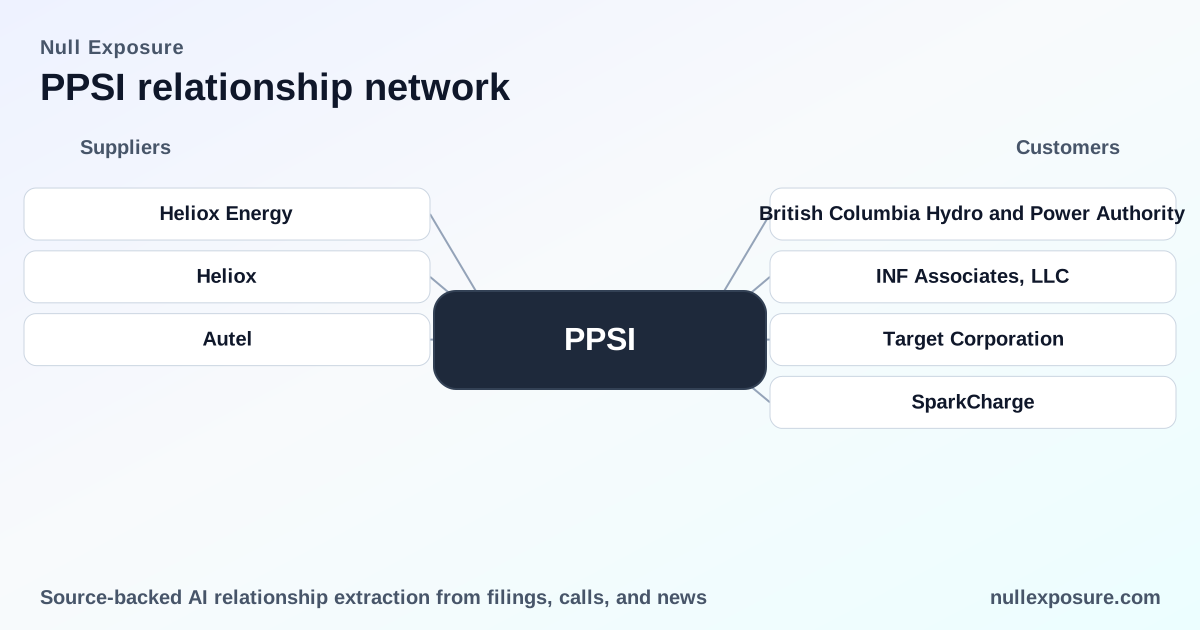
Pioneer Power Solutions (PPSI): Supplier Relationships That Drive Its eMobility Push
Pioneer Power Solutions manufactures and services specialized electrical power equipment and monetizes through direct sales, site installations, and aftermarket service contracts—recently expanding into eMobility skid‑mounted charging solutions sold to utilities, airports and other institutional buyers. Revenue derives from hardware sales (transformers, transfer switches, mobile generators, EV charging skid units) plus recurring service and parts agreements, positioning the company as a solutions integrator that captures margin on both equipment and installed services.
Explore further coverage and supplier intelligence at https://nullexposure.com/.
How Pioneer makes money and why supplier links matter
Pioneer’s core operating model is manufacturing plus on‑site integration. The company sells packaged systems (including skid‑mounted EV charging and mobile power units), then captures follow‑on service, spare parts and commissioning revenue. Contracting posture is buyer‑centric: Pioneer purchases electrical components and chargers from third‑party vendors and integrates them into turnkey offerings for utilities, airports and large customers. The firm’s public filings show one unnamed supplier represented ~25% of accounts payable as of December 31, 2024, a material concentration signal that increases vendor reliance and procurement risk as the company scales eMobility deployments.
Key commercial drivers:
- Hardware plus services: one‑time equipment sales plus recurring maintenance and parts.
- Channel-to-institutional customers: direct large contracts with utilities and infrastructure operators.
- Supplier dependency: significant concentration in components procurement that amplifies supply disruptions or pricing shifts.
If you evaluate counterparty risk or supplier concentration for PPSI, start with supplier‑level intelligence at https://nullexposure.com/.
What the public relationships show (FY2026 reporting)
Below I enumerate every relationship result returned for Pioneer’s supplier scope in the sample data and summarize what each disclosure means for investors and operators.
Heliox Energy — MarketScreener (reported March 10, 2026, FY2026)
Pioneer’s eMobility division will provide skid‑mounted PureCharging systems that integrate four dual‑port 60 kW Heliox DC fast chargers for off‑grid deployment at several of a utility’s remote service sites. According to MarketScreener’s March 2026 report, the arrangement confirms Pioneer’s role as systems integrator using third‑party DC fast chargers in turnkey remote installations.
Heliox — ROI‑NJ (reported February 24, 2026, FY2026)
Pioneer stated its eMobility unit will supply skid‑mounted PureCharging equipment fitted with Heliox DC fast chargers for off‑grid use for the region’s largest investor‑owned utility in the Southeast. ROI‑NJ’s February 2026 coverage reiterates that Pioneer sells integrated off‑grid charging solutions to major utilities, leveraging Heliox hardware for the DCFC component.
Autel — TradingView (reported March 10, 2026, FY2026)
An order for Canada’s largest airport operator included two e‑Boost D Mobile units (diesel/renewable diesel) each equipped with four Autel Level 2 ports, indicating Pioneer’s mobile EV charging product line incorporates Autel Level 2 hardware for aviation and airport use. TradingView’s March 2026 item highlights Pioneer’s exposure to airport infrastructure projects and the use of Autel equipment in those mobile charging platforms.
Heliox — TradingView (reported March 10, 2026, FY2026)
TradingView also reported an award from a large Southeastern IOU for skid‑mounted PureCharging systems with four dual‑port 60 kW Heliox DCFC chargers destined for remote sites, echoing the same utility contract described elsewhere and confirming consistent media corroboration in March 2026.
What investors should infer about operational constraints
The company disclosures and the relationship inventory point to several company‑level constraints that shape risk and opportunity:
-
Concentration risk: The filing excerpt that one supplier accounted for roughly 25% of accounts payable as of December 31, 2024 is a material supplier concentration signal; this elevates procurement risk across Pioneer’s installed base and new projects when single vendors supply critical components. This is a company‑level constraint, not attributed to a specific partner in the excerpt.
-
Buyer role and dependency: Pioneer acts as the buyer of chargers, engines and electrical components and then integrates those parts into finished systems. The company’s cost of goods description shows materials and inbound freight are significant cost drivers, reinforcing that supplier pricing and availability directly affect margins.
-
Criticality and maturity: Integrating proven third‑party chargers (Heliox for DCFC; Autel for Level 2) reduces product development cycle time and accelerates deployments, but it also creates operational dependence on external OEM roadmaps and lead times.
-
Contracting posture: Pioneer’s commercial model is oriented around bespoke or semi‑standardized integrated systems sold to institutional customers; this increases the importance of reliable supplier relationships and aftermarket support agreements.
Investment implications and risk checklist
Pioneer’s eMobility wins are operationally meaningful—they validate an integrator model that captures both equipment and service margins. However, the balance between growth and supplier concentration creates a dual thesis:
- Upside: Rapidly growing addressable market for remote and mobile charging increases revenue potential; validated deployments with utilities and airports demonstrate product‑market fit for integrated skid units using best‑of‑breed chargers.
- Risk: Material supplier concentration and tight coupling to external charger OEMs mean price shocks, allocation or supplier change could erode gross margins or delay projects.
Investors and procurement teams should prioritize vendor diversification, long‑lead procurement contracts, and warranty/service alignment with key OEMs.
For full supplier mapping and deeper counterparty analytics, visit https://nullexposure.com/.
Bottom line: actionable takeaways
- Pioneer monetizes through integrated hardware sales and recurring services, leveraging third‑party charger OEMs to accelerate deliveries to utilities and airports.
- Heliox and Autel are documented equipment suppliers in FY2026 press coverage, with Heliox providing DC fast chargers for remote utility skid solutions and Autel providing Level 2 ports for mobile airport units.
- Corporate supplier concentration is material and a core risk factor; evaluate contracts, payment terms and alternative sourcing as part of any investment or operating diligence.
Assess supplier risk and monitor ongoing contracts via primary filings and supplier disclosures at https://nullexposure.com/.