PRA Group (PRAA): Supplier Relationships, Operating Constraints, and What Investors Should Price In
PRA Group buys portfolios of delinquent consumer loans and monetizes them through structured purchase contracts and downstream collections activity across the Americas, Europe and Australia. The company sources loans via spot sales and short-term forward-flow agreements with large credit originators, then extracts cashflow through servicing and legal collections; margins depend on portfolio yield, acquisition price and collection efficiency. Learn more about supplier intelligence and counterparty risk at the NullExposure homepage: https://nullexposure.com/.
How PRAA’s commercial model converts paper into cash
PRA Group operates as a buyer and manager of nonperforming loan portfolios. The firm’s revenue is generated when purchased receivables recover more value than their acquisition cost and servicing expense. Two commercial levers drive returns: the ability to negotiate favorable purchase prices (including forward flows and spot buys) and the operational capability to collect at scale across jurisdictions. Balance-sheet scale, legal infrastructure and contact technology are core to execution.
The company’s public metrics underscore scale and cyclical sensitivity: trailing revenue exceeds $1.2 billion and portfolio purchases have run into the hundreds of millions and billions annually, which creates both purchasing power and concentration risk in sourcing strategies.
Supplier relationships discovered in public sources
Below are the supplier and vendor relationships surfaced in the available results, with plain-English takeaways and source references.
-
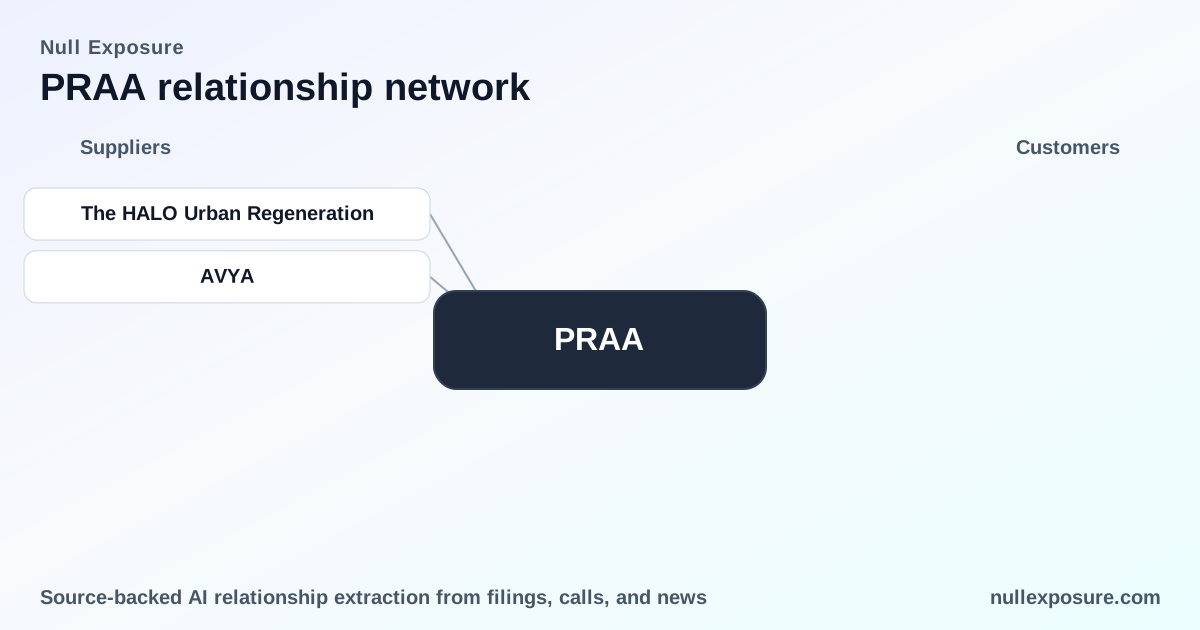
The HALO Urban Regeneration — PRA Group was named the anchor tenant at the HALO Enterprise and Innovation Centre in Kilmarnock, with a 15‑year commitment that anchors PRA’s local presence and talent pipeline in Scotland. This is a commercial real-estate and community investment that signals a sustained operational footprint in the U.K. (Source: East Ayrshire Council news release, 2026 — https://newsroom.east-ayrshire.gov.uk/news/global-leader-in-financial-services-finds-sustainable-home-at-the-halo-kilmarnock)
-
Avaya — A 2016 legal action resulted in an injunction restricting PRA’s use of the Avaya Proactive Contact Dialer for placing calls to cellular numbers without prior express consent, placing technology and compliance constraints on some contact methods historically used in collections. This highlights litigation and vendor-technology risk tied to regulatory consent requirements. (Source: InsideARM report, 2016 — https://www.insidearm.com/news/00041665-portfolio-recovery-associates-to-pay-18-m/)
What the constraints reveal about PRAA’s supplier posture
The evidence in filings and excerpts defines a consistent contracting and sourcing posture that investors should internalize:
-
Contracting is a mix of framework and short-term agreements. PRA uses forward-flow arrangements that set purchase criteria and pricing for specified terms; these typically run six to 12 months but can be open-ended, creating regular renegotiation points and repricing windows. This structure supports predictable supply while preserving negotiating flexibility.
-
Spot transactions are also used. Originators sell portfolios as one-offs when convenient; this enables opportunistic purchasing but increases variability in portfolio quality and timing.
-
Counterparty profile skews toward large enterprises and credit originators. PRA’s outreach is global and targets banks, consumer finance companies and auto lenders, giving access to scale but concentrating exposure to the health and disposition choices of major originators.
-
Geographic sourcing is global. PRA’s investment and purchasing operations operate across multiple regions, which diversifies regulatory and macroeconomic exposure but raises operational complexity.
-
Materiality of minimum purchase obligations is low. Filings indicate the minimum contractual purchase obligation under forward flows is not significant, implying PRA retains sourcing optionality and is not heavily tied into fixed procurement commitments.
-
Core product and insolvency segments coexist. PRA runs a Core operation focused on standard nonperforming loans and an Insolvency operation handling claims tied to bankruptcy or similar proceedings—each with distinct operational protocols and legal frameworks.
-
Scale of purchases is large. Portfolio purchases have been reported at $1.4 billion during a reporting period, establishing PRA as a sizeable market participant with high absolute procurement spend.
Collectively, these constraints point to a buyer that operates with flexible, short-duration agreements while relying on scale and relationships with large sellers to secure inventory. For supplier managers, that means contracts will emphasize negotiated price resets, account-level representations and periodic diligence.
Explore supplier profiles and contract signals in depth at NullExposure: https://nullexposure.com/.
Risk and operational implications for investors and operators
-
Regulatory and vendor-technology risk is real and actionable. The Avaya injunction in 2016 demonstrates how a vendor relationship and the use of dialing technology intersect with consumer-consent regulation, producing direct operational constraints and potential remediation costs. Compliance-driven vendor change can be expensive and slow.
-
Sourcing concentration and counterparty reliance raise execution risk. Engaging primarily with large banks and finance companies delivers volume but exposes PRA to seller behavior—changes in originator strategy or credit sell-off timing can alter supply and pricing quickly.
-
Contracting cadence creates reprice events and optionality. Six-to-twelve-month forward flows allow PRA to reset economics often; this is a strength in tightening markets but a vulnerability when counterparties extract pricing concessions in weak recovery environments.
-
Local investment signals longer-term strategic positioning. The HALO anchor tenancy reflects human-capital and regional presence investments that stabilize collection operations and can support regulatory acceptance and talent recruitment in Europe.
-
Scale amplifies both margin opportunity and operational burden. Large annual purchases give PRA buying leverage but require robust governance over representations, asset quality testing and post-acquisition remediation.
Actionable takeaways for an investor evaluating PRAA supplier exposure
- Treat forward-flow counterparties as both volume providers and negotiation levers — contract clauses on representations, price resets and termination rights materially affect returns.
- Monitor vendor-technology usage and consent-compliance posture as part of operational due diligence; technology-related injunctions are a persistent operational risk.
- Where PRA invests in local operations and real estate, interpret those moves as signals of longer-term regional commitment that reduce short-term outsourcing risk but increase fixed overhead.
Final recommended step: review counterparty profiles and contract terms with an emphasis on forward-flow economics and consent-compliance controls; for a consolidated view of supplier signals and contract constraints, visit NullExposure for provider-level intelligence: https://nullexposure.com/.
Bottom line: PRA Group is a scale buyer of distressed receivables that leverages short-duration and spot contracts with large sellers while balancing regulatory and technology constraints. Investors should price in contract repricing risk, vendor-compliance exposure and the operational complexity of multi-jurisdiction collections when modeling returns.