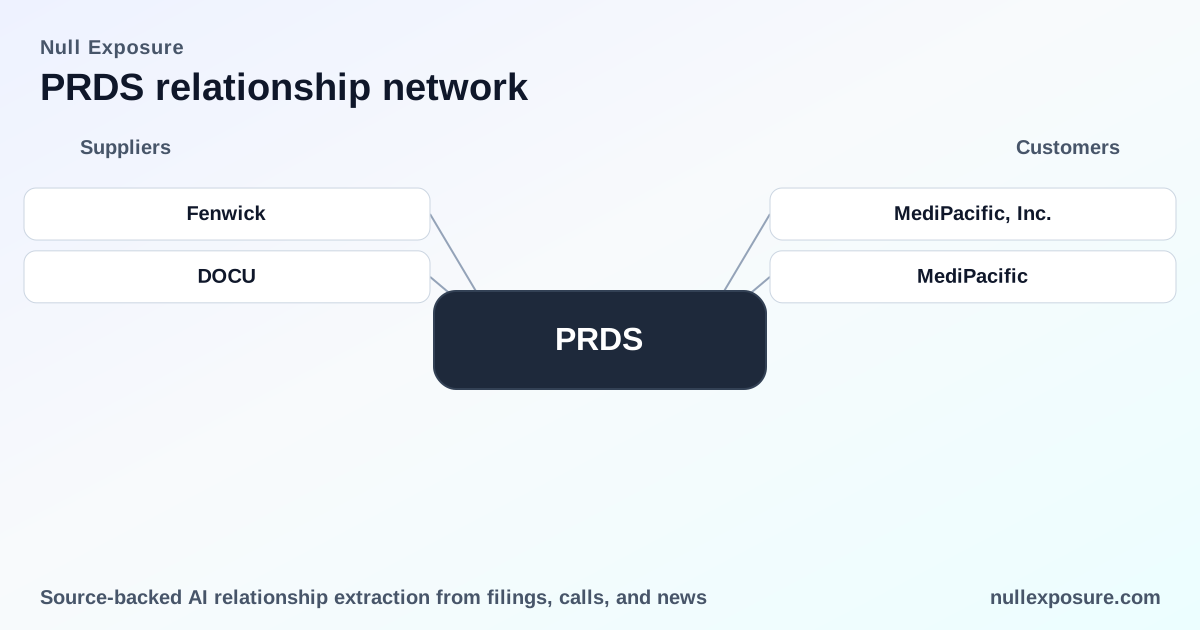
PRDS Supplier Map: Legal Counsel and Operational Tools Power a Small Antiviral Developer
Pardes Biosciences (PRDS) operates as an early-stage biopharmaceutical company focused on discovering and developing oral antiviral therapeutics; the company monetizes through milestone-driven licensing, strategic partnerships, and potential product commercialization or sale of the enterprise. Operationally, Pardes runs a lean R&D organization that outsources transactional, legal and routine operational functions to external providers, concentrating spend on high-value scientific partners while using SaaS tools and outside counsel for corporate execution. Explore more supplier intelligence at https://nullexposure.com/.
What this supplier footprint tells investors about how Pardes operates
Pardes’ supplier profile is compact and transaction-focused. The company’s contracting posture is predominantly engagement-based—external counsel retained for M&A and transactional work, and SaaS vendors adopted for day-to-day corporate operations. This pattern is consistent with early-stage biotechs that prioritize flexible cost structures over large internal administrative teams.
Key company-level signals:
- Concentration: A small set of high-impact suppliers (legal counsel, critical SaaS) suggests vendor concentration risk; a few relationships can move material corporate outcomes.
- Criticality: Legal and transactional suppliers are mission-critical during corporate events (financings, M&A), while SaaS tools underpin operational continuity.
- Maturity and bargaining leverage: As an R&D-stage firm, Pardes exhibits the bargaining posture of a capital-constrained developer—outsourcing essential functions and using reputable external partners to reduce execution risk.
- Contracting posture: Short, event-driven engagements and retainers for counsel; subscription-based contracts for operational software.
These signals imply that investors should track supplier continuity and counterparty disclosures closely, since a small roster of external providers can influence transaction timing, regulatory filings, and deal economics.
The supplier relationships you need to know
Below are the relationships identified in public reporting, each summarized for investor due diligence.
Fenwick — retained for M&A representation
Fenwick LLP is representing Pardes Biosciences in a pending acquisition by MediPacific, an affiliate of Foresite Capital Management; this is a classic example of using top-tier outside counsel to manage deal execution and regulatory filings. According to Fenwick’s announcement in March 2026, the firm is counsel on the transaction that transfers Pardes to MediPacific (Fenwick.com, March 2026: https://www.fenwick.com/insights/experience/fenwick-represents-pardes-biosciences-in-pending-acquisition-by-medipacific).
DocuSign — widely used for contract execution
Pardes uses DocuSign heavily for approvals and contract signatures, indicating a reliance on established e-signature workflow tools to streamline corporate and transactional operations. A Fortune profile from January 2022 described the company’s routine use of DocuSign for approvals and contract execution (Fortune, Jan 2022: https://fortune.com/2022/01/21/this-leader-has-been-a-cfo-at-5-biotech-startups-and-just-helped-a-covid-pill-developer-go-public/).
How investors should interpret these relationships
The supplier list is small but strategically selected. Fenwick’s role is high-impact and transactional: a premier law firm engaged specifically for an M&A event signals that the company prioritizes legal precision and deal execution capability during a value realization phase. DocuSign’s presence signals operational maturity in corporate governance workflows—reducing administrative friction during financings, partner agreements, and board approvals.
Middle-of-cycle CTA: For a deeper read on supplier risk and concentration in small-cap biotech, visit https://nullexposure.com/.
Operational implications for valuation and risk modeling:
- Transaction risk: Legal counsel quality directly affects closing risk, disclosure completeness, and timetable—important for deal-based valuation models.
- Operational continuity risk: SaaS dependence creates low switching friction but introduces service-platform dependency; breaches or outages in critical SaaS can delay deal signings or filings.
- Negotiation leverage: As an acquired target, Pardes’ negotiating leverage is a function of scientific progress and buyer demand; counsel selection often reflects management’s intention to maximize deal value.
Practical monitoring checklist for investors and operators
To translate supplier visibility into actionable oversight, track the following items:
- Contract status and retainer terms with outside counsel—confirm who has escalation authority on deal negotiations.
- Continuity and service-level guarantees for core SaaS vendors, especially e-signature and corporate management platforms.
- Any expanded supplier list disclosed in SEC filings or acquisition materials that could materially affect transaction execution or post-close integration.
- Counterparty reputational events—large firms like Fenwick will publicize representation, which gives investors a forward signal of corporate activity (e.g., announced M&A).
Key risk takeaway: Legal counsel and transactional vendors are the primary vectors for execution risk at Pardes; operational SaaS risk is secondary but material to deal timing.
Bottom line and next steps for due diligence
Pardes’ supplier footprint is concise and focused on execution: high-quality outside counsel for transactions and enterprise SaaS for workflow efficiency. For investors, monitor legal disclosures and any expanded supplier roster as leading indicators of corporate milestones and execution risk.
Final CTA: For ongoing coverage and supplier analytics relevant to small-cap biotech and transaction risk, visit https://nullexposure.com/.
This review is built from public reporting: Fenwick’s representation was announced in March 2026 (Fenwick.com), and DocuSign usage was described in a Fortune profile from January 2022. Use these filings and notices as primary inputs when updating your vendor-risk assessment and transaction models.