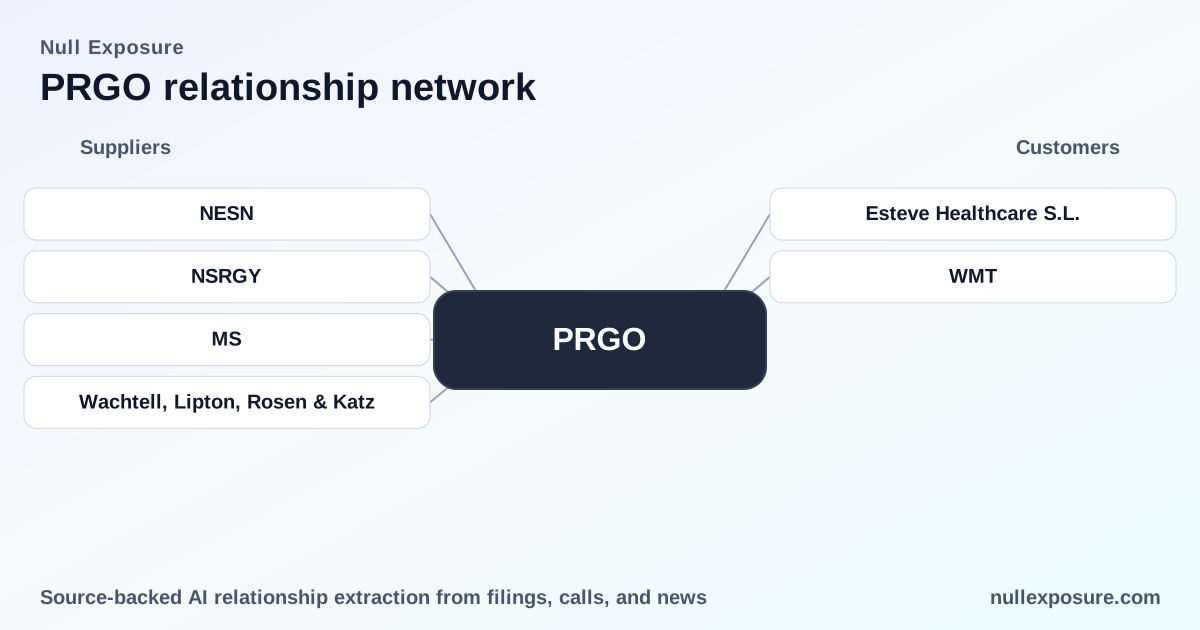
Perrigo (PRGO): Supplier relationships, contract posture, and what investors should act on
Perrigo Company plc manufactures private‑label over‑the‑counter pharmaceuticals and monetizes through product sales to retailers, ownership of manufacturing assets, and opportunistic M&A that transfers branded and plant assets into its portfolio. The firm's cash generation depends on steady manufacturing throughput, outsourced logistics and API sourcing, and disciplined management of lease and facility costs—factors that make supplier and service‑provider relationships a direct driver of operating performance and investor returns. For immediate background and document access, see https://nullexposure.com/.
How Perrigo runs the business and why suppliers matter to the P&L
Perrigo is a manufacturer and consolidator in the self‑care and consumer health space; it generates revenue from private‑label sales and from acquired brands and facilities. The company operates a mix of owned and leased assets and relies on third‑party logistics, contract freight, and overseas API suppliers to keep production lines running. These supplier links influence cost of goods sold, inventory velocity, and margin stability—so understanding relationships and contract terms is essential for investors.
Key operational signals from filings and press coverage:
- Long‑term contracting posture for property and equipment through leases scheduled to expire as late as 2040, implying multi‑year fixed obligations on occupancy and IT hardware.
- Material but bounded facility spend: rent expense ran around $51.3 million in 2024, placing facility spend in a mid‑range band ($10m–$100m) that affects fixed cost leverage.
- Supply concentration in certain EMEA markets, notably Israel, which sources active pharmaceutical ingredients (APIs) used in self‑care products.
- Heavy use of service providers—contract freight, common carriers, and third‑party cybersecurity assessments—indicating operational reliance on external vendors rather than vertical integration.
If you want a concise dossier linking these findings to primary sources, start here: https://nullexposure.com/.
What the documented relationships are telling investors
Below I summarize every company relationship recorded in the supplier scope and the most relevant published source for each.
Nestlé — acquisition and ensuing litigation
Perrigo acquired Nestlé’s Gateway infant formula plant in Wisconsin and U.S./Canadian rights to the Good Start brand in November 2022; multiple January 2026 securities‑fraud class action notices allege that the acquired infant formula business suffered from underinvestment in maintenance and operational improvements, and that Perrigo’s disclosures misrepresented the asset condition (GlobeNewswire and Barchart, January 2026). These filings are the primary public thread linking Perrigo’s supplier/asset integration to investor litigation risk.
Source: GlobeNewswire press notices and related January 2026 class‑action announcements, with coverage aggregated on Barchart and other financial outlets in January 2026.
Morgan Stanley & Co. LLC — financial adviser to a divestiture
Morgan Stanley served as Perrigo’s financial adviser in the transaction that divested a rare‑disease affiliate for $294 million, demonstrating Perrigo’s use of major investment banks to structure and execute asset sales (Crain’s Grand Rapids, March 2026).
Source: Crain’s Grand Rapids coverage of the asset sale, March 2026.
Wachtell, Lipton, Rosen & Katz — legal counsel on the transaction
Wachtell, Lipton, Rosen & Katz acted as legal counsel on Perrigo’s divestiture referenced above, indicating the company retains top‑tier external legal resources for complex transactions (Crain’s Grand Rapids, March 2026).
Source: Crain’s Grand Rapids transaction reporting, March 2026.
Constraints and what they reveal about Perrigo’s operating profile
The corporate disclosures and evidence excerpts provide company‑level constraints that shape supplier risk and bargaining leverage:
- Contracting posture — long‑dated leases: Perrigo leases warehouse and computer equipment under agreements extending through 2040, which locks in occupancy cost and reduces short‑term flexibility but provides predictable capacity planning.
- Concentration and criticality — EMEA API sourcing (Israel): The company sources key APIs and finished goods from Israel, which functions as a strategic R&D and supply node; disruption or regulatory changes in that geography would have an outsized operational impact.
- Spend profile — mid‑range fixed cost: Rent expense around $51.3 million annually signals a meaningful fixed cost base that affects operating leverage and the break‑even point for production volumes.
- Relationship model — external service providers: Heavy reliance on contract freight, common carriers, and third‑party cybersecurity assessments implies Perrigo manages more of its logistics and risk through vendors than through internal capabilities, raising vendor‑management and monitoring demands.
- Maturity and activity — active, ongoing obligations: Lease schedules and service arrangements are active and extend over multi‑year horizons, indicating mature, committed supplier relationships rather than ad‑hoc procurement.
These constraints together produce a supplier profile of moderate concentration, contractually entrenched cost structure, and high operational criticality for a limited set of external suppliers.
Risks and opportunities investors should price in now
- Litigation and integration risk: The Nestlé acquisition and subsequent class‑action notices create a near‑term downside risk to reported results through potential settlements, remediation costs, and reputational impact. The allegations focus on underinvestment in maintenance and operational optimization, which are direct operating expenses that could compress margins or require capital injections (GlobeNewswire and related January 2026 reports).
- Supply‑chain vulnerability: Reliance on Israel‑based API suppliers concentrates risk in a single region for critical inputs; supply disruption or price movement in those inputs will flow straight to COGS and gross margins.
- Fixed cost leverage: Multi‑year lease commitments and mid‑tens of millions in annual rent mean Perrigo’s margins are sensitive to revenue fluctuations; this amplifies both upside on recovery and downside on sustained volume loss.
- Governance and vendor oversight: Outsourcing logistics and cybersecurity reduces capital intensity but increases the need for rigorous contract oversight; Perrigo’s Supplier Cyber Risk Assessment processes are relevant but require active execution to be effective.
How investors and operators should act
- For investors: re‑weight scenarios to account for potential one‑off remediation and legal costs tied to the Nestlé acquisition, and stress‑test earnings against sustained API price shocks given EMEA concentration. Track filings and press notices tied to the January 2026 class‑action cycle for cash‑flow implications. Learn more and monitor document trails at https://nullexposure.com/.
- For operators and procurement leads: prioritize immediate vendor audits for Israel‑sourced APIs and accelerate maintenance and operational optimization programs at acquired plants to reduce regulatory and reliability risk.
- For analysts: model lease obligations explicitly and incorporate a sensitivity for rent and freight escalation; treat service‑provider performance as an operational risk factor.
For a curated view of Perrigo’s supplier signals and source documents, visit https://nullexposure.com/.
Final read — the bottom line for portfolio decisions
Perrigo is a manufacturing operator whose margins and cash flow are directly tied to supplier quality, lease commitments, and successful integration of acquired assets. The Nestlé acquisition litigation elevates short‑term risk, while long‑term leases and EMEA API concentration create structural exposure that investors must price into CAGR and downside scenarios. Analytical focus should be on remediation costs, supplier continuity, and the company’s ability to drive operating improvements in its acquired facilities.
If you want ongoing updates and primary‑source tracking tied to these supplier relationships, start your review at https://nullexposure.com/.