PRIF-P-K: Supplier map and operational signals investors need
Pioneer Credit Funding (security ticker PRIF-P-K) is a preferred equity instrument that sits on a vehicle focused on acquiring and managing consumer credit assets; it monetizes by capturing asset cash flows and layering structured capital (including preferred tranches) to deliver risk-adjusted yield to institutional investors. This security’s risk profile is driven by the underlying asset pool performance, manager alignment, and the mechanics of preferred redemption and custody—factors that operators and allocators must monitor closely. Explore full supplier mapping on NullExposure: https://nullexposure.com/
Quick read: what this preferred instrument represents for a portfolio
PRIF-P-K is a preferred-stock claim on a credit asset manager’s capital stack rather than common equity upside, so income stability and structural protections are the principal value drivers. The available public metadata is sparse on standard balance-sheet metrics, but the security trades on the NYSE and shows a 52-week trading range, indicating investor liquidity and market pricing. The security’s characteristics signal a mid- to long-duration cash flow exposure with emphasis on yield capture through manager execution and financing structure.
Supplier relationships you must track right now
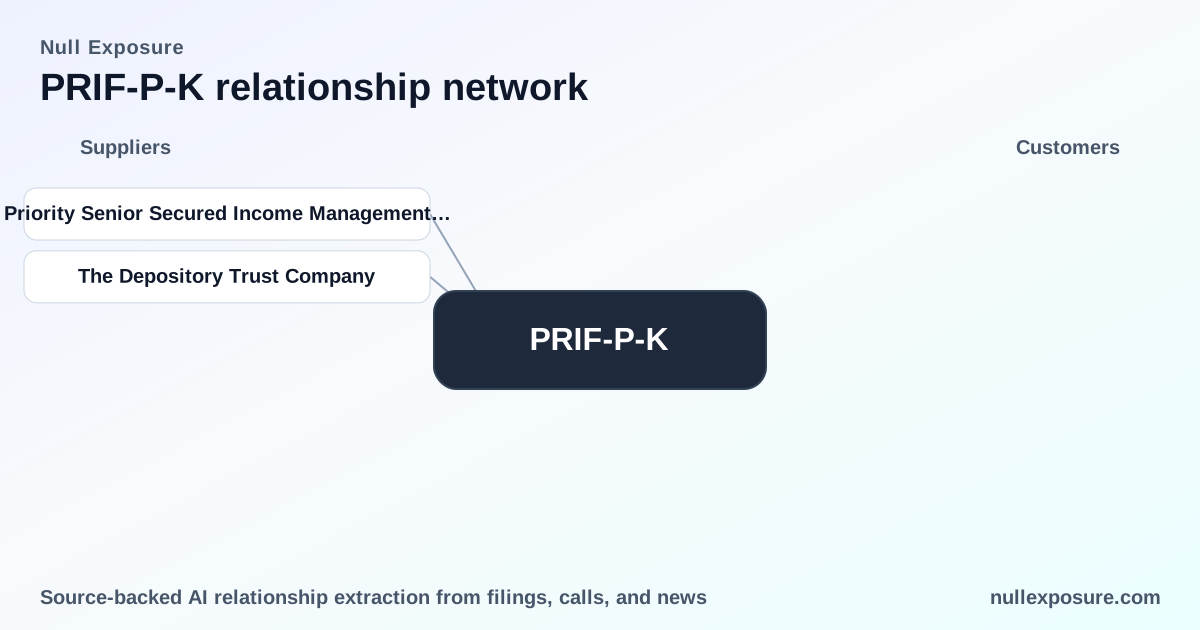
Below are the two counterparties identified in recent coverage; both are functionally distinct and operationally important.
-
Priority Senior Secured Income Management, LLC — Management link to Prospect Capital management team
- The fund that manages the referenced preferred series is run by Priority Senior Secured Income Management, LLC, and that management team is staffed by investment and operations professionals from Prospect Capital Management L.P., a credential that ties PRIF’s operational capability and investment playbook to an experienced private-credit manager. See the GlobeNewswire press release published via The Manila Times on January 27, 2026: https://www.manilatimes.net/2026/01/27/tmt-newswire/globenewswire/priority-income-fund-announces-redemption-of-195-million-of-its-6000-series-j-term-preferred-stock-due-2028/2265528
-
The Depository Trust Company (DTC) — Custody and settlement conduit for preferred shares
- The redemption notice states that the Series J preferred shares being redeemed are held through The Depository Trust Company, confirming that DTC is the settlement and custody mechanism for these instruments and that redemption will follow DTC procedures. See the same GlobeNewswire release (January 27, 2026): https://www.manilatimes.net/2026/01/27/tmt-newswire/globenewswire/priority-income-fund-announces-redemption-of-195-million-of-its-6000-series-j-term-preferred-stock-due-2028/2265528
Why these two relationships matter in plain terms
Priority Senior Secured Income Management determines credit selection, workout strategy, and the operational processes that convert borrower cash flows into distributable yield—manager quality directly maps to investor outcomes. The Depository Trust Company provides clearing, custody, and standardized redemption processing—DTC involvement materially reduces settlement friction but concentrates operational dependence on a single industry custodian.
Explore how these counterparty dynamics compare across issuers on NullExposure: https://nullexposure.com/
What the operating model and company-level signals tell investors
The dataset of captured constraints is empty, which itself is a signal: no supplier-specific contractual constraints were identified in the public feed, so investors should treat supplier terms and bespoke covenants as possible undocumented sources of operational risk until reviewed directly.
From available company-level information and relationship data, derive these signals:
- Contracting posture: Outsourced asset and operations management. The manager is an affiliated investment team model that leverages Prospect Capital’s operational playbook, indicating a delegated execution approach rather than fully internalized servicing.
- Concentration: Manager and custodian concentration exist—the management team is concentrated on a known sponsor group and custody is through DTC, creating single points of operational dependence.
- Criticality: Custody and redemption mechanics are critical to investor cash flows. DTC custody controls the mechanical ability to process redemptions and transfers; manager decisions control underlying cash flow realization.
- Maturity and structural signal: Preferred tranche issuance and public redemption notices demonstrate a mature capital-markets orientation—the issuer uses standard preferred instruments and market channels to execute capital events.
These are company-level signals derived from public descriptions and the recent redemption notice; they describe how Pioneer Credit Funding operates rather than assigning contractual constraints to a specific supplier.
Investment implications and a concise risk checklist
- Manager dependency: Manager track record and operational bandwidth determine recovery and collection outcomes; tie due diligence to Prospect-affiliated personnel and processes.
- Redemption and liquidity risk: The public notice of a significant redemption (Series J) indicates that preferred series can be called and redeemed under defined procedures—model cash flows with potential early redemption in mind. (See GlobeNewswire/ManilaTimes, Jan 27, 2026: https://www.manilatimes.net/2026/01/27/tmt-newswire/globenewswire/priority-income-fund-announces-redemption-of-195-million-of-its-6000-series-j-term-preferred-stock-due-2028/2265528)
- Operational concentration: DTC custody reduces settlement risk but creates dependency on industry infrastructure and its procedures for any transfer or redemption event.
- Transparency and documentation gap: The public overview lacks granular financial metrics; investors should demand offering memoranda, waterfall mechanics, and servicing agreements prior to material allocation.
Practical next steps for allocators and operators
- Request the fund’s offering documents, servicing agreements, and recent investor notices to validate manager economics, redemption mechanics, and waterfall priorities.
- Confirm DTC participant arrangements and custody controls to ensure redemption and settlement flow as expected under stress scenarios.
- Monitor manager personnel continuity given the reliance on Prospect-adjacent teams; align governance and reporting covenants to reduce execution risk.
For a mapped view of this issuer’s supplier ecosystem and comparator intelligence, visit NullExposure: https://nullexposure.com/
Bottom line
PRIF-P-K is a structured preferred instrument whose return profile hinges on manager execution and standardized custody mechanics. The two material supplier relationships identified—Priority Senior Secured Income Management (manager) and The Depository Trust Company (custodian)—are operationally decisive for redemption processing and cash-flow realization. Investors should prioritize documentary due diligence on manager mandates and DTC custody arrangements before increasing exposure, and operators should harden monitoring around redemption triggers and manager continuity. Learn more about supplier-level risk and governance on NullExposure: https://nullexposure.com/