United Parks & Resorts (PRKS): Supplier relationships that shape operating leverage and downside risk
United Parks & Resorts operates and monetizes a portfolio of theme parks and resort experiences through admissions, food & beverage, merchandise, and intellectual-property licensing across several regional parks in the U.S. The company captures margin through high fixed-cost utilization of park capacity and by extracting ancillary revenue streams; supplier and licensing relationships directly determine brand access, capital intensity and long-duration cost commitments. For an in-depth mapping of counterparties and contract risk, visit https://nullexposure.com/ to see supplier intelligence and original source links.
Why supplier relationships matter to the investment case
United Parks & Resorts is a business where contracts and licenses are first-order drivers of revenue access and cost structure. Long-term land leases and licensing deals create both stability in operating footprint and concentration risk when a handful of agreements control iconic IP or large tracts of real estate. Operationally, management must manage seasonal revenue swings against fixed, often multi-year obligations — which amplifies returns when attendance and per-guest spending climb, and magnifies downside when they do not.
Key operating-model characteristics:
- Contracting posture: The company relies on a mixture of long-term leases and licensing arrangements that lock in location and IP access for many years, creating durable but relatively inflexible cost commitments.
- Concentration and criticality: Certain licenses and land leases are materially critical to park identity and ability to operate — losing or renegotiating those contracts would materially impair revenues.
- Maturity and tenor: Several obligations and licenses run for multiple years or are perpetual in nature, increasing the importance of long-horizon planning and counterparty diligence.
- Service relationships and controls: The company enforces information-security and supplier security terms with third parties, signaling material reliance on external service providers for operations and cybersecurity monitoring.
All relationships uncovered in the supplier review
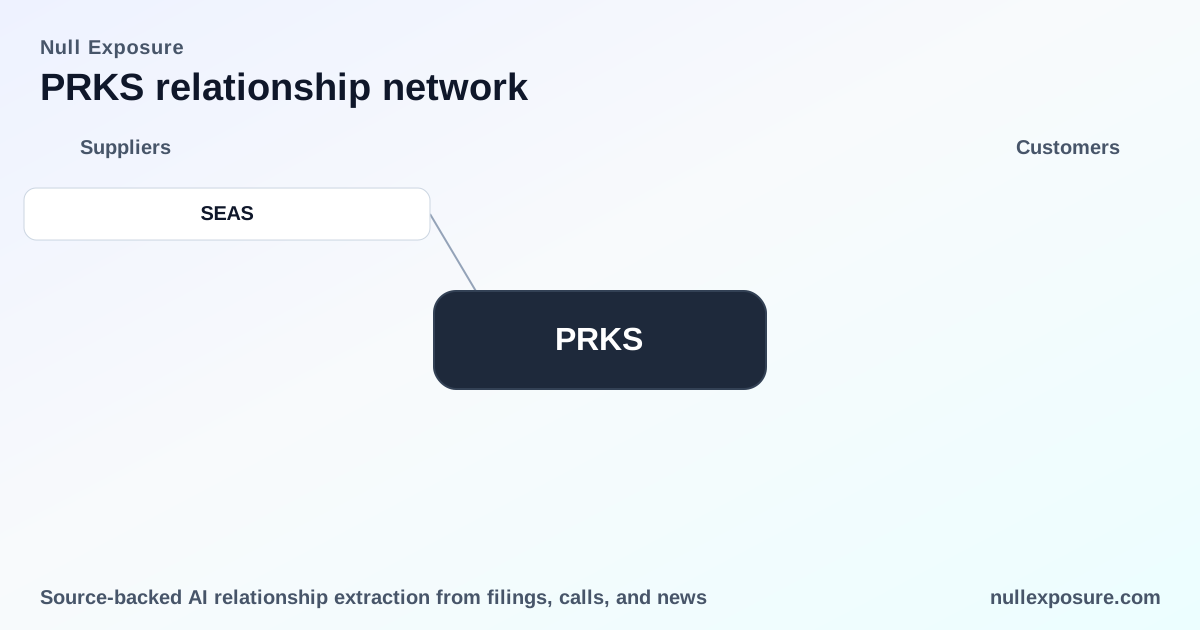
SeaWorld (SEAS)
United Parks & Resorts is listed as having a supplier relationship with SeaWorld, an operator and licensor of SeaWorld theme parks in Orlando, San Antonio and internationally. According to a March 10, 2026 InsiderMonkey profile, SeaWorld operates and licenses SeaWorld-branded parks across multiple U.S. markets and beyond. (Source: InsiderMonkey blog, March 10, 2026).
Additionally, SeaWorld’s public filings show material long-term commitments such as significant senior notes outstanding and large land leases (e.g., Sea World LLC’s multi-decade land lease in San Diego), demonstrating that counterparties in this sector operate under extended financial and real-estate obligations that influence supplier negotiation dynamics. (Source: company filings as of December 31, 2024).
What the constraints say about PRKS’ contracting footprint
A review of contract-related disclosures highlights several company-level signals that matter to creditors, operators and investors.
- Long-term contract posture is dominant. Multiple excerpts reference long tenors for leases and credit facilities, indicating that counterparties and the company itself routinely sign multi-year commitments that determine capital and operational flexibility. (Evidence cites long-term leases and credit facility maturities as of FY2024.)
- Licensing is structural and material. The company uses and depends on a mix of trademark and character licenses — including arrangements tied to Sesame and Busch Gardens IP — which are described as potentially material to operations. If key licenses were renegotiated, revenue and market positioning would be meaningfully affected. (Source: licensing disclosures referenced in FY filings.)
- Government counterparties figure in land use. At least one long-term land lease involves a municipal counterparty; that government relationship introduces unique renegotiation mechanics and public-policy exposure that differ from private landlord leases. (Source: lease disclosures referencing municipal leasehold.)
- Security and supplier controls are codified. The company requires supplier compliance with defined information-security terms and uses SIEM monitoring and third-party advisors for cyber risk — indicating service-provider relationships are contractually constrained and monitored. (Source: company cybersecurity and supplier engagement disclosures.)
These signals combine to produce a supplier posture that values long-term stability — at the cost of limited near-term agility. For investors, that means upside is closely tied to traffic and per-capita spend normalization, while downside is increased if fixed contractual outlays cannot be quickly flexed.
Visit https://nullexposure.com/ for full supplier profiles and contract excerpts that inform these conclusions.
What operators and procurement teams should be watching
- License renewal clauses and termination triggers. Prioritize early-warning monitoring of IP and trademark license dates and renegotiation windows; these are core to park branding and merchandise revenue.
- Lease indexed costs and municipal covenants. For government-held leases, understand municipal obligations and permitted uses — renegotiation often requires political engagement and is slow.
- Counterparty credit and debt schedules. Large outstanding notes and long-dated credit facilities across leisure operators compress negotiation leverage; track maturities and financing covenants as they affect supplier cashflow timing.
- Cyber and service-provider SLAs. Given explicit supplier security requirements, ensure contractual SLAs align with the company’s SIEM practices and 24x7 monitoring commitments.
Investment implications and risk/reward summary
United Parks & Resorts is a capital-intensive, brand-dependent operator whose supplier and licensing map creates both durable revenue channels and embedded operational inflexibility. The company’s profitability profile benefits from high fixed-cost leverage when attendance and per-guest spend recover, but the same fixed commitments — long-term leases, material IP licenses, and contractual security obligations — amplify downside during cyclical slowdowns. The market's forward multiples and EV/EBITDA reflect this risk-return mix; supply-side contracts are a primary transmission mechanism.
For investors and counterparties wanting a deeper read on counterparties, contract tenors and the clause-level exposure that drives operational risk, use the supplier intelligence hub at https://nullexposure.com/ to access primary excerpts and relationship visualizations.
Final takeaways and next steps
- Contracts and licenses are core to PRKS’ value capture — investors should treat supplier and licensing timelines as leading indicators for revenue resilience.
- Concentration in long-term leases and material IP agreements increases event risk; monitor renewal windows and renegotiation triggers.
- Operational controls over suppliers and cyber monitoring reduce some service risk, but do not eliminate the systemic exposure created by non-flexible cost structures.
If your thesis depends on durable brand access and predictable site control, factor supplier-tenor risk into valuation and stress-testing. For primary-source contract excerpts, relationship maps and tailored supplier scoring, go to https://nullexposure.com/ and review the PRKS supplier dossier.