Prelude Therapeutics (PRLD): Supplier posture and what it means for investors
Prelude Therapeutics is a precision, clinical‑stage oncology company that discovers and develops small‑molecule therapies and advances them through clinical trials; it monetizes through eventual drug approvals, commercialization, and partnering/licensing arrangements with larger pharma. The company does not manufacture its own products — its value depends on external suppliers for drug substance, distribution, and clinical trial execution, and on strategic collaborations to access partner assets. For investors evaluating supplier risk, the gating factors are contract terms, single‑source dependencies for critical inputs, and the maturity of outsourced manufacturing and distribution relationships. For a deeper supplier‑risk view, visit Null Exposure.
Why supplier relationships determine PRLD’s near‑term valuation
Prelude is a cash‑burning clinical enterprise with modest revenues (Revenue TTM: $12.14M) and no commercial manufacturing footprint. That operational model makes third‑party relationships not peripheral but central to the company’s ability to execute trials, meet regulatory timetables, and preserve optionality for partnering or outright commercialization. With no internal manufacturing capability, supply continuity, quality control, and distribution logistics are material to program timelines and investor returns.
Key financial context that reinforces supplier importance:
- Market capitalization near $211M with negative EBITDA, signaling sensitivity to any disruption that delays development or raises costs.
- Clinical‑stage profile: development progress — not sales — will drive re‑rating, and that progress depends on reliable suppliers and collaborators.
How Prelude contracts and sources — the operating constraints that matter
Prelude discloses multiple, repeated signals about how it organizes external relationships. These are company‑level operating characteristics, not interpretations of any one supplier:
- Spot contracting posture. Prelude states it obtains supplies on a purchase‑order basis and “does not have long‑term supply arrangements in place,” indicating transactional, spot procurement for critical inputs rather than long‑dated supply contracts. This increases execution risk if demand surges or a supplier reprioritizes capacity.
- No internal manufacturing; reliance on third‑party manufacturers. The company explicitly discloses it lacks manufacturing facilities and depends on external manufacturers for preclinical, clinical and potential commercial supply. That reliance makes production continuity a strategic risk and creates negotiating leverage for suppliers.
- Third‑party distribution and storage are standard. Prelude uses outside providers for storage and distribution of drug substance and product; logistics failures or regulatory non‑compliance at these providers would directly impact trial timelines.
- Clinical execution outsourced to CROs and investigators. The company depends on CROs, laboratories, clinical investigators and consultants to conduct studies and analyze data, so clinical trial project management and vendor selection are materially important.
One named supplier relationship appears in Prelude’s disclosures: in February 2023 Prelude signed an agreement with BeiGene to supply zanubrutinib for combination study, demonstrating the company’s approach of sourcing active pharmaceutical ingredients or comparator drugs from established pharma partners rather than self‑manufacture.
These constraints together create a profile of high criticality, transactional contracting, dispersed vendor roles, and active outsourcing — a combination that delivers scalability but also concentrates operational risk around supplier performance and contract continuity.
The explicit supplier relationships investors should track
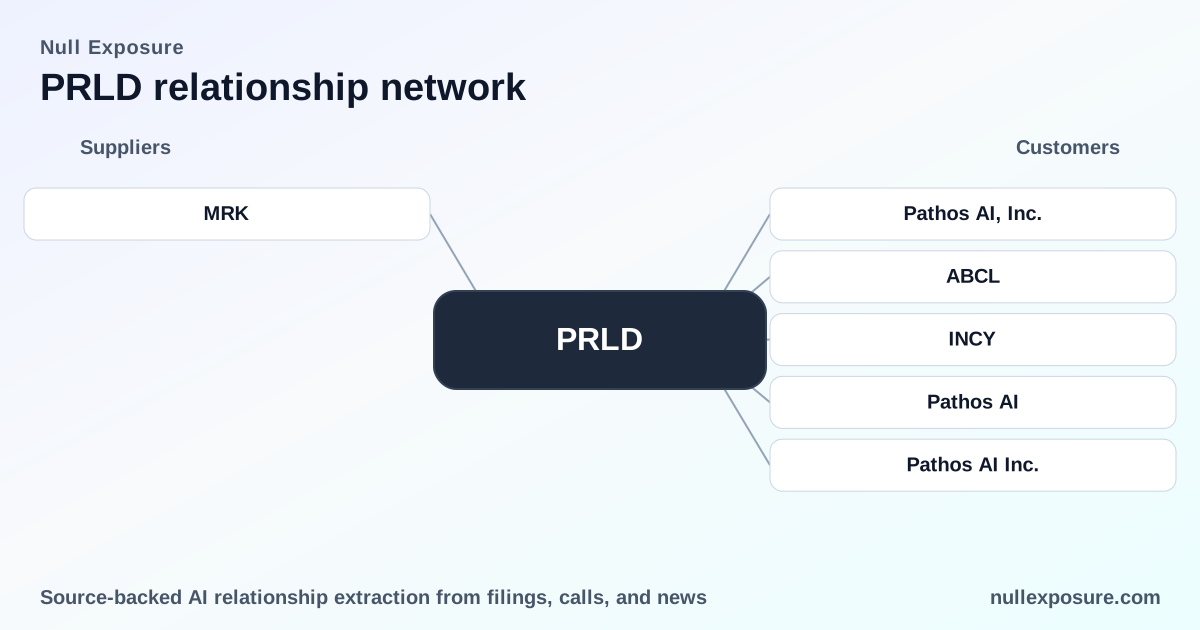
Merck — a collaboration for clinical supply of KEYTRUDA
According to Contract Pharma’s March 10, 2026 report, Merck is supplying KEYTRUDA to Prelude for a Phase 2 clinical combination trial, with Prelude acting as the trial sponsor. This is a strategic, program‑level collaboration because access to KEYTRUDA enables Prelude to test its candidate in combination with an established checkpoint inhibitor, accelerating clinical hypotheses that are valuable to future partners or acquirers. (Source: Contract Pharma, March 10, 2026)
Note: the company’s public disclosures emphasize spot procurement and third‑party manufacturing broadly, and do not imply a long‑term supply commitment beyond the trial support described.
BeiGene — explicit supply agreement for zanubrutinib (from company disclosures)
Prelude’s disclosures state that in February 2023 the company signed an agreement with BeiGene to supply zanubrutinib, a BTK inhibitor, for study in combination with Prelude’s PRT2527, illustrating its strategy of partnering for comparator or combination agents. (Source: Prelude company filings / disclosures)
What investors should watch next — operational triggers and risk indicators
- Contract duration and exclusivity. The current procurement posture is spot‑oriented; monitor whether Prelude converts any of these relationships into multi‑year supply agreements, which would reduce execution risk.
- Single‑source concentration. Identify if any critical raw material or comparator drug is single‑sourced and whether contingency suppliers exist; single‑source exposure is materially adverse for timeline certainty.
- Regulatory responsibility and quality audits. Since Prelude outsources manufacturing and distribution, the firm remains responsible to regulators for supply chain compliance; evidence of clean vendor audits and formal quality agreements will materially de‑risk programs.
- Clinical supply logistics. Supply chain timing for trial starts and enrollment cadence will reveal whether current distribution partners can meet global trial requirements.
Practical takeaways for partnership and investment decisions
- Supplier relationships are not background items — they are executional drivers that can accelerate or derail value creation for a clinical‑stage biotech like Prelude.
- Spot contracts and heavy outsourcing increase near‑term timeline risk; investors should prefer evidence of longer‑term supply commitments or multiple qualified sources for critical inputs.
- Named collaboration with Merck for KEYTRUDA is strategically meaningful because it enables combination trials that can validate Prelude’s assets against industry standards and improve partnering leverage.
For a deeper read on how supplier posture affects biotech valuation and partner selection, visit Null Exposure.
Next steps for investors and operators
Operators should prioritize formalizing supply agreements and documenting quality oversight; investors should press management on supply‑contract tenure, contingency planning, and the status of vendor audits. Track announcements that convert spot procurements into multi‑year supply pacts or that add alternative manufacturers — those are the strongest indicators that supply risk is being proactively managed.
For ongoing monitoring and supplier‑level intelligence on Prelude and similar small‑cap biotechs, see Null Exposure.