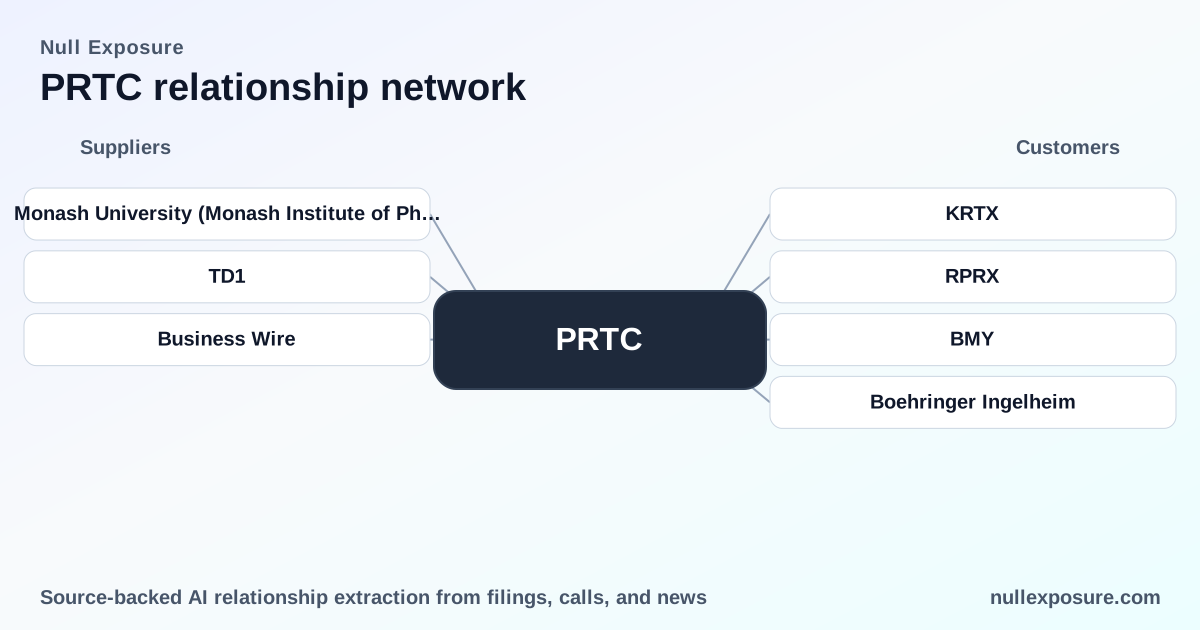
PureTech Health (PRTC) — supplier relationships, commercial posture, and investor implications
PureTech Health builds value by founding and incubating biotherapeutics companies, licensing in academic inventions, and monetizing through equity stakes, milestone-driven licensing deals, and eventual royalties or exits. The firm operates as an IP-first platform that converts early-stage research into independent commercial entities and selective partnerships; this model generates outsized upside on successful exits while keeping a capital-intensive R&D footprint on the balance sheet. For a focused view of supplier relationships and implications for counterparties, read on — and if you want ongoing supplier-risk intelligence, visit https://nullexposure.com/.
How PureTech’s operating model converts science into cash
PureTech is a Boston-headquartered, clinical-stage biotherapeutics company that creates value by spinning out founded entities and licensing academic platforms into proprietary programs. According to the corporate profile, PureTech’s public equity and reported metrics show a market capitalization near $397 million, TTM revenue of about $6.4 million and a negative EBITDA reflecting heavy R&D and portfolio investment. These numbers illustrate a common platform-stage finance profile: capital intensity today for optionality and potential asymmetric returns down the line.
Key business-model characteristics that matter to partners and suppliers:
- Contracting posture: The company favors exclusive, long-term IP licenses and spin-out structures that create durable rights for PureTech or its founded entities, producing locked-in revenue pathways (milestones/royalties) and ongoing collaboration obligations.
- Concentration: Value realization is concentrated in a limited number of programs and spinouts; counterparty exposure to a winning program can be highly material.
- Criticality: Supplier inputs tied to core IP (technology platforms, clinical data services, specialized manufacturing) are strategically critical and command preferential contracting terms.
- Maturity mix: The portfolio combines early-stage discovery assets with a small number of commercial-stage activities (for example, relationships involving founded entities), creating asymmetric supplier demand across clinical and commercial services.
If you are evaluating supplier exposure or looking to partner with PureTech, baseline diligence should include IP assignment clarity, milestone triggers, and the funded runway for the specific founded entity you will serve. Learn more about supplier-centric intelligence at https://nullexposure.com/.
What the headline supplier relationships show
Below are every supplier/partner mention in the available results and what each relationship signals for counterparties.
Monash University (Monash Institute of Pharmaceutical Sciences)
PureTech holds an exclusive license to the Glyph technology platform that originated from Christopher Porter, Ph.D., and his team at Monash Institute of Pharmaceutical Sciences in Melbourne, giving PureTech control over the platform’s commercial development. According to a March 2026 Samoa Observer reference to FY2021, the Glyph platform is licensed exclusively to PureTech, which anchors the company’s rights to that underlying technology. (Source: Samoa Observer, March 2026.)
Takeaway: Exclusive academic licenses concentrate IP ownership with PureTech and imply long-term supplier opportunity for development, but also create single-point dependency on that platform’s success.
TALi / Akili Interactive collaboration
PureTech’s founded entity Akili Interactive executed a license arrangement to incorporate TALi’s technology aimed at addressing early childhood attention impairments; the deal positions Akili to integrate TALi modules into clinical or commercial digital therapeutics workflows. A March 2026 Samoa Observer recap notes that Akili licensed TALi technology (ASX:TD1) that targets early childhood attention, reflecting PureTech’s approach of combining external digital health tools with its founded companies. (Source: Samoa Observer, March 2026.)
Takeaway: Digital-health licensing to founded entities indicates mixed-mode supplier demand—technology vendors can gain footholds with Akili, but contracts will be driven by regulatory and clinical endpoints.
Corporate communications and investor outreach (Business Wire)
PureTech used Business Wire to announce presentation activities, signaling active investor relations and ongoing capital-market engagement; a FinancialContent distribution of a Business Wire release in January 2026 confirmed PureTech’s presentation at a major healthcare investor conference. (Source: Business Wire via FinancialContent, January 2026.)
Takeaway: Regular investor-facing communication elevates transparency requirements for suppliers supporting investor claims (clinical readouts, timelines, regulatory milestones).
Strategic implications for investors and supplier managers
PureTech’s supplier relationships and public filings point to a portfolio-driven, IP-centric contracting model. For investors and operators that will perform services for PureTech or its founded entities, the following points are material:
- Contract design should protect payment milestones and IP reversion. Given PureTech’s reliance on exclusive academic licenses and spinouts, contracts must address milestone shortfalls and rights on termination.
- Counterparty revenue concentration risk is real. Suppliers that focus on a single PureTech program face elevated counterparty risk if clinical timelines slip or strategic priorities shift.
- Regulatory and commercialization contingencies drive value realization. Digital partnerships (for example, Akili/TALi) require supplier readiness for combined clinical validation and regulatory submissions.
- Capital intensity affects supplier credit posture. PureTech’s negative EBITDA and positive trailing P/E reflect volatile earnings and portfolio exits rather than stable operating cashflows; suppliers should plan accordingly for milestone-tied receipts and staged payment terms.
Practical next steps for business development and procurement
- Negotiate milestone-linked payments and escrowed deliverables for R&D services to align cash flows with program milestones.
- Require clear IP assignment and data-ownership clauses when supplying technology or research outputs to a founded entity.
- Model counterparty concentration by stress-testing exposure to a single program’s delay or termination.
If you are assessing supplier risk or pursuing a commercial relationship with PureTech or one of its founded entities, start with a tailored supplier-review: request program funding schedules, license terms, and milestone calendars. For executive-level supplier intelligence and ongoing monitoring, visit https://nullexposure.com/.
Final assessment
PureTech operates as an IP-led, spinout-focused life sciences platform. The supplier landscape is structured around exclusive academic licenses, targeted digital-health integrations, and investor-driven disclosure cadence. For counterparties, the rewards of working with PureTech come with execution and concentration risks that require contract designs that reflect milestone uncertainty and IP centrality.
For ongoing supplier relationship intelligence and monitoring tailored to investor and operator needs, explore offerings at https://nullexposure.com/.