Phillips 66 (PSX): supplier relationships that move margins and ESG transitions
Phillips 66 is an integrated energy company that monetizes through refining margins, midstream fee-based income, chemicals and marketing, and an established shareholder return policy (dividends and buybacks). With fiscal 2025 revenue around $132.4 billion and a market cap near $69.5 billion, the company’s profitability is a function of feedstock sourcing, refinery utilization, and access to advantaged crude and technology partners that reduce operating cost or emissions. For investors evaluating counterparty and supplier risk, the recent supplier signals show a mix of commodity counterparties, global trading houses, and engineering/technology partners that together shape both near-term margins and long-term transition exposure. Visit NullExposure for deeper supplier intelligence: https://nullexposure.com/
How Phillips 66 wins: keep refineries fed cheaply, capture midstream tolls, and lower carbon intensity through partnerships that reduce future regulatory or carbon-cost risk. Supplier relationships are therefore both a margin lever and a strategic hedge.
What the supplier list implies about PSX’s operating posture
Phillips 66’s supplier footprint in the latest coverage is a blend of direct crude sourcing and specialist technology/service providers. That mix signals a company strategy that simultaneously pursues price-advantaged feedstocks and capital partnerships to decarbonize refining assets. From an investor standpoint, three operating-model characteristics stand out:
- Contracting posture: evidence points to active spot-market procurement for certain feedstocks and regulatory credits, meaning the company accepts short-dated price exposure where it extracts upside from refinery flexibility. This is consistent with its obligation to blend renewable fuels and buy RINs if necessary.
- Geographic reach and supply concentration: procurement and renewable-fuel activities are described as global, indicating broad sourcing that reduces single-supplier concentration but increases exposure to geopolitical and sanctions dynamics when dealing with sanctioned or state-owned producers.
- Service and technology reliance: Phillips 66 contracts established engineering and technology providers for carbon capture integration and complex project delivery, signaling reliance on third-party expertise for its decarbonization roadmap.
If you want a consolidated view of Phillips 66 supplier signals and how they translate to counterparty risk, learn more at NullExposure: https://nullexposure.com/
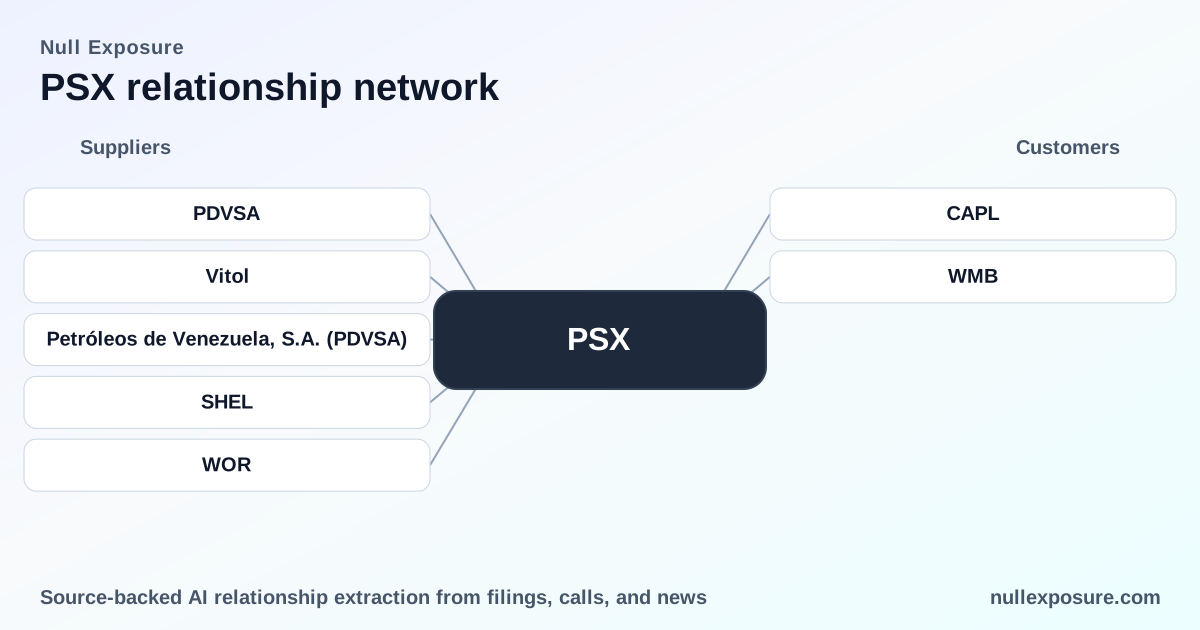
The suppliers named in recent coverage — what every operator and investor needs to know
PDVSA / Petróleos de Venezuela, S.A.
- Phillips 66 has sought U.S. approval to purchase heavy Venezuelan crude directly from PDVSA starting in April 2026, which would let the refiner avoid intermediaries and capture cheaper heavy crude economics. This represents direct sovereign-seller exposure with attendant geopolitical and compliance risk. Source: Reuters coverage cited in Finviz and Simply Wall St reporting (first seen Mar 10, 2026).
Vitol
- Phillips 66 purchased Venezuelan oil from trading house Vitol at discounts to Brent, demonstrating the company’s use of trading intermediaries to secure advantaged heavy crude when direct deals are not available. Trading houses like Vitol act as margin enhancers but also as operational counterparties for logistics and pricing risk. Source: Finviz energy markets piece (first seen Mar 10, 2026).
Shell Catalysts & Technologies (SHEL)
- Phillips 66 has partnered with Shell’s catalysts and technology division to deploy carbon-capture technology at the Humber refinery project, using Shell’s solution to reduce CO2 emissions from refining operations. This is a strategic technology relationship intended to lower the refinery’s carbon intensity and help meet regulatory and stakeholder expectations. Source: Business Live coverage on the Humber project (first seen Mar 10, 2026).
Worley (WOR)
- Worley is contracted to integrate Shell’s carbon-capture technology into Phillips 66’s Humber refinery and to design the CO2 export infrastructure, positioning the firm as the primary engineering integrator for the project. Worley’s role increases project delivery and execution risk exposure but provides specialist execution capability necessary for CCS deployment. Source: Business Live article on Humber integration (first seen Mar 10, 2026).
(For completeness: multiple entries in the monitoring set reference PDVSA under slightly different names—both the PDVSA shorthand and the formal Petróleos de Venezuela, S.A.—reflecting the same sovereign supplier relationship reported across outlets.)
Constraints and company-level signals that matter to investors
The captured constraints give concrete signals about how Phillips 66 manages supplier relationships at the firm level:
- Spot contracting is a material part of procurement posture. Excerpts describing RIN purchases and open-market obligations indicate Phillips 66 accepts short-dated market exposure for regulatory credits and certain feedstocks. That increases earnings volatility tied to commodity and credit price swings, but it also allows the company to capture immediate arbitrage into refinery margins.
- Global supply operations are embedded in Renewables activities. Phillips 66’s Renewable Fuels segment explicitly describes global feedstock procurement and the marketing of renewable fuels, signaling cross-border counterparty risk and logistical complexity rather than narrow regional sourcing.
- Service-provider relationships are core to non-commodity risk management. The company engages consultants and third parties for cybersecurity and specialized engineering, which reduces in-house capability risk but creates dependency on third-party maturity and contract performance.
Together these constraints point to a moderately decentralized procurement model with strategic reliance on third-party technical partners — a structure that optimizes for margin capture and speed-to-market but raises supplier execution and geopolitical risk dimensions.
Investment implications and risk checklist
- Near-term margin upside if direct PDVSA purchases clear compliance and logistics hurdles, because heavy Venezuelan grades are trading at discounts that refinery configurations like Phillips 66’s Gulf Coast assets can exploit.
- Geopolitical and compliance risk rises with engagement of state-owned sellers in sanctioned jurisdictions; that risk is operationally concentrated until contracts are finalized and cleared.
- Execution risk on decarbonization projects is tied to the delivery capabilities of engineering partners (e.g., Worley) and technology licensers (e.g., Shell Catalysts); delays or cost overruns would hit capital allocation and the company’s emissions trajectory.
For a targeted supplier-risk briefing tailored to your portfolio exposure, see NullExposure’s supplier intelligence: https://nullexposure.com/
Bottom line for investors
Phillips 66 is actively managing two levers: feedstock cost advantage through flexible sourcing and trading relationships, and longer-term emissions reduction through technology and engineering partnerships. The supplier mix reported in March 2026 signals potential near-term margin improvement if Venezuelan crude access is approved, offset by increased compliance and geopolitical scrutiny, while CCS partnerships illustrate a credible path to lower carbon intensity but introduce project execution risk. Monitor regulatory approvals, counterparties’ sanctions status, and project execution updates from Shell and Worley as leading indicators of value capture or downside. Explore more supplier-focused intelligence and keep supplier-driven risk under continuous review at NullExposure: https://nullexposure.com/