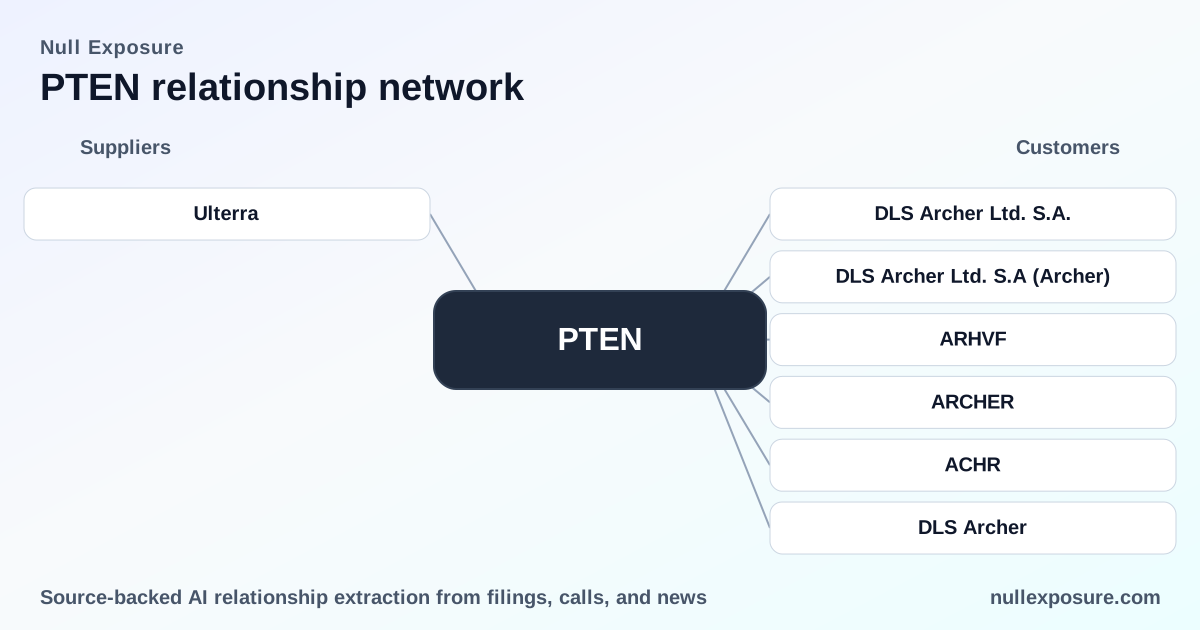
Patterson-UTI Energy (PTEN): supplier relationships and procurement posture investors should track
Patterson‑UTI Energy operates as an onshore contract driller and completion services provider, monetizing through day‑rate drilling contracts, completion service fees, and material procurement margins tied to its completion services business. Revenues are driven by rig utilization and completion activity, while margins and working capital reflect procurement commitments for consumables such as proppants and drill bits. For a concise supplier‑risk snapshot and supplier mapping tools, visit https://nullexposure.com/.
How PTEN makes money and why suppliers matter to returns
Patterson‑UTI earns revenue by deploying drilling rigs and providing completion services to oil and gas operators; the company’s top line reflects rig activity and the volumes of completions it executes on behalf of customers. On a trailing twelve‑month basis PTEN reported roughly $4.83 billion in revenue and ~$900 million of EBITDA, while market capitalization sits near $3.85 billion — underscoring a capital‑intensive operating model where procurement contracts and equipment uptime directly influence cash flow. According to Patterson‑UTI’s corporate site, the firm’s fleet and service breadth anchor operator relationships and create recurring purchasing needs for consumables and complementary equipment.
Supplier relationships therefore function as an operational lever: reliable drill‑bit suppliers and guaranteed proppant delivery underpin utilization and completion throughput, which in turn affect day rates and utilization economics. For direct access to an interactive supplier register and relationship intelligence, see https://nullexposure.com/.
On‑record supplier relationships you need to know
Ulterra — drill bits referenced in earnings commentary
Patterson‑UTI referenced Ulterra drill bits as part of an expansion in drilling products, highlighting a marketed position that includes Ulterra bits in Argentina. This indicates a commercial relationship in drilling consumables and product sourcing that supports international drilling activity. Source: InsiderMonkey earnings call transcript, March 10, 2026.
What the disclosed procurement constraints reveal about PTEN’s operating posture
PTEN’s public disclosures and relationship signals disclose several actionable procurement characteristics that investors should translate into portfolio risk metrics:
-
Long‑term contracting posture: PTEN’s completion services segment has committed to minimum proppant purchases under multi‑year agreements with a remaining obligation of approximately $21.7 million as of December 31, 2025, allocated roughly $16.9 million in 2026 and $4.8 million in 2027. This constitutes a clear multi‑period procurement liability and reduces spot exposure for that portion of demand. (Disclosure as of Dec 31, 2025.)
-
Magnitude of spend: The disclosed minimum obligations place procurement spend into the $10m–$100m band for these commitments, signaling meaningful but not outsized vendor spend relative to PTEN’s revenue base. This level of contracted spend is large enough to be material to specific supplier economics while still manageable at the corporate scale.
-
Contract role and bargaining posture: Company disclosures describe PTEN as a counterparty that has entered purchase agreements for completion materials; the filing frames PTEN as a committed buyer with defined minimums, which strengthens supply certainty but reduces flexibility in falling markets. This contracting posture benefits suppliers through predictable volumes while exposing PTEN to committed spend in downcycles.
-
Maturity and timing: The near‑term skew of obligations (majority falling in 2026) compresses procurement liquidity risk into the coming 12–18 months, requiring active monitoring of supplier solvency and logistics execution in that window.
Collectively, these signals show a procurement model that blends committed multi‑year supply with operational reliance on specialized consumables, making supplier continuity and price pass‑through important drivers of PTEN’s margin stability.
Operational and financial implications for investors
-
Operational criticality: Drill bits and proppants are operationally critical — any disruption or delivery lag cascades into rig downtime and completion delays. The Ulterra relationship is a commercial example of the type of supplier that supports field operations; the proppant purchase obligations are the clearest quantified supplier exposure.
-
Concentration and counterparty risk: The disclosed minimum obligations are material enough that a failure by key vendors would degrade utilization and increase unit costs; investors should evaluate supplier diversity and the existence of fallback sources in tendering and logistics.
-
Cash flow and balance‑sheet impact: Contracted proppant spend and equipment sourcing affect working capital and capex cadence. PTEN’s reported negative trailing EPS and modest operating margins indicate earnings leverage to both commodity cycles and procurement cost inflation: any uptick in supplier prices without pass‑through compresses margins quickly.
-
Valuation context: The company trades at an EV/EBITDA around 5.25, forward P/E roughly 8.4, and exhibits a low beta. These multiples embed expectations of recovery in utilization but also price in procurement and operational risks; supplier disruptions would justify a multiple re‑rating.
For deeper supplier‑level transparency and supplier risk scoring tools, explore https://nullexposure.com/.
Practical next steps for investors and operators
- Prioritize counterparty diligence on firms supplying proppants and drill‑bits (Ulterra and like players): verify capacity, geographic delivery performance, and alternate sourcing options.
- Monitor PTEN’s 2026 execution against the disclosed $16.9 million obligation to gauge how contracted volumes convert to delivered completions and working capital draw.
- Factor procurement commitments into scenario models for day‑rate sensitivity and margin compression, especially in a downcycle.
Bottom line: what to watch and the decisive takeaway
Patterson‑UTI’s supplier footprint combines targeted product relationships (e.g., Ulterra drill bits) with quantified multi‑year proppant purchase commitments totaling roughly $21.7 million outstanding as of year‑end 2025. That structure improves supply certainty but locks in spend into a near‑term window and creates potential margin exposure if input prices rise or demand softens. Investors should integrate supplier contract timing and counterparty resilience into valuation and operational stress tests.
For ongoing supplier intelligence and to map these relationships into procurement risk models, visit https://nullexposure.com/.