Pelthos Therapeutics (PTHS): Supplier relationships and operational constraints investors should price in
Pelthos Therapeutics develops and plans to commercialize non-opioid therapeutic spray formulations and monetizes through exclusive licensing, product commercial sales and downstream distribution rights. The company outsources drug substance and finished‑product manufacturing to third parties and secures exclusive global commercialization and purchase terms through licensing agreements — a model that converts R&D assets into scalable revenue only after regulatory success and secure supplier performance. Investors should value Pelthos as an early‑stage biotech whose commercial trajectory is tightly coupled to a small set of external manufacturing and licensing partners. For a deeper run‑through of supplier exposures, visit https://nullexposure.com/.
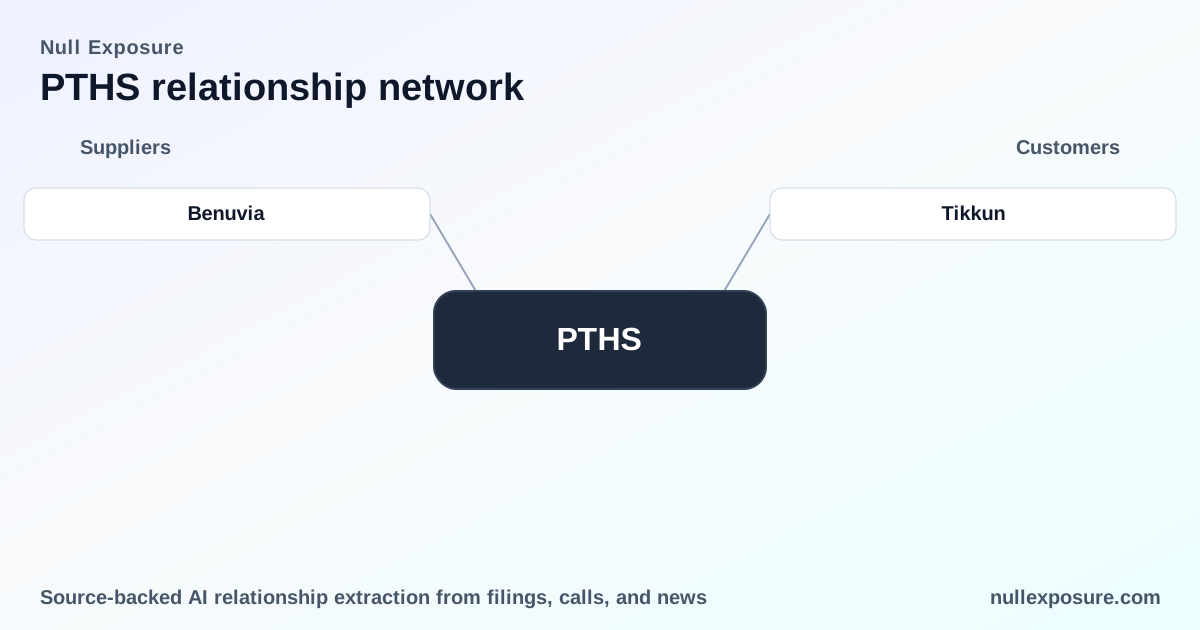
One relationship investors cannot ignore: Benuvia supplies the Spray Formulations
Under the Benuvia License Agreement, Benuvia is contractually responsible for manufacturing and supplying Pelthos’ Spray Formulations, while Pelthos retains exclusive, worldwide rights to develop, commercialize and distribute those products and will purchase them exclusively from Benuvia under a separate supply agreement. That arrangement transforms Benuvia from a typical supplier into a structurally important counterparty for any future commercial launch. According to Pelthos’ FY2024 Form 10‑K, the licensing and exclusive purchase mechanics are explicit and central to the company’s commercialization strategy.
Why that single supplier relationship matters for valuation and execution
- Concentration of manufacturing and purchase obligations creates counterparty risk. Exclusive purchasing rights combined with a single named manufacturer elevate the operational impact of supply disruptions, capacity constraints, or quality control issues.
- Commercial upside depends on secure, global supply. Pelthos holds exclusive worldwide commercialization rights for the Spray Formulations; therefore, Benuvia’s ability to meet global regulatory and volume requirements directly influences revenue timing and scale.
- Contract posture is licensing plus exclusive supply. The 10‑K makes clear the economics flow from a licensing agreement with attached supply commitments rather than a simple toll‑manufacturing relationship, which implies negotiated pricing, supply guarantees and likely milestones or purchase obligations that will affect margins.
Source: Pelthos Therapeutics, FY2024 Form 10‑K (Benuvia License Agreement and Benuvia Supply Agreement disclosures).
Practical investor takeaway
Treat Benuvia as a de facto strategic supplier and commercial partner; any diligence or scenario analysis should test Benuvia’s capacity, regulatory track record and contract remedies.
Other named third parties and company‑level supplier signals
Pelthos’ filings disclose other relevant third‑party relationships and operational patterns that shape supplier risk.
-
Camden Capital LLC — Pelthos has a Consultant Agreement with Camden that provides CFO and strategy services through an engaged executive; the agreement stipulates monthly fees and accrued payment terms. This is relevant because it signals reliance on external, contracted management support rather than fully staffed internal functions. Source: Pelthos FY2024 filing referencing the Consultant Agreement (Jan 10, 2023).
-
Clinical Manufacturing Organizations (CMOs) — Pelthos states it will manufacture clinical and eventual commercial supply through CMOs in the U.S. and potentially other jurisdictions and explicitly does not produce drug substance in‑house. External CMOs have already produced enough CC8464 drug substance to support early clinical programs and toxicology work. This is a company‑level operational design: Pelthos operates a virtual manufacturing model and depends on third‑party capacity and compliance for product progress. Source: Pelthos FY2024 disclosures regarding CMOs and CC8464 production.
How these constraints shape the operating model — actionable characteristics
Pelthos’ disclosures and constraint signals reveal a clear operating profile investors should map into scenarios:
- Contracting posture: licensing with exclusive purchase commitments. The Benuvia License Agreement is a licensing arrangement that includes exclusive supply/purchase obligations, creating contractual lock‑ins that affect flexibility and negotiating leverage.
- Concentration: supplier concentration is high for the Spray Formulations. Exclusive purchase language concentrates supply risk with Benuvia and underscores the need for performance covenants or contingency plans.
- Criticality: supplier relationships are mission‑critical. Because Pelthos does not manufacture in‑house, external manufacturing partners are foundational to trial execution, regulatory filings and any revenue generation.
- Maturity: early‑stage operational maturity with active, contract‑driven execution. Filings show active consultant arrangements and CMO engagements in support of clinical work — this is not a mature commercial supply chain, but an active, evolving supplier base centered on outsourced manufacturing.
- Segmental focus: manufacturing outsourced to CMOs rather than internal production. This lowers fixed capital requirements but increases operational dependence on external quality systems, lead times, and capacity allocation.
Source base: Pelthos FY2024 10‑K excerpts on licensing, CMOs, consultant agreements and manufacturing supply.
Risk framing for investors and operators
- Downside scenarios: supply disruption at Benuvia, failure to secure additional CMO capacity for scale, or contractual disputes that delay commercial launch could materially push out revenue and increase spend on sourcing alternatives.
- Upside scenarios: if Benuvia demonstrates robust scalable manufacturing and Pelthos achieves regulatory approvals, exclusive purchase and worldwide commercialization rights concentrate upside for Pelthos and simplify global go‑to‑market execution.
- Operational mitigants: investors should look for contractual language around capacity guarantees, quality indemnities, termination rights, and supplier redundancy plans in subsequent filings; operators should prioritize early secondary sourcing and supply‑chain audits.
For a supplier‑centric risk monitor and to keep tracking updates, see https://nullexposure.com/.
Clear actions for investors and operators
- For investors: model scenarios where Benuvia underperforms and where it overdelivers; stress test time‑to‑revenue against supply interruptions. Review future filings for explicit supply agreement terms and any third‑party qualification steps.
- For operators: lock in secondary CMO relationships, negotiate performance‑based clauses in supply agreements, and build transparent quality and capacity metrics into supplier oversight.
- For both: track filings for amendments to the Benuvia Supply Agreement and CMO qualification milestones that materially change supply risk.
Bottom line: Pelthos’ commercial prospects are tightly coupled to licensed product economics and outsourced manufacturing performance. Benuvia is the single largest named supplier exposure for the Spray Formulations; CMOs and contracted consultants complete a virtual operating model that prioritizes flexibility but concentrates execution risk. Keep these supplier constraints front and center when valuing PTHS. If you want continuous supplier intelligence and contract‑level signal updates, go to https://nullexposure.com/.