Palvella Therapeutics (PVLA): supplier relationships that support an early‑stage rare‑disease biotech
Palvella Therapeutics develops targeted therapies for rare genetic skin and lymphatic disorders and monetizes through clinical development, regulatory approvals and eventual product commercialization, supported today by capital markets activity and partnerships with contract manufacturers and financial intermediaries. The company's operating model is R&D‑centric and outsourcing‑dependent: it funds development through equity raises and relies on third‑party CMOs and service providers to supply clinical and (potentially) commercial materials. For investors evaluating supplier risk and partner concentration, the FY2026 equity offering and accompanying disclosures provide the clearest window into who Palvella works with and how those relationships influence execution risk. Learn more on the platform at https://nullexposure.com/.
High‑level operating model and what it means for supplier risk
Palvella is a research‑first biotech with no internal manufacturing capability and zero reported revenue TTM. The company explicitly contracts out manufacturing and trial execution: this creates concentration risk, because the loss of a single CMO could materially and adversely affect timelines, regulatory filings and costs. Management also points to third‑party managed services for cybersecurity and CROs/academic partners for trials; while Palvella states it has not identified cybersecurity incidents that materially affected results, the firm’s disclosures affirm a continued exposure to third‑party operational risk.
Key operating constraints as signals rather than raw metrics:
- Contracting posture: Palvella is contract‑heavy — it expects to continue outsourcing manufacturing and trial services for the foreseeable future. This reduces fixed capital needs but increases dependency on supplier performance and compliance with FDA standards.
- Concentration and criticality: The firm relies on a limited number of CMOs for preclinical/clinical supplies; loss of those relationships is identified by management as potentially material and in the worst case critical to commercial viability.
- Maturity and stage: Supplier roles are predominantly in the manufacturing and services segments and are currently active and operationally central rather than nascent pilot relationships.
- Cybersecurity posture: Company disclosures state no material cybersecurity incidents to date, while acknowledging third‑party managed services are part of their mitigation strategy.
These signals collectively point to a classic small‑cap biotech risk profile: low capital intensity internally but high operational leverage to supplier continuity and quality. If you operate in this space, prioritize supplier audits and contingency planning when negotiating or partnering.
Who showed up on the FY2026 capital markets ledger (and what they did)
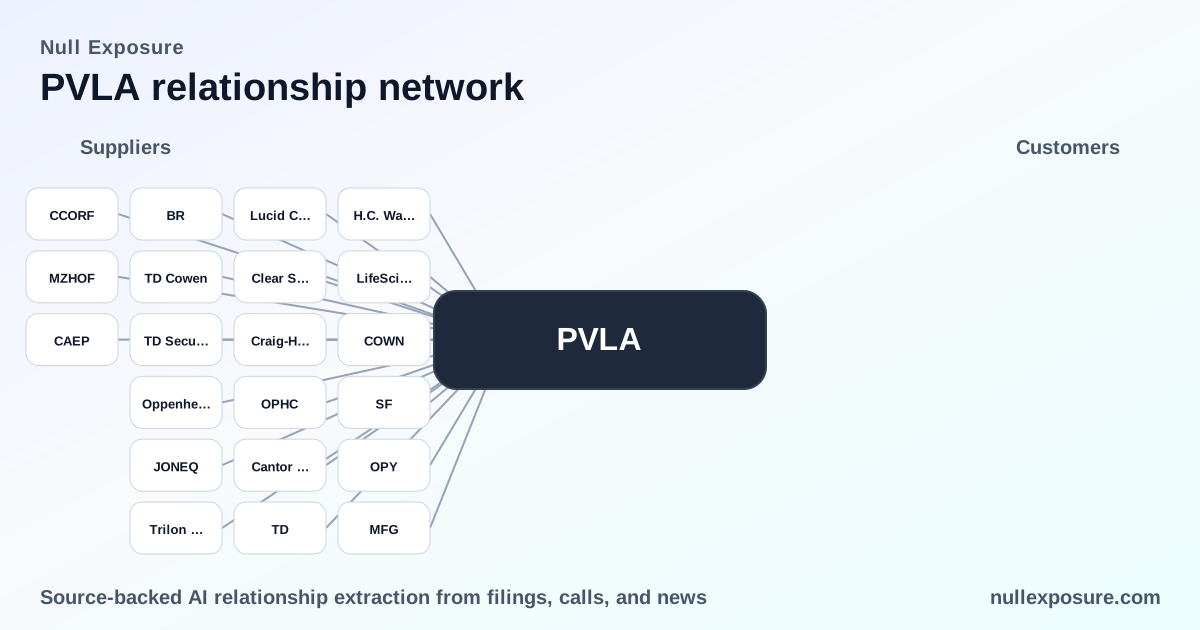
Palvella executed an upsized public offering in FY2026 that involved multiple investment banks and co‑managers; these institutions are important commercial counterparties for capital access and distribution. Below are the relationships referenced in Palvella’s offering disclosures and contemporaneous press coverage, with plain‑English summaries and sources.
-
H.C. Wainwright & Co. — Acted as one of the joint bookrunning managers on Palvella’s upsized offering, participating in syndicate execution and distribution. Source: GlobeNewswire press release, Mar 2, 2026 (closing announcement) https://www.globenewswire.com/news-release/2026/03/02/3247266/0/en/Palvella-Therapeutics-Announces-Closing-of-Upsized-Public-Offering-of-Common-Stock-and-Exercise-in-Full-of-the-Underwriters-Option-to-Purchase-Additional-Shares.html.
-
LifeSci Capital — Listed among the joint bookrunning managers for the offering, providing sell‑side distribution to life‑science investors. Source: GlobeNewswire press release, Mar 2, 2026 https://www.globenewswire.com/news-release/2026/03/02/3247266/0/en/Palvella-Therapeutics-Announces-Closing-of-Upsized-Public-Offering-of-Common-Stock-and-Exercise-in-Full-of-the-Underwriters-Option-to-Purchase-Additional-Shares.html.
-
TD Cowen (TD Cowen) — Served as a joint bookrunning manager and primary underwriter representative in the syndicate; TD Cowen’s role features in the pricing and closing notices. Source: GlobeNewswire press release, Feb 26 and Mar 2, 2026 https://www.globenewswire.com/news-release/2026/02/26/3245154/0/en/Palvella-Therapeutics-Announces-Pricing-of-Upsized-Public-Offering.html.
-
Stifel — Participated as a joint bookrunner and syndicate representative supporting the equity raise. Source: GlobeNewswire press release, Mar 2, 2026 https://www.globenewswire.com/news-release/2026/03/02/3247266/0/en/Palvella-Therapeutics-Announces-Closing-of-Upsized-Public-Offering-of-Common-Stock-and-Exercise-in-Full-of-the-Underwriters-Option-to-Purchase-Additional-Shares.html.
-
Oppenheimer & Co. — Named among the joint bookrunning managers, contributing to placement and investor outreach. Source: GlobeNewswire press release, Mar 2, 2026 https://www.globenewswire.com/news-release/2026/03/02/3247266/0/en/Palvella-Therapeutics-Announces-Closing-of-Upsized-Public-Offering-of-Common-Stock-and-Exercise-in-Full-of-the-Underwriters-Option-to-Purchase-Additional-Shares.html.
-
Mizuho — Identified as a joint bookrunning manager in offering materials, part of multi‑bank syndicate. Source: GlobeNewswire press release, Feb 26, 2026 https://www.globenewswire.com/news-release/2026/02/26/3245154/0/en/Palvella-Therapeutics-Announces-Pricing-of-Upsized-Public-Offering.html.
-
Canaccord Genuity — Named as a joint bookrunner for the offering, participating in distribution to institutional clients. Source: GlobeNewswire press release, Feb 26, 2026 https://www.globenewswire.com/news-release/2026/02/26/3245154/0/en/Palvella-Therapeutics-Announces-Pricing-of-Upsized-Public-Offering.html.
-
Cantor Fitzgerald (Cantor) — Included in syndicate listings and cited in market reporting on the offering’s pricing and structure as an underwriter representative. Source: TradingView coverage of the offering pricing, Mar 2026 https://www.tradingview.com/news/tradingview:af76f63a7edcd:0-palvella-therapeutics-prices-1-6m-share-offering-at-125-expects-187-3m-net-td-cantor-stifel/.
-
TD Securities / TD Securities (USA) LLC — Identified both as a counterparty representative and as the entity through which final prospectus copies could be requested via Broadridge distribution channels. Source: GlobeNewswire pricing notice, Feb 26, 2026 https://www.globenewswire.com/news-release/2026/02/26/3245154/0/en/Palvella-Therapeutics-Announces-Pricing-of-Upsized-Public-Offering.html and TradingView reporting.
-
Broadridge Financial Solutions — Named as the distribution agent for prospectus materials on behalf of TD Securities (contact point for final prospectus). Source: GlobeNewswire pricing notice, Feb 26, 2026 https://www.globenewswire.com/news-release/2026/02/26/3245154/0/en/Palvella-Therapeutics-Announces-Pricing-of-Upsized-Public-Offering.html.
-
Lucid Capital Markets — Served as a co‑manager for the offering, listed among the group that helped place the deal. Source: GlobeNewswire closing press release, Mar 2, 2026 https://www.globenewswire.com/news-release/2026/03/02/3247266/0/en/Palvella-Therapeutics-Announces-Closing-of-Upsized-Public-Offering-of-Common-Stock-and-Exercise-in-Full-of-the-Underwriters-Option-to-Purchase-Additional-Shares.html.
-
Clear Street — Served as a co‑manager on the offering, supporting distribution infrastructure for the deal. Source: GlobeNewswire Feb 26 and Mar 2, 2026 https://www.globenewswire.com/news-release/2026/02/26/3245154/0/en/Palvella-Therapeutics-Announces-Pricing-of-Upsized-Public-Offering.html.
-
Craig‑Hallum — Listed among co‑managers, participating in the placement of shares to investors. Source: GlobeNewswire closing press release, Mar 2, 2026 https://www.globenewswire.com/news-release/2026/03/02/3247266/0/en/Palvella-Therapeutics-Announces-Closing-of-Upsized-Public-Offering-of-Common-Stock-and-Exercise-in-Full-of-the-Underwriters-Option-to-Purchase-Additional-Shares.html.
-
Jones — Named as a co‑manager in the offering materials, helping with investor outreach and logistics. Source: GlobeNewswire closing press release, Mar 2, 2026 https://www.globenewswire.com/news-release/2026/03/02/3247266/0/en/Palvella-Therapeutics-Announces-Closing-of-Upsized-Public-Offering-of-Common-Stock-and-Exercise-in-Full-of-the-Underwriters-Option-to-Purchase-Additional-Shares.html.
-
Trilon Advisors LLC — Listed as an external communications/IR contact in a separate press release about Phase 3 topline results, indicating engagement with advisory/IR support for clinical communications. Source: Sahm Capital / Trilon Advisors press distribution, Feb 24, 2026 https://www.sahmcapital.com/news/content/palvella-therapeutics-announces-positive-topline-results-from-phase-3-selva-clinical-study-of-qtorin-39-rapamycin-anhydrous-gel-qtorin-rapamycin-in-microcystic-lymphatic-malformations-2026-02-24.
Collectively, the syndicate gives Palvella access to broad distribution and life‑science specialist coverage; the syndicate composition also signals investor appetite and the company’s ability to finance near‑term development.
Explore a structured supplier map for Palvella on the platform: https://nullexposure.com/.
Investment implications and action points for operators
- Short term: The FY2026 equity raise reduces immediate financing risk, but operational continuity depends on a small set of CMOs; investors should require a disclosure review of supplier contracts and contingency plans in diligence.
- Counterparty risk: The underwriting syndicate is diversified across specialist and bulge‑bracket firms, which strengthens capital access; operational counterparties are concentrated, which elevates execution risk.
- Governance and monitoring: For operators and procurement teams, prioritize vendor audits, validated secondary suppliers and contractual exit/transfer clauses to protect trial and launch timelines.
- Cyber and service resilience: Although Palvella reports no material cybersecurity incidents, its reliance on managed service providers makes ongoing vendor security assessments a governance imperative.
If you need a tailored supplier risk report or real‑time alerts for Palvella counterparties, start here: https://nullexposure.com/. For deeper diligence and contract‑level analysis, our platform maps supplier criticality and concentration to financial exposure scenarios — request a walkthrough at https://nullexposure.com/.
Closing takeaway: Palvella’s capital markets partnerships are robust and diversified, but its operational success is tightly coupled to a limited set of manufacturing and service providers; for investors and operators that dynamic defines the principal execution risk to monitor.