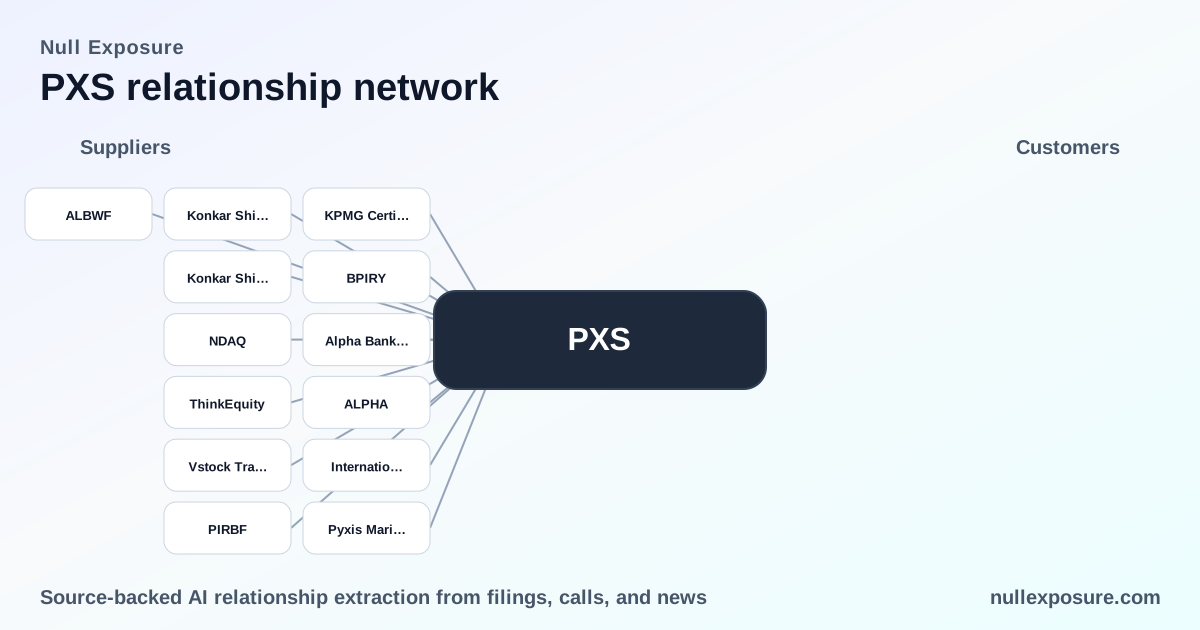
Pyxis Tankers (PXS) — supplier and service relationships that shape liquidity and operations
Pyxis Tankers operates and monetizes as a Greece‑headquartered shipping owner focused on MR and dry‑bulk vessels that generate revenue through time charters and spot employment while running an asset‑light operational model that outsources technical and commercial ship management; the company finances its fleet with secured bank facilities and periodic capital markets activity. Key value drivers are charter coverage, debt refinancing cadence, and the stability of affiliated and independent managers who execute day‑to‑day operations. For an integrated supplier view and tailored counterparty scoring, visit https://nullexposure.com/.
How Pyxis contracts and who gets paid first
Pyxis’s operating model shows a deliberate reliance on external managers and regional banks for funding, which produces a contracting posture defined by short to medium term credit relationships and a moderate level of counterparty concentration in Greece. The company uses secured loan facilities tied to individual vessels, pays recurring management and administrative fees to both affiliated and third‑party managers, and uses third parties for shareholder services and placement agents when accessing equity markets. No formal constraints were flagged in the supplier constraints feed; that absence is itself a company‑level signal that contractual limitations were not captured in the review period, so assess counterparties based on tenure, magnitude and recency of transactions below.
Supplier and service relationships you need to know
KPMG Certified Auditors S.A.
KPMG resigned as Pyxis’s independent registered public accounting firm, with the audit committee receiving the resignation notice on June 27, 2025. According to a Globe and Mail press release covering the company filing (FY2025), the departure introduces an immediate overhead of securing a new auditor and potential near‑term disclosure work. (Globe and Mail, press release, June 27, 2025)
Piraeus Bank S.A. / Piraeus Bank
Pyxis amended secured loans with Piraeus Bank covering three vessels and reduced margins to Term SOFR +1.80%, extending maturities and lowering interest cost on aggregate outstanding principal of $42.1 million; the amendments delayed the next loan maturity to September 2028 and improved liquidity. The amendments were announced January 26, 2026, in the company release and summarized in market reporting. (GlobeNewswire/Globe and Mail coverage, Jan 26, 2026)
Alpha Bank S.A. / Alpha Bank
Pyxis refinanced secured facilities with Alpha Bank for two MR tankers—the Pyxis Lamda and Pyxis Theta—closing deals on December 17, 2025, that produced $33.35 million of five‑year facilities and generated incremental proceeds earmarked for fleet expansion. This refinancing materially reshapes Pyxis’s maturity ladder and liquidity available for capex or buybacks. (Company release via GlobeNewswire and industry reporting, Dec 17, 2025)
International Tanker Management Ltd. (ITM)
ITM provides unaffiliated technical management for Pyxis’s MR vessels; management fees for Q4 2025 were stable at $0.5 million year‑over‑year, indicating a steady, contracted technical management cost base. (Company financial results release, FY2025–FY2026 reporting)
Pyxis Maritime Corp. (Maritime)
Pyxis Maritime Corp., the company’s tanker ship manager, receives administrative fees that include inflation adjustments (2.74% Greece inflation rate applied for 2024 in Q4 2025 billings), reflecting an indexed service relationship with predictable cost escalation. (Company financial results release, Q4 2025)
Konkar Shipping Agencies S.A. / Konkar Shipping Agencies, S.A.
Konkar, an affiliated private company, manages Pyxis’s dry‑bulk vessels and charges recurring management fees; the company repeatedly discloses reliance on Konkar for dry‑bulk management across FY2024–FY2026 reporting. (Company releases and investor communications, FY2024–FY2026)
The NASDAQ Stock Market, Inc.
Nasdaq previously issued a deficiency notice to Pyxis in 2020 over a minimum bid price breach, a historical compliance event that remains relevant to investor communications and listing governance, though subsequent corporate actions have addressed capital structure and liquidity since. (Company notice via GlobeNewswire, June 29, 2020)
ThinkEquity
ThinkEquity acted as sole placement agent for a $25.0 million private placement of common stock that closed in 2021, establishing a precedent for Pyxis using boutique placement agents to raise equity when necessary. (Company press release, Feb 24, 2021)
Vstock Transfer, LLC
Vstock Transfer served as paying agent for preferred share distributions during a prior redemption process, indicating reliance on third‑party transfer agents for shareholder servicing and preferential security administration. (Corporate disclosure in prior redemption announcement, FY2024)
What these relationships imply about Pyxis’s operating model and risk profile
The supplier map reveals a company structured to keep capital costs variable and operations flexible by outsourcing technical and administrative functions while using secured lending tied to specific vessels to finance growth.
- Contracting posture: Pyxis uses vessel‑level secured loan agreements with regional Greek banks and short to medium‑term management contracts; this creates repeated refinancing events that are manageable but cyclical.
- Counterparty concentration: Funding is concentrated with Greek commercial banks (Alpha Bank, Piraeus Bank) and operational control is concentrated with a small set of managers (Pyxis Maritime, Konkar, ITM), which elevates counterparty risk if one counterparty’s terms deteriorate.
- Criticality of suppliers: Management firms and banks are critical to operations and liquidity; audit oversight (now with KPMG’s resignation) is also critical for investor confidence and regulatory compliance.
- Maturity and stability signals: Recent refinancings in December 2025 and January 2026 extend maturities and lower funding cost, signaling active liability management and improved near‑term liquidity profile.
Key operational takeaway: Pyxis balances operational flexibility through outsourcing with a financial model that requires periodic refinancing — recent bank amendments materially reduce near‑term refinancing pressure but concentrate counterparty exposure in Greek lenders.
For a deeper counterparty assessment and scoring model tailored to shipping suppliers, see https://nullexposure.com/.
Risk considerations and what investors should watch next
- Audit transition risk: The departure of KPMG increases near‑term disclosure and audit execution risk; investors should track appointment of a successor auditor and any related commentary in upcoming filings.
- Refinancing cadence: Even with extended maturities to 2028 for certain facilities, Pyxis continues to depend on successful renegotiations for growth or repurchase programs; covenant terms and pricing in future renewals will determine free cash flow sensitivity.
- Affiliated manager concentration: Reliance on affiliated managers like Konkar and Pyxis Maritime increases governance and related‑party scrutiny; fee disclosures and any shifts to third‑party managers should be monitored.
Final read: what matters for supplier due diligence
Assess bank counterparty health, monitor the auditor replacement process, and validate management fee structures with an eye toward related‑party economics. These three areas determine operational continuity, cost of capital, and investor transparency.
If you want a supplier risk brief or counterparty scorecard for Pyxis Tankers, start here: https://nullexposure.com/. For bespoke research on shipping counterparties and financing corridors, contact our team via https://nullexposure.com/ — we convert filings and press releases into actionable supplier risk intelligence.