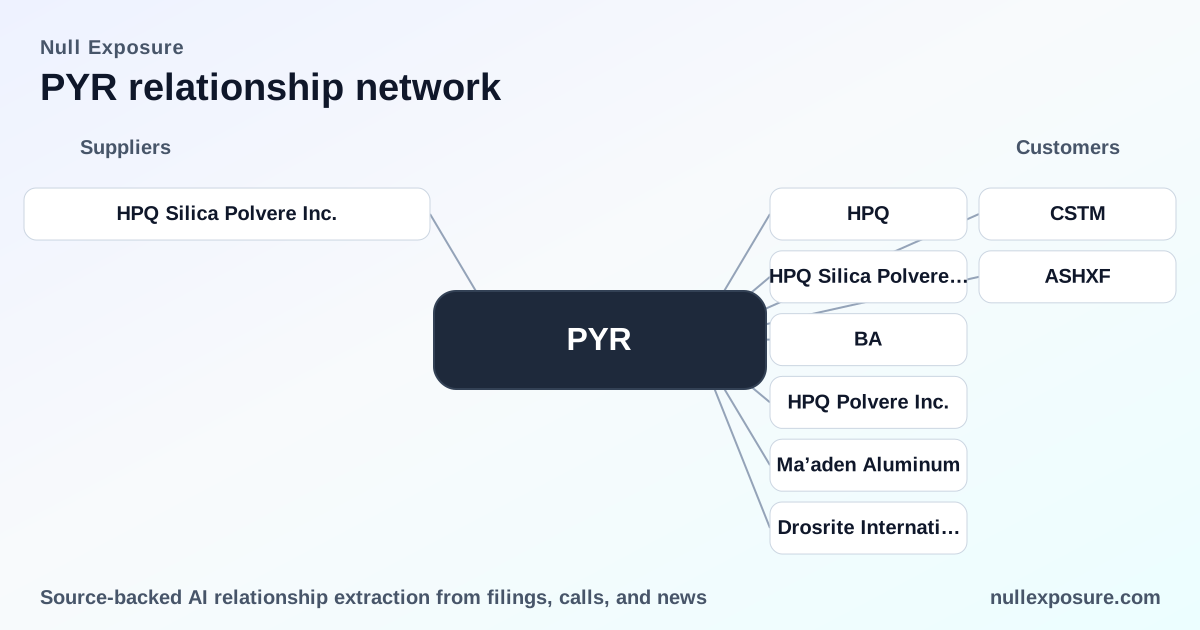
PYR supplier intelligence: what investors and operators need to know
PyroGenesis (PYR) designs and sells high-temperature plasma-based equipment and engineering services and monetizes through discrete equipment sales, long-cycle engineering contracts, and after-sales service and parts — revenue that is sensitive to customer mix and sales classification. A recent strategic move into equity ownership of a buyer alters how those revenues are reported and shifts contracting posture from pure supplier to joint-venture partner, with direct implications for revenue visibility, third‑party customer concentration metrics, and valuation comparables. Read on for a concise breakdown of the relationship, the practical constraints this structure signals at the company level, and the diligence questions operators and investors must prioritize. For an ongoing, searchable view of supplier dynamics, visit https://nullexposure.com/.
The headline: supplier becomes part-owner of a customer
A March 2026 report in SustainableBiz documented that PyroGenesis is taking a 50% stake in a fumed‑silica technology subsidiary associated with HPQ Silica Polvere Inc. That transaction converts future equipment transactions with that entity from third‑party sales into intra‑group sales, and therefore those sales will not count as client transactions in the same way on public reporting. This is a direct change in how revenue is classified and how commercial relationships are presented to the market, with immediate consequences for comparability across periods and for how investor models treat recurring service versus one‑off equipment revenues. (Source: SustainableBiz, March 10, 2026.)
Supplier relationships on the record
HPQ Silica Polvere Inc.
PyroGenesis has been an equipment supplier to HPQ Silica Polvere, and PyroGenesis’s acquisition of a 50% stake in HPQ’s fumed‑silica technology subsidiary converts those equipment sales into sales to a subsidiary rather than to an external client; this alters the economic presentation and investor-relevant metrics for client concentration and growth. (SustainableBiz, March 10, 2026.)
What that single relationship implies for corporate signaling
The public record for PYR’s supplier scope is narrow, but the recorded change in relationship type generates company-level signals that investors and operating partners must treat as structural rather than incidental:
- Contracting posture is shifting from supplier to equity partner. Equity ownership aligns incentives with the counterparty but reduces the visibility of arm’s-length commercial performance and shifts negotiation dynamics toward joint governance rather than standard supplier contracting.
- Revenue classification and concentration metrics will become less transparent. Turning major buyers into affiliates reduces headline client-sales figures and obscures the true economic dependence on a given technology or counterparty unless the company provides clear segment disclosure.
- Criticality and pricing leverage change. Ownership in a customer can increase long‑term captured value (through equity appreciation and profit share) but reduces simple resale or customer‑diversification narratives that many investors use to model downside protection.
- Maturity of commercial relationships increases. A transaction that converts client sales to intra‑group activity signals longer‑term capital commitment and deeper integration, which investors should treat as strategic capital allocation rather than ordinary working capital deployment.
These are company-level constraints on how PYR presents its operations and should be incorporated into valuation and procurement diligence rather than treated as isolated statistics.
How this affects valuation and risk assessment
PyroGenesis’s repositioning changes several inputs in standard investment models:
- Revenue growth and quality: Reported equipment sales to an affiliate will reduce third‑party client revenue growth, even if underlying economic activity remains constant; investors must reclassify reported figures to compare like‑for‑like periods.
- Margin and cash-flow expectations: Equity ownership introduces capital‑gain potential but also exposes PYR to the operational and capital needs of the partner subsidiary; forecast cash flows require consolidation or equity‑method adjustments depending on accounting treatment.
- Governance and related‑party risk: Related‑party transactions require disclosure and raise questions about transfer pricing, minority protections, and exit mechanics; investors and procurement teams must demand clarity on governance rights and exit covenants.
- Market multiples and comparables: Comparable‑company analysis becomes unreliable if a meaningful share of historical "client sales" is now internalized; adjust multiples to reflect true external revenue base.
Diligence checklist for investors and operators
Ask for direct answers to these operational and governance questions when engaging PYR or counterparts:
- What accounting treatment will PYR use for sales to the newly owned subsidiary, and how will management present like‑for‑like revenue in investor materials?
- What contractual protections and transfer-pricing rules govern commercial transactions between PYR and any affiliates?
- What governance rights accompany the 50% stake (board seats, vetoes, exit timelines) and what capex or working-capital commitments are foreseen?
- How does management plan to preserve or disclose third‑party customer concentration metrics going forward?
- What scenarios trigger consolidation versus equity-method accounting, and how will that affect reported indebtedness and leverage metrics?
These procurement and investment questions establish whether the transaction is strategic value capture or an accounting-driven reclassification of sales.
For a broader look at supplier-level exposures and how similar corporate moves have influenced earnings quality, visit https://nullexposure.com/.
Practical counsel for portfolio managers and operators
Treat the HPQ-related transaction as both an opportunity and a reporting risk. Opportunity comes from increased upside if the fumed‑silica technology scales and PYR captures equity value; risk comes from reduced transparency on third‑party revenue and potential governance entanglements that complicate exit planning. Require forward-looking disclosures and scenario reconciliations from management that show reported revenue, like‑for‑like external revenue, and consolidated economic exposure side‑by‑side for at least three fiscal periods.
Bottom line and recommended next steps
The conversion of a buyer into a part‑owned affiliate is a deliberate strategic choice that alters the shape of PyroGenesis’s commercial model. Investors must adjust valuation frameworks to separate economic reality from accounting presentation and demand governance clarity to limit related‑party risk. Operators evaluating supplier relationships should insist on clear transfer-pricing, performance milestones, and exit mechanics before accepting affiliate transactions as a substitute for arm’s-length contracts.
For ongoing supplier intelligence and to monitor how PYR's partner engagements evolve, go to https://nullexposure.com/. If you require a customized review of PYR’s partner structure or a modeled reconciliation of external versus affiliate revenue, contact our research desk at https://nullexposure.com/ for tailored analysis.