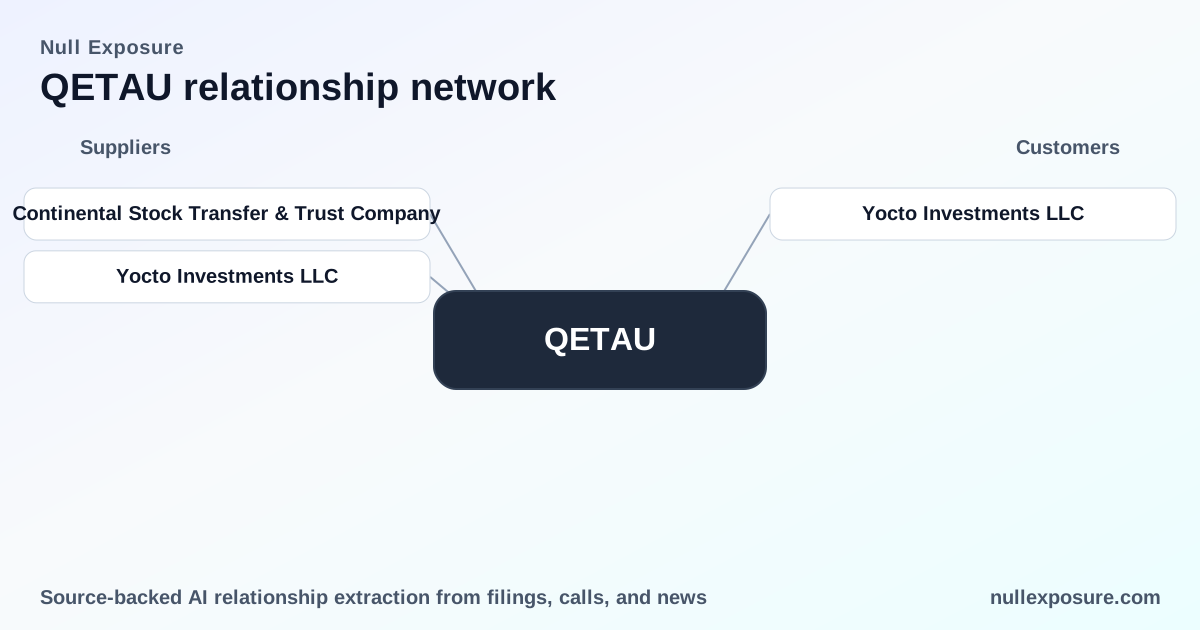
Quetta Acquisition Corporation Unit (QETAU): Supplier relationships that define a SPAC's near-term runway
Quetta Acquisition Corporation Unit (QETAU) is a classical special-purpose acquisition company: it holds IPO proceeds in a trust account and is structured to monetize through a business combination or liquidate the trust to return capital to public holders. In the interim the vehicle carries no operating revenue, relies on sponsor-provided administrative services, and places IPO proceeds with a transfer agent/custodian—arrangements that set the operational cadence and counterparty risk profile for investors and counterparties.
Explore supplier and counterparty signals for SPAC counterparties at https://nullexposure.com/.
Why these supplier relationships matter for investors and operators
For SPACs the supplier ledger is not incidental—custodians and sponsors determine whether funds are secure, whether operational overheads are funded, and how quickly the company can close a business combination. QETAU presents the typical SPAC profile: no revenue, no operating businesses, and a trust account holding IPO proceeds. That means the entire economic story sits on a handful of relationships that are either custodial (protecting investor capital) or operational (delivering the back-office and regulatory compliance services necessary to pursue a deal).
Key company-level financial characteristics reinforce that posture: zero revenue, negative book value, and a declared trust account funded after the IPO (see relationship detail below). These are not operating metrics of an active enterprise so much as structural plumbing that determines how and whether the SPAC can execute on its mandate.
Visit https://nullexposure.com/ for deeper supplier-risk intelligence on SPAC counterparties.
Custodian: Continental Stock Transfer & Trust Company — holding the cash runway
Continental Stock Transfer & Trust Company is the custodian maintaining the trust account that holds IPO proceeds for Quetta; $69,690,000 was placed in that trust account upon closing of the IPO and private placement, which is the pool intended to back redemptions and support deal economics. This custody relationship is essential because the trust balance represents the SPAC’s primary pool of investor capital. (Source: TradingView summary of Quetta’s SEC 10-Q, reported March 10, 2026 — covering FY2024 disclosures.)
Sponsor / administrative provider: Yocto Investments LLC — monthly support agreement
Quetta has an agreement to pay its Sponsor $10,000 per month for office space, utilities, secretarial, and administrative support, with unpaid amounts accruing without interest and payable by the consummation of an initial business combination. That contractual structure is typical for SPAC sponsors: it preserves upfront capital in the trust while creating an accruing liability that converts into a near-term cash obligation upon deal closing or liquidation. (Source: TradingView summary of Quetta’s SEC 10-Q, reported March 10, 2026 — covering FY2024 disclosures.)
Company-level constraints and what they signal about operating posture
The filings disclose two observable supplier-related constraints that are meaningful for counterparties and investors:
- The company has a service-provider contracting posture: it maintains ongoing monthly fee arrangements for sponsor/administrative support that accrue without interest. That legal posture creates an asset-light operating model but builds contingent liabilities that crystallize at the time of a business combination or liquidation.
- The company is operationally immature but active: Quetta engaged outside counsel and compliance services for ongoing public report preparation under a flat fee arrangement and paid a retainer during FY2024, signaling the SPAC is actively maintaining SEC compliance while pursuing a combination.
Both signals are company-level indicators rather than relationship-specific ratings; they show concentration of critical services on a small set of counterparties, limited operational scale, and reliance on contractual accruals rather than immediate cash outflows. According to the company’s SEC filings summarized in March 2026, Quetta engaged Celine & Partners PLLC for U.S. corporate and securities compliance at a flat monthly fee and paid a $50,000 retainer during the year ended December 31, 2024. (Source: company SEC disclosures summarized via TradingView, March 10, 2026.)
What this means for counterparty risk and deal execution
- Criticality: The trust account custodian is a single-point repository for the IPO proceeds; any operational or reputational problem with the custodian would materially affect liquidity available for redemptions and closing a deal. Continental’s role is therefore critical.
- Concentration: A small number of counterparties supply custody, sponsor services, and legal/compliance support—a standard SPAC risk profile where operational failure in one supplier can create execution drag.
- Contracting posture: Accruing monthly sponsor fees without interest preserves the trust balance now but creates contingent obligations that will compress cash flow once the SPAC consummates a deal or liquidates.
- Maturity: Quetta is pre-combination, with no operating revenues and limited balance-sheet activity beyond the trust and accrued sponsor/admin obligations, so near-term performance is governed by legal timelines and counterparty reliability rather than product or sales execution.
Investors evaluating exposure to QETAU should track custodian confirmations, sponsor capitalization and willingness to fund working capital, and the timeline for a definitive merger—each influences whether accrued liabilities convert into manageable obligations or into a bargaining point at closing.
Tactical implications for investors and operators
- Monitor the trust account balance and any redemptions closely; the $69.69M trust is the primary economic buffer. (TradingView coverage of the 10-Q, March 10, 2026.)
- Verify the sponsor and key service providers’ capacity and incentives to fund pre-closing operations; accrued, interest-free fees concentrate risk if the sponsor is thinly capitalized.
- Confirm counterparty continuity: the engagement of outside counsel and compliance support (flat fee plus retainer) signals an active filings calendar; disruption in those services would materially delay SEC filings and transaction timelines.
For operator diligence and vendor negotiation, demand explicit terms on how sponsor accruals are handled in various exit scenarios and require robust custodian reporting.
If you want a supplier-risk intelligence briefing tailored to SPAC counterparties, visit https://nullexposure.com/.
Final takeaways and next steps
Quetta Acquisition Corporation Unit is a textbook SPAC: no operating revenues, a funded trust account, and a narrow set of supplier relationships that determine its ability to transact. Continental Stock Transfer & Trust Company holds the trust funds that underwrite investor returns, while the sponsor relationship includes an accruing monthly service fee that will crystalize at combination or liquidation. Company-level signals—engagement of compliance counsel under a flat fee and the accrual structure for sponsor services—underscore a low-maturity, high-concentration operating model reliant on a few critical counterparties.
For investors and operators, the priority is to monitor custodian confirmations, sponsor capitalization, and compliance-service continuity—all of which govern whether the SPAC converts capital into a viable target or returns funds to investors.
Learn how to monitor counterparties and supplier risk for SPACs at https://nullexposure.com/.