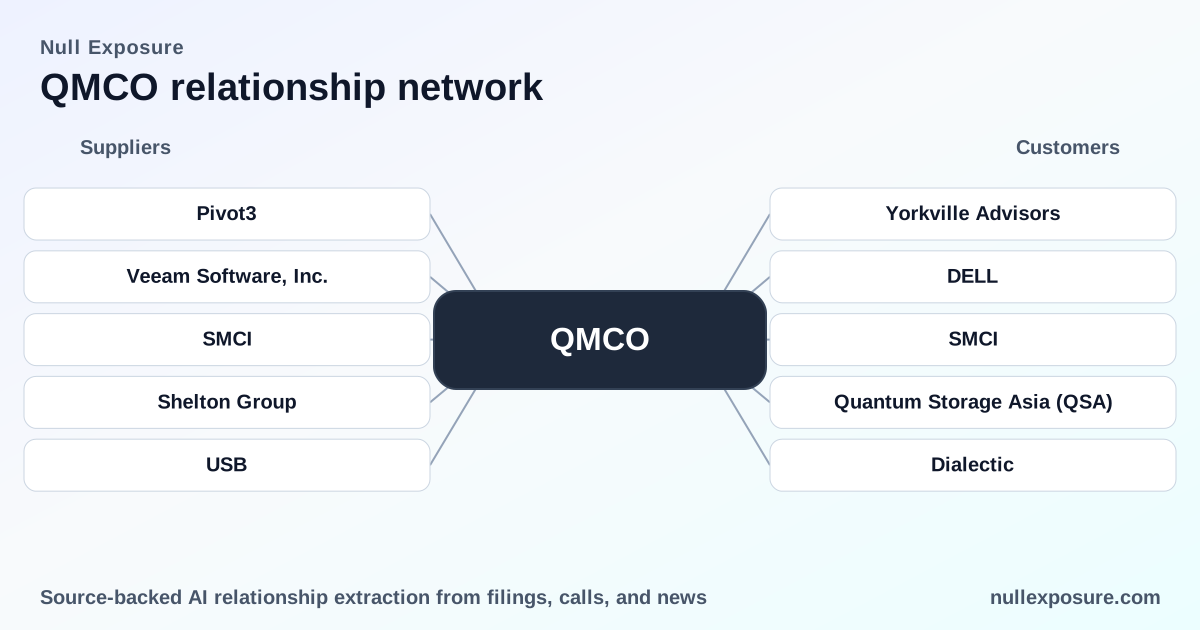
Quantum Corporation (QMCO) — Supplier Relationship Intelligence and Operational Constraints
Quantum Corporation designs and sells hardware and software for storing and managing digital video and unstructured data and monetizes through product sales (storage appliances and tape systems), software and subscriptions (data management and protection), and services (warranty, repairs, and professional services). Revenue drivers are product shipments into media, surveillance and enterprise backup markets, recurring software/support contracts, and occasional inorganic growth or financing events that reshape capital structure. For procurement and investor diligence, focus on contract manufacturing footprints, service-provider networks, and financing counterparties that can affect operational continuity and balance-sheet risk.
Discover deeper supplier signals and supplier coverage at https://nullexposure.com/.
How Quantum’s supplier posture shapes operational risk
Quantum runs a globally distributed supply chain with an emphasis on contract manufacturing and third-party logistics, plus a mix of internal and outsourced service capability for repairs and warranty work. That structure creates both scalability and single-point risks: it reduces fixed manufacturing overhead but concentrates operational exposure in contract manufacturers and logistics providers across regions. Key characteristics investors should treat as part of the operating model:
- Contracting posture: Quantum relies on contract manufacturers in the U.S. and Mexico and uses third‑party logistics in EMEA and APAC, which signals a supplier-dependent manufacturing strategy rather than vertically integrated production. This lowers capital intensity but increases dependency on vendor performance and global logistics flows.
- Geographic footprint and concentration: Active operations in EMEA and APAC make the company sensitive to regional logistics disruptions and component lead times; global diversification helps demand access but requires robust supplier oversight.
- Service model and criticality: Warranty and non‑warranty repairs are handled through a mix of internal teams and third‑party service providers, indicating that post‑sale customer experience and uptime are partially outsourced and thus tied to supplier SLAs.
- Maturity and spend profile: Professional services and audit fees in the $1M–$10M band (auditor engagement data) signal recurring, material supplier spend that is institutionalized and contractually managed.
These are company‑level signals extracted from filings and public communications rather than being tied to a single vendor relationship.
Relationships on record — what each link tells you
Pivot3 — expanded surveillance portfolio (FY2021)
Quantum acquired Pivot3’s video surveillance portfolio and related assets, positioning the company to strengthen its surveillance and HCI-focused product mix for security markets. According to a PR Newswire release (FY2021), the deal transferred surveillance-focused software and assets into Quantum’s product lineup, expanding its addressable market.
Veeam Software, Inc. — backup platform qualification (FY2023)
Quantum qualified its enterprise backup storage portfolio with the Veeam Data Platform, including Veeam Backup & Replication V12, which enables tighter interoperability with a leading backup software vendor and supports enterprise channel sales. A StorageNewsletter article (July 2023) reported the qualification and its implications for enterprise backup compatibility.
Supermicro — component and system-level supply dynamics (FY2024)
Discussions in press coverage highlight that high‑speed all‑flash systems from vendors such as Supermicro have long lead times, a dynamic that can directly affect Quantum’s ability to ship high‑performance systems on schedule. Blocks & Files noted (Nov 2024) that lead-time pressures in all‑flash supply chains present timing risk for vendors integrating or sourcing those systems.
Shelton Group — outsourced investor relations contacts (FY2026)
Quantum’s investor relations contact information is routed through Shelton Group for multiple fiscal announcements, indicating use of an external communications/IR firm for investor outreach and press logistics. QuantiSnow insight releases (FY2026) carry Shelton Group contact details for quarterly and full‑year financial notices.
Shelton Group — (second filing/notice) (FY2026)
A separate QuantiSnow insight posting for another fiscal-quarter release again lists Shelton Group investor contacts, reinforcing the use of the same external IR firm for routine disclosure and investor communications. This duplication across filings confirms a consistent outsourced IR arrangement (FY2026).
U.S. Bank Trust Company — trustee and collateral agent for PIK notes (FY2025)
Quantum appointed U.S. Bank Trust Company as trustee and collateral agent for its 10.00% PIK notes due 2028, which are initially convertible at $10.00 per share and secured by company assets; this establishes a secured financing counterparty relationship that affects creditor rights and asset encumbrance. TradingView reported the indenture details (Dec 18, 2025), documenting the trustee appointment and terms.
What those relationships imply for investors and operators
Collectively, the relationships depict a company that is product‑centric but dependent on a web of contract suppliers and external service providers to execute sales, maintain customer uptime, and manage capital structure. Key implications:
- Operational sensitivity to component lead times (Supermicro reference) increases the importance of inventory management and supplier diversification for high‑margin flash systems.
- Acquisition-driven product expansion (Pivot3) can accelerate TAM access but requires integration of software IP and service workflows into existing operations.
- Third‑party partnerships for enterprise software interoperability (Veeam) are critical to win enterprise backup deals and secure recurring revenue.
- Outsourced investor communications (Shelton Group) is consistent with small‑cap governance models where specialist firms handle IR and press logistics.
- Secured financing relationships (U.S. Bank Trust) create creditor priorities and collateral encumbrances that investors must monitor alongside equity dilution risk from convertible/PIK features.
For procurement and operations teams: verify contract manufacturing audit rights, monitor lead‑time reporting from key suppliers, and include service SLAs for third‑party repair vendors in renewal windows. Learn more about supplier risk signals and monitoring services at https://nullexposure.com/.
Practical due‑diligence checklist for QMCO supplier risk
- Confirm contract manufacturer locations and contingency plans for U.S./Mexico sites.
- Validate third‑party logistics coverage across EMEA and APAC and test alternative routing options.
- Review service agreements for warranty and non‑warranty repairs to ensure SLA alignment with customer expectations.
- Assess financing documents and trustee terms to understand collateralization and potential restrictions on asset sales or capex.
- Map software interoperability certifications (for example, Veeam qualification) to commercial pipelines and renewal timing.
Closing view and next steps
Quantum’s supplier ecosystem is strategically broad but operationally consequential: outsourced manufacturing and logistics give flexibility but increase execution risk, while software and acquisition moves expand product reach. For investors, supplier diligence should sit alongside financial covenant and cash‑flow analysis because secured financings and equipment lead times directly affect both revenue cadence and downside scenarios.
For a structured supplier‑risk review or to track supplier changes over time, visit https://nullexposure.com/ to see how these relationships are monitored and how similar signals influence investment and operational decisions.