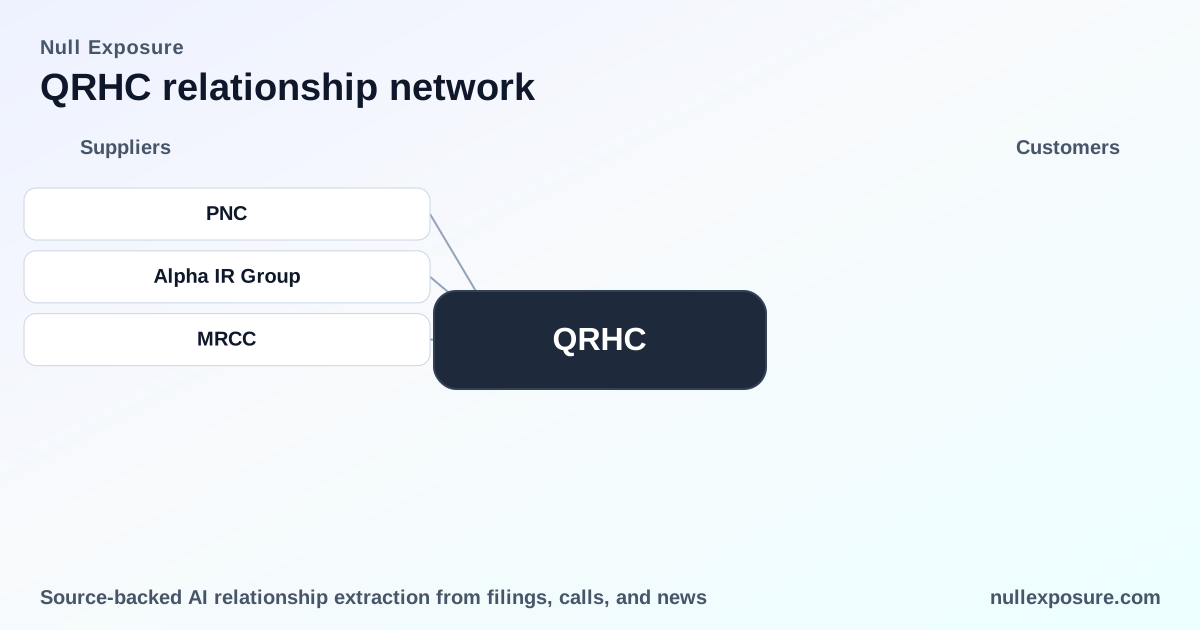
Quest Resource Holding (QRHC) — supplier relationships and what they mean for investors
Quest Resource Holding Corporation operates collection, recycling and waste-disposal businesses across the United States and monetizes through fee-based waste services, commodity recovery, and regional disposal operations. The company generates roughly $261.3 million in trailing twelve‑month revenue with constrained profitability (EBITDA about $5.1 million) and a market capitalization near $23.6 million; supplier and financing relationships therefore directly affect margins, working capital and the path to steady cash generation. For investors and operators evaluating vendor risk, the current publicly surfaced suppliers and counterparties reveal a mix of banking counterparties, investor‑relations support and outsourced administrative functions that are material to cash flow and market communication. Learn more and access the full supplier analysis at https://nullexposure.com/.
Why these supplier relationships matter to a small-cap waste operator
Quest runs capital‑intensive, logistically complex operations where bank lines and third‑party contracts translate directly into throughput, pricing and cost structure. The three visible relationships in recent public records are concentrated in two functional buckets: financing counterparties (PNC and Monroe) and outsourced communications/administration (Alpha IR Group and a third‑party benefits administrator referenced in company remarks). Together they illuminate contracting posture, cost of capital, and externalization of non‑core activities—each a lever for operational leverage or loss.
Key company metrics that frame supplier risk:
- Revenue (TTM): $261.3M and EBITDA: $5.09M, indicating thin operating cushions against financing cost increases.
- Market cap: ~$23.6M, signalling that external credit and vendor terms carry outsized importance relative to market equity.
- Insider ownership ~30% and institutions ~37%, a governance mix that influences diligence and vendor oversight.
If you are evaluating strategic supplier exposure for QRHC, start with these interdependencies and monitor any shifts in financing spreads, IR arrangements, or outsourcing terms. For more context and continuous supplier monitoring visit https://nullexposure.com/.
The counterparties you need to know — plain English summaries
PNC
An earnings-call transcript for Q3 2025 notes the PNC line as a baseline for financing cost comparisons, with another lender’s debt carrying a higher spread relative to PNC’s facility. According to the Q3 2025 call transcript published on InsiderMonkey, PNC’s line functions as a reference pricing instrument for Quest’s short‑term banking structure, explaining why movements in that facility directly affect reported interest expense. (InsiderMonkey, Q3 2025 earnings call transcript: https://www.insidermonkey.com/blog/quest-resource-holding-corporation-nasdaqqrhc-q3-2025-earnings-call-transcript-1644109/)
Monroe
The same Q3 2025 earnings call transcript explicitly references a Monroe loan as being priced approximately five percentage points higher than the PNC line, creating a material delta in finance cost for the company. This spread differential makes Monroe debt a significant driver of QRHC’s near‑term interest expense and cash‑flow strain. (InsiderMonkey, Q3 2025 earnings call transcript: https://www.insidermonkey.com/blog/quest-resource-holding-corporation-nasdaqqrhc-q3-2025-earnings-call-transcript-1644109/)
Alpha IR Group
Quest uses Alpha IR Group as its investor relations contact for earnings and market communications, as disclosed in the company’s Q3 2025 earnings announcement posted to GlobeNewswire. Outsourcing investor communications centralizes external messaging and controls disclosure cadence, which is important given QRHC’s small public float and concentrated ownership. (GlobeNewswire press release, October 27, 2025: https://www.globenewswire.com/news-release/2025/10/27/3174945/0/en/Quest-Resource-Holding-Corporation-to-Report-Third-Quarter-2025-Financial-Results-and-Host-Earnings-Call-on-November-10-2025.html)
Outsourced administrative services — a company-level signal
Quest has stated that it “contracts with a third‑party administrator for medical claims and benefit processing,” which is a company‑level operational choice rather than a counterparty‑specific disclosure. This outsourced arrangement signals several structural characteristics of Quest’s operating model:
- Contracting posture: Management prefers off‑balance sheet technical services for HR/benefits to limit internal headcount and fixed overhead.
- Concentration risk: A single third‑party administrator for benefits creates a single point of failure for employee claims and back‑office compliance.
- Criticality: Benefits administration is critical for workforce stability and compliance; failure could produce employee relations costs and regulatory scrutiny.
- Maturity: Outsourcing routine administrative functions is typical of smaller, capital-constrained operators seeking scalability without fixed cost increases.
These factors are company‑level signals—use them to interrogate vendor SLAs, termination clauses and continuity plans during diligence.
What investors should watch next
The relationship evidence available prioritizes three monitoring lines that move valuation and operational risk:
- Financing spreads and refinancing events. The roughly five‑point spread between Monroe and PNC cited on the Q3 2025 call directly impacts free cash flow; investors should track any refinancing, covenant waivers, or repayment schedules disclosed in filings.
- Concentration of externalized services. The use of Alpha IR and a third‑party benefits administrator concentrates non‑operational functions outside of the company; confirm contractual duration and exit costs before committing additional capital.
- Earnings cadence and transparency. Alpha IR controls the company’s external narrative; any change in IR provider or disclosure frequency is material for liquidity and investor confidence.
If you require a structured supplier diligence brief on QRHC, request a tailored report at https://nullexposure.com/.
Bottom line and recommended next steps for investors and operators
Quest Resource Holding runs a capital‑sensitive business where banking counterparties and outsourcing choices are levers that materially affect margins and market perception. The PNC and Monroe financing relationship introduces direct cost‑of‑capital risk, while Alpha IR and outsourced benefits administration shape external communication and internal stability. Investors should demand clarity on debt schedules, refinancing plans and vendor SLAs; operators should prioritize vendor diversification and contingency planning to reduce single‑counterparty failure risk.
For a deeper supplier risk assessment and continuous monitoring of QRHC relationships, visit https://nullexposure.com/ and request the supplier diligence package linked to QRHC.