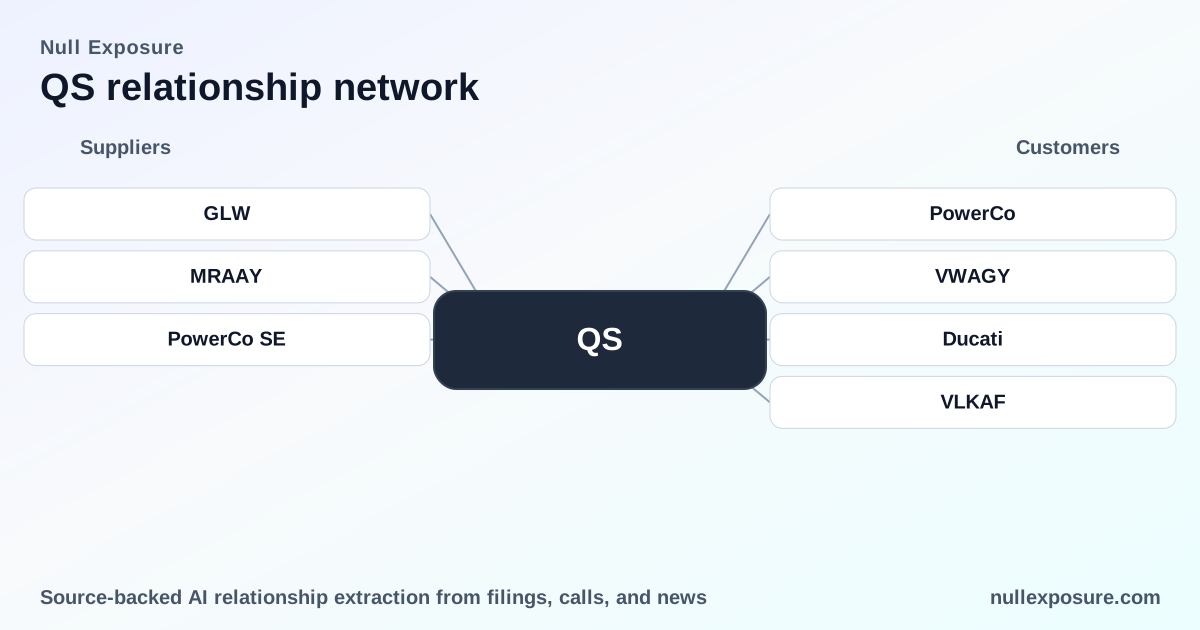
QuantumScape’s supplier map: what Corning, Murata and PowerCo tell investors about scale and execution
QuantumScape develops and intends to commercialize solid-state lithium-metal batteries for electric vehicles and related applications. The company currently monetizes through development-stage commercialization: funding and R&D partnerships, licensing and technology transfer agreements, and a pathway to cell and module sales via strategic manufacturing partnerships and production processes (the company already cites agreements and pilot production milestones rather than recurring product revenue). Investors should value QuantumScape as a technology developer whose near-term returns depend on converting partnerships into high-volume manufacturing and licensing cashflows. For a closer look at how supplier ties shape that reality, visit https://nullexposure.com/.
Why supplier relationships determine whether QS scales or stalls
QuantumScape’s business is capital- and supply-chain intensive. Solid-state cell chemistry is only part of the equation; the ability to source advanced ceramic separators, scale production processes and transfer manufacturing know-how drives time-to-revenue and unit economics. Supplier relationships therefore control capacity ramp, cost trajectory and the company’s leverage in commercialization negotiations. That means partners who can supply critical components at automotive scale are not interchangeable vendors — they are strategic gatekeepers.
The partners investors should know today
Corning — ceramic separator development and commercialization
QuantumScape announced a formal agreement with Corning for development and commercialization of ceramic separators to enable high-volume battery production, signaling a move from lab innovation toward industrialized supply chains. According to a QuantumScape press release dated September 30, 2025, the companies are collaborating specifically on ceramic separator development and commercialization, a theme also covered by market reports in early March 2026. (Source: QuantumScape company announcement, 09/30/25; Barchart news coverage, March 2026.)
Murata Manufacturing — manufacturing expertise in the U.S. ecosystem
QuantumScape identified Murata Manufacturing as one of two “globally renowned ceramic production experts” added to its U.S. manufacturing ecosystem, a designation the company made on its Q4 2025 earnings call where executives described partners that strengthen high-volume production capability. This places Murata squarely in the role of a production-scale collaborator for critical separator or ceramic processing capabilities. (Source: QS Q4 2025 earnings call, March 2026; StockTwits coverage, March 2026.)
PowerCo SE (Volkswagen battery subsidiary) — route to automotive validation and application
QuantumScape’s cells have surfaced in vehicle-level demonstrations through a collaboration with PowerCo SE, Volkswagen’s battery arm; press coverage described the Ducati V21L using QSE-5 cells built with QuantumScape’s Cobra production process, showing an application route for QS technology into OEM ecosystems. This relationship is the clearest commercial validation signal — it connects QuantumScape’s cells to automotive supply chains and end-market productization. (Source: InsiderMonkey coverage describing the Ducati V21L and QSE-5 cell production, March 2026.)
What the disclosed constraints reveal about QS’s operating model
QuantumScape’s publicly available constraint signals are company-level indications of how the business is structured and how it will transact with suppliers and partners. These constraints point to a firm building a capital-intensive, long-duration commercialization program rather than pursuing short, transaction-based sales.
- Long-term contracting posture: The company discloses a weighted-average remaining operating lease term of 7.7 years, which signals long-duration capital commitments and facility-level bets.
- Licensing embedded in procurement: Minimum purchase commitments explicitly include licenses and hosting services, indicating that licensing and IP monetization are embedded in QS’s procurement and vendor architecture.
- Large-enterprise counterparties expected: QS describes sourcing from industry-leading suppliers and strategic relationships with established vendors, a signal of reliance on large enterprises for critical inputs.
- Roles: buyer and service consumer: The firm positions itself as a buyer of materials and a consumer of professional services (advisors, consultants, auditors) to support risk management and controls, meaning QS will continue to outsource both critical input manufacturing and non-core functions like cybersecurity and testing.
Taken together, these constraints indicate concentration and maturity risks typical of firms moving from R&D to production: heavy capex commitments, negotiated licensing terms that affect margins, and dependence on a limited set of large, industrial suppliers.
(If you want a concise supplier-risk scorecard and relationship briefings, see https://nullexposure.com/.)
How these supplier ties alter the risk/reward profile
QuantumScape’s supplier relationships cut both ways for investors. On the opportunity side, partnerships with Corning and Murata materially de-risk scale-up by bringing proven ceramic production know-how and supply-channel reach. The PowerCo/VW connection offers a route to OEM validation and potential offtake or commercialization pathways that shorten time to market.
On the risk side, dependence on a few highly capable suppliers introduces concentration and bargaining risks: delays or underperformance at those suppliers will directly affect QS’s ramp. The company is still development-stage with no reported TTM revenue and negative EBITDA, so supplier execution is the key antecedent to any revenue realization. (Company financial profile: no revenue TTM, EBITDA negative, latest quarter to 2025-12-31.)
A pragmatic checklist for evaluating the next 12–24 months
- Manufacturing milestones: Watch announcements of pilot-to-volume transitions with Corning and Murata and any timelines for the Cobra production line moving to commercial rates.
- Contract scope: Confirm whether deals include exclusive supply, licensing fees, minimum purchase commitments, or technology transfer clauses that will affect margins.
- Commercial validation: Monitor additional OEM integrations beyond the Ducati example with PowerCo to see if cells move from demonstration to production intent.
- Financial cadence: Given negative EBITDA and zero revenue in trailing measures, incoming partner-funded milestones, licensing receipts or capital raises will be key liquidity events.
Bottom line — what investors should take away
QuantumScape is a technology-first battery company whose valuation and pathway to revenue are driven less by in-house factories today than by the ability to secure and operationalize strategic supplier relationships. Corning and Murata provide the industrial muscle for ceramic separator scale; PowerCo connects QS to OEM productization. These relationships materially alter the probability of a successful commercial ramp, but they also concentrate risk into a small set of industrial partners.
For investors and operators benchmarking supplier risk and contractual posture, the company’s long-term leases, licensing commitments and reliance on large-enterprise suppliers are critical signals to incorporate into any valuation or partnership diligence. For a compact briefing on supplier exposures and tailored relationship intelligence, visit https://nullexposure.com/.
If you are actively evaluating QS as a supplier partner or investment, prioritize verification of contractual terms, ramp commitments, and third-party performance guarantees — those are the levers that will convert QuantumScape’s technology roadmap into a predictable revenue stream. For ongoing supplier analysis and alerts, explore https://nullexposure.com/.