Restaurant Brands International (QSR): Supplier relationships that shape margins and operational risk
Restaurant Brands International (QSR) owns and franchises Tim Hortons, Burger King and Popeyes, monetizing through franchise fees, company-operated restaurants, supply‑chain margins and a centralized advertising and technology platform. The company generates recurring cash flow from royalties and franchise income while retaining exposure to commodity and distribution costs through purchase commitments and long‑term service contracts; market capitalization and profitability metrics reflect a mature quick‑service operator with material operating leverage. For a deeper read on how supplier relationships translate into investable risk and opportunity, visit https://nullexposure.com/.
How RBI’s supplier posture dictates margin sensitivity
RBI runs a hybrid model: franchise cash flow provides high-margin, low-capex revenue, while the company’s role as a large purchaser and contracting counterparty concentrates operational risk. The FY2024 Form 10‑K discloses purchase obligations of approximately $562 million with roughly $489 million due within 12 months, and identifies $84 million of multiyear IT and telecom contractual obligations that include early‑termination fees and significant advertising commitments. These items confirm two working facts: RBI relies on multi‑year vendor arrangements for technology, media and logistics; and it carries large short‑term cash commitments that compress liquidity flexibility during stress periods.
- Concentration is operationally critical. The company reports that a small group of broadline distributors service the majority of restaurants for each brand, which elevates single‑counterparty disruption risk and increases negotiating leverage for major distributors.
- RBI is a buyer with exposure to commodity price volatility. The 10‑K explicitly notes purchases subject to weather and market conditions and leases for property and logistics, which directly drive store P&L variability.
These company‑level constraints are derived from FY2024 reporting and frame how supplier relationships affect earnings volatility and capital allocation.
The relationships to track right now
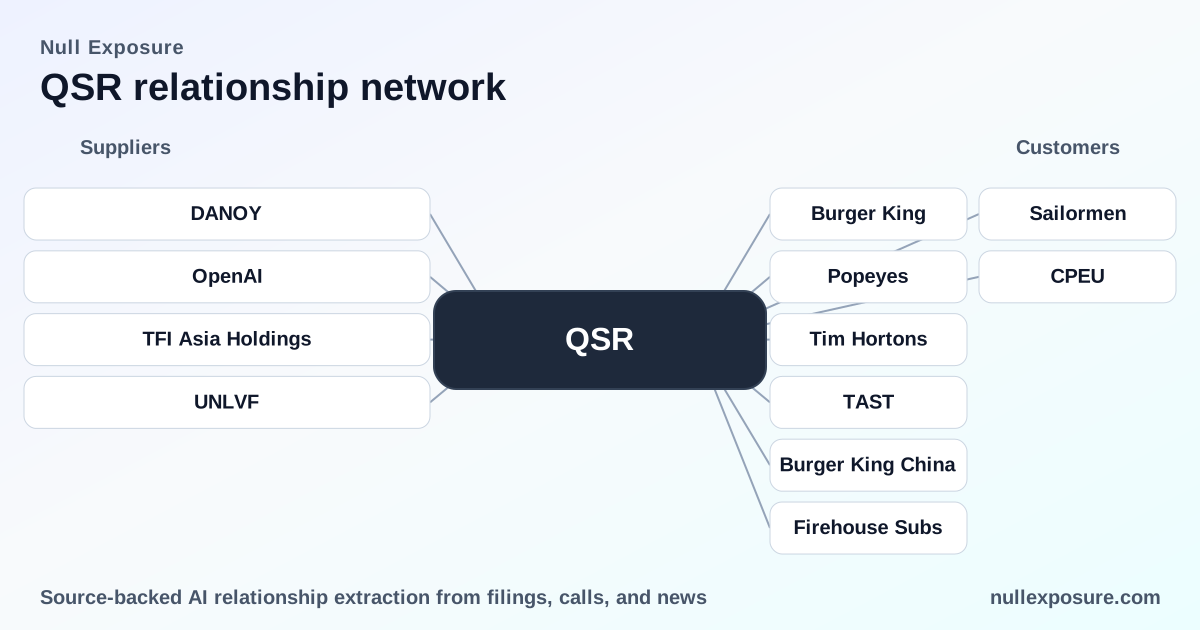
Below are every supplier or partner reference found in the provided results, with concise, investor‑oriented takeaways and source notes.
Danone — prior executive connection, not a procurement contract
An FY2024 10‑K reference shows that an RBI executive previously held marketing roles at Danone in Germany, indicating senior management experience in global consumer packaged‑goods marketing rather than an active supplier relationship. According to the company’s FY2024 Form 10‑K, the reference is biographical in nature. (FY2024 10‑K)
Unilever — executive background that signals CPG marketing experience
The Form 10‑K also records prior marketing roles at Unilever for the same executive, reinforcing management familiarity with multinational CPG go‑to‑market and brand management practices, which can shape supplier selection and category strategy. (FY2024 10‑K)
OpenAI — pilot of AI voice assistant in frontline operations
Restaurant Technology News and other press report that Burger King is testing an OpenAI‑powered headset voice assistant called “Patty” in roughly 500 U.S. restaurants, intended to deliver operational prompts and training cues directly to employees; the pilot highlights RBI’s push to convert technology partnerships into labor productivity gains and operational standardization. (Restaurant Technology News, March 2026; Daily Press, March 2026)
TFI Asia Holdings — prior divestiture and acquisition context in China
Industry reporting notes that Burger King acquired a struggling China business from TFI Asia Holdings for $158 million, a transaction that speaks to RBI’s willingness to make targeted market investments to regain strategic control of international operations. The move implies exposure to local turnaround execution risk and potential re‑investment in supply‑chain reconfiguration. (Restaurant Business Online, March 2026)
What these relationships imply for investors
Collectively, the documented connections fall into two practical categories: human capital origins (Danone, Unilever) that inform marketing and procurement philosophy, and operational/transactional partners (OpenAI pilot, TFI Asia deal) that directly affect cost structure and growth prospects. The OpenAI deployment indicates an active program to reduce labor variability and improve throughput via vendor technology, while the China transaction shows a willingness to assume operational execution risk where brand control is strategic.
For investors this means:
- Technology contracts are now material to unit economics given the FY2024 disclosure of multiyear IT/telecom commitments and advertising purchase obligations.
- Distributor concentration is a clear vulnerability: a handful of broadline distributors service the bulk of restaurants, elevating supplier continuity risk and potential pricing pressure.
- Capital allocation reflects both defensive and opportunistic posture—defensive via long‑term supply and service contracts; opportunistic via targeted acquisitions to control underperforming markets.
If you want a model of how these supplier relationships translate into balance‑sheet and earnings sensitivity, start with the purchase obligations and distributor concentration lines in the FY2024 10‑K and stress test commodity and logistics cost inflation scenarios. More resources are available at https://nullexposure.com/.
Practical risk checklist for QSR supplier diligence
- Stress test the P&L for a 10–20% jump in broadline distributor costs and assess passthrough to franchisees. Distributor concentration elevates tail risk.
- Price out alternative IT/telecom providers versus known early‑termination costs; long‑term contracts create switching costs.
- Quantify operational gains from AI pilots like the OpenAI headset and the timeline to unit‑level margin capture. Technology partnerships convert into savings only if adoption is rapid.
- Evaluate international M&A track record against the TFI Asia acquisition to judge execution risk and capital intensity in emerging markets.
Bottom line and next steps
Restaurant Brands International is a franchisor whose franchise economics are insulated but not immune: the company’s supplier commitments, distributor concentration and targeted technology deployments materially influence near‑term margin outcomes and long‑term scalability. Investors should treat the FY2024 contractual disclosures as active drivers of cash‑flow timing and operational risk rather than inert footnotes.
For continued monitoring and supplier‑level intelligence on QSR and other consumer names, visit https://nullexposure.com/ to explore vendor exposure and counterparty risk analysis. If you want a focused briefing on how supplier concentration impacts RBI’s free cash flow under stress scenarios, start at https://nullexposure.com/ and request a tailored report.