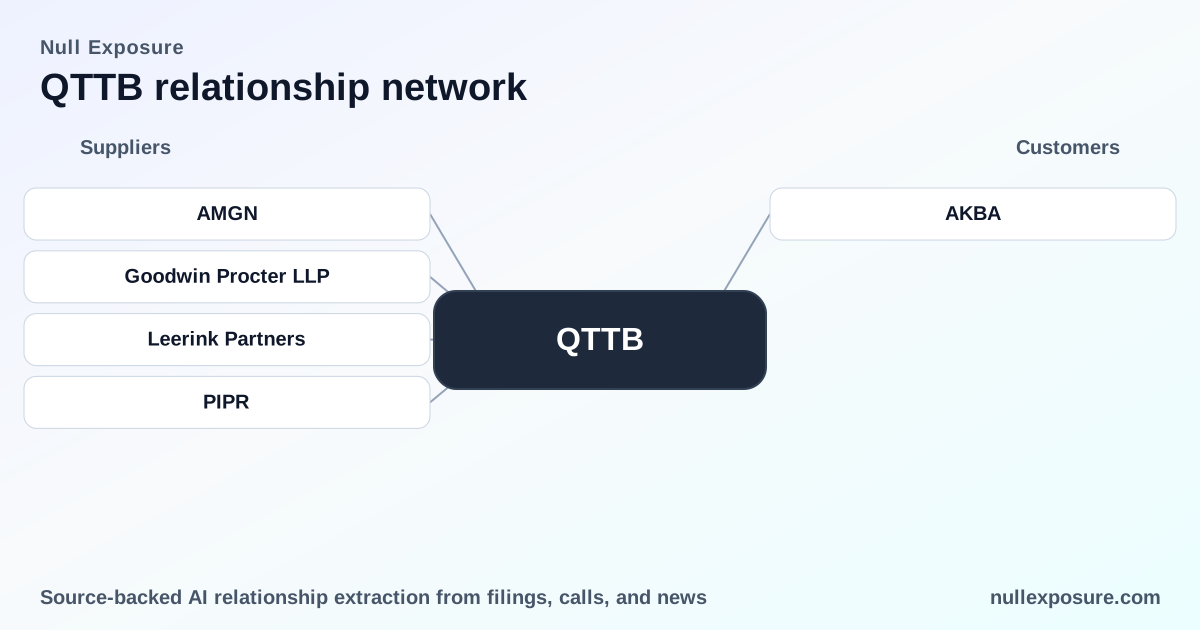
Q32 Bio (QTTB) — Supplier relationships that determine execution risk and commercial optionality
Q32 Bio is a clinical‑stage biotechnology company that develops antibody‑based therapies and monetizes value through clinical progress, licensing, and eventual commercialization of wholly‑owned assets. The company advances programs through partnerable R&D milestones and retains commercialization upside after recent rights reacquisitions, while outsourcing manufacturing, clinical services, and corporate finance/legal work to third parties. For investors evaluating counterparty exposure, the combination of asset control (bempikibart), outsourced manufacturing and CRO dependencies, and active capital‑markets advisory relationships defines the risk/reward profile today. Learn more about supplier intelligence and relationship signals at https://nullexposure.com/.
Why suppliers and advisors are the operational backbone for Q32 Bio
Q32 Bio does not operate its own manufacturing, storage, or distribution network; it contracts with CDMOs, CROs and service providers to run preclinical studies, clinical trials and to supply drug substance and product. That operating model converts scientific progress into commercial value but concentrates execution risk externally.
- Contracting posture: High outsourcing — Q32 relies on third‑party manufacturers and research vendors for core program delivery.
- Concentration: Supplier concentration is elevated because the company lacks internal manufacturing capability; specific CDMO or CRO single points of failure would be material.
- Criticality: Suppliers are mission critical — delays, quality issues, or regulatory non‑compliance by vendors would directly slow clinical timelines and commercial readiness.
- Maturity: Relationships are operational and active today, consistent with a company transitioning from discovery to clinical development and near‑term commercialization planning.
These company‑level signals increase operational leverage: good supplier governance accelerates value realization; supplier failures produce outsized downside. For procurement and risk teams, these are the tradeoffs to monitor. If you want regular updates on supplier exposure and counterparty risk, visit https://nullexposure.com/.
Who the suppliers and advisors are — what each relationship means
Amgen
Q32 reacquired worldwide rights to bempikibart from Amgen in late 2023, restoring full control of the program and any future commercialization economics; press coverage ties that reacquisition to Q32’s strategy to advance bempikibart and its other wholly‑owned asset, ADX‑097. A TS2 Tech report (March 10, 2026) noted the reacquisition, and a PR Newswire release (March 2026) reiterated that proceeds from transactions would support clinical development of Q32’s assets.
Goodwin Procter LLP
Goodwin Procter serves as legal counsel to Q32 Bio in connection with strategic corporate transactions, providing corporate, securities and transactional legal support; this relationship surfaced in the company’s merger and financing announcement. The engagement is documented in a PR Newswire press release (March 2026).
Leerink Partners
Leerink Partners is the exclusive financial advisor to Q32 Bio for the announced merger transaction, responsible for deal marketing, valuation work and coordinating financings; the advisory role is disclosed in Q32’s merger announcement. This advisory relationship is described in a PR Newswire release (March 2026).
Piper Sandler
Piper Sandler is acting alongside Leerink as a placement agent for Q32 Bio’s planned private placement, handling capital raising distribution and investor placement functions tied to the transaction. The role of Piper Sandler was named in Q32’s PR Newswire announcement (March 2026).
How these relationships fit into the company’s business model and risk profile
Q32’s model is asset‑centric with outsourced execution. The reacquisition of bempikibart from Amgen is a strategic inflection: Q32 now captures greater upside from successful development and potential commercialization, but it also inherits the full execution risk previously borne by a larger partner.
- Operational dependence: The company’s disclosures highlight reliance on CDMOs and CROs for manufacturing and clinical operations; this is not a peripheral exposure — it is central to program delivery.
- Regulatory and compliance footprint: Q32 operates in a global regulatory environment and signals potential global compliance complexity; failures by Q32 or its suppliers to meet regulatory standards are labeled as potentially material in the company’s own statements.
- Financial and market execution: Investment bank and placement‑agent relationships (Leerink, Piper Sandler) are being used to bridge financing to fund clinical advancement; legal counsel (Goodwin) supports transactional execution. These advisory relationships reduce execution risk on the capital and corporate side, but do not mitigate operational supplier risk.
Key takeaway: strategic control over assets increases upside, while outsourcing increases execution concentration risk that investors must monitor alongside financing progress.
If you are reassessing counterparties or quantifying supplier concentration exposure, our platform aggregates relationship signals and legal/financial adviser disclosures — see https://nullexposure.com/ for sample workstreams.
Practical implications for investors and operator checklists
Investors should track a handful of high‑impact items tied directly to supplier and advisor relationships:
- Timelines and milestones for bempikibart and ADX‑097, and any CDMO capacity reservations tied to those milestones.
- Contract terms and exclusivity with named CDMOs/CROs (termination rights, quality obligations, escrow or supply continuity mechanisms).
- Regulatory compliance evidence related to outsourced manufacturing (inspection statuses, 483s, remediation plans).
- Execution of the planned private placement and the ongoing role of Leerink and Piper Sandler in market access.
- Legal risk and transaction documentation managed by Goodwin Procter that could affect deal timing or proceeds.
Risk factors to watch: supplier non‑performance, regulatory findings at third‑party sites, and financing shortfalls that reduce runway for contract fulfillment.
Closing view and recommended investor actions
Q32 Bio’s recent rights reacquisition and active advisory engagements create a clear path to capture commercial value, but that path is only as reliable as its outsourced execution. For investors, the optimal framework is to combine clinical milestone tracking with targeted supplier diligence: confirm that CDMO/CRO agreements support program timelines and include supply continuity protections.
To monitor changes in supplier roles, contract staging, and advisor activities, visit https://nullexposure.com/ for supplier‑level coverage and ongoing relationship intelligence.
Bold moves in the pipeline require disciplined counterparty oversight: asset control plus supplier resilience equals investable operational leverage.