QuickLogic (QUIK): Supplier Relationships That Define a Small-Cap Semiconductor Strategy
QuickLogic builds and licenses low-power semiconductor platforms and IP for edge devices, monetizing through a mix of silicon sales, development kits, IP licensing and program-specific engineering contracts. The company runs a capital-light front-end model that outsources wafer fabrication and assembly while retaining design control over specialty FPGAs — a posture that converts engineering know‑how into recurring product and engineering-revenue streams. For investors, the critical signal is that QuickLogic’s roadmap, especially its Strategic Radiation Hardened (SRH) FPGA program, is tightly coupled to a small set of manufacturing and IP partners. Learn more at https://nullexposure.com/.
The investment thesis in one paragraph
QuickLogic is a niche semiconductor supplier with concentrated supply dependencies and a product strategy centered on differentiated programmable logic for constrained and mission‑critical environments. Financially, it is a small-cap company (market cap roughly $155.6M) with limited revenue scale (Revenue TTM ~$16.2M) and operating losses; the near-term value proposition to shareholders is optionality on SRH FPGA commercialization and IP licensing rather than steady margin expansion. QuickLogic’s commercial trajectory is therefore governed more by supplier relationships and program execution than by broad market share gains.
Why supplier ties matter more than usual for QUIK
QuickLogic outsources wafer fabrication and many downstream manufacturing functions, which creates a classic semiconductor risk/reward profile: you preserve R&D agility but you depend on a few external foundries and specialist IP vendors to deliver mask turns, test wafers, and production yield. The company’s historical disclosures emphasize reliance on a limited number of contract manufacturers and subcontractors for wafer fabrication, assembly, programming and testing. That contracting posture raises two investor-relevant implications: (1) concentration risk — supplier disruption would hit product availability quickly, and (2) commercial leverage — strong foundry relationships can accelerate roadmap milestones without heavy capital expenditure.
QuickLogic’s public financials underline the leverage: negative operating margins and a small revenue base mean that supply interruptions or cost shocks can produce outsized effects on profitability. The SRH FPGA program is a value inflection precisely because it targets defense and space-grade markets where program revenues are larger per unit and stickier if qualified. For more on analysis and portfolio implications, visit https://nullexposure.com/.
Supplier relationships and what they mean to shareholders
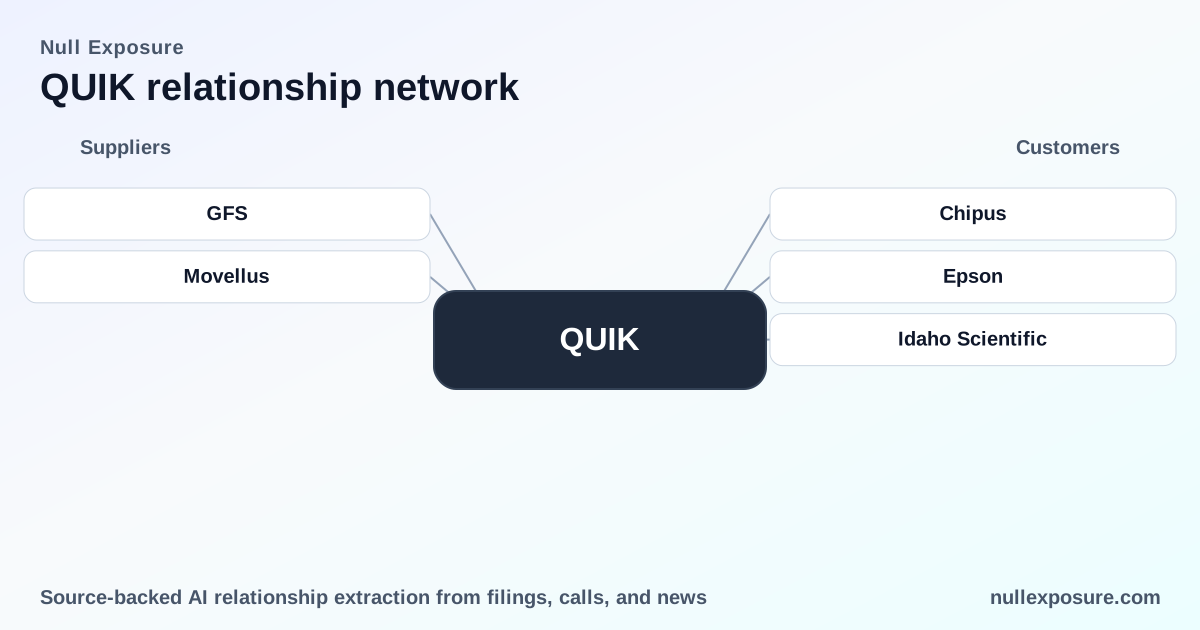
GlobalFoundries
GlobalFoundries is the fabricator for QuickLogic’s SRH FPGA test chips, with design files delivered and tape‑out completed for a test device on GF’s 12LP process; QuickLogic funded SRH FPGA dev kits built on that 12 nm technology. According to reporting in EE Times Asia and BISInfotech in March 2026, QuickLogic completed design and tape‑out to be manufactured by GlobalFoundries and shipped initial developer kits funded by QuickLogic (March 2026). These tie QuickLogic’s SRH program schedule directly to GlobalFoundries’ 12LP production timeline and process reliability.
Movellus
Movellus supplied high‑performance clocking IP selected by QuickLogic for the SRH FPGA program, supporting timing and clock distribution that are critical in radiation‑hardened designs. Intellectia.ai’s March 2026 earnings-call coverage noted that Movellus’ clocking technology is part of QuickLogic’s Strategic Radiation Hardened FPGA program, signaling reliance on external intellectual‑property specialists for critical subsystem functions.
What these relationships tell investors about operational constraints
QuickLogic’s public disclosures and the recent press links generate several company‑level operational signals:
- Critical supplier dependency. The company states that a decision by a supplier not to provide services — or inability to do so due to a natural or financial disaster — would have a significant impact on the business. This is a direct flag that supplier availability is material to revenue delivery and program timing.
- Manufacturer posture and concentration. QuickLogic depends on a limited number of contract manufacturers, subcontractors and suppliers for wafer fabrication, assembly, programming and testing of hardware products, and for the supply of programming equipment. That language is a company-level admission of high supplier concentration and outsourced manufacturing.
- Maturity and program focus. The SRH FPGA program’s reliance on external foundry process nodes and third‑party IP indicates an operational model that is mature in R&D integration but dependent on external manufacturing execution — appropriate for a small cap that prioritizes IP and design over fabs.
Collectively, these signals create a profile of high criticality, concentrated counterparty exposure, and program-level dependency that investors must monitor through supplier milestones and foundry availability metrics.
Practical implications for valuation and risk
- Upside is program-driven. Commercialization of SRH FPGA and developer kit uptake are primary value drivers. Successful qualification with GlobalFoundries and acceptance in defense/space programs would re‑rate growth prospects given higher ASPs and longer contracts.
- Downside is supply-driven. A manufacturing delay or yield shortfall at a single contracted foundry would produce immediate revenue friction and margin pressure given the revenue scale and negative operating leverage.
- Partner selection matters. The inclusion of specialized IP suppliers like Movellus reduces in‑house development risk but increases external dependency on IP performance and licensing terms.
For a tactical read on supplier milestones and how they affect valuation, see the analysis hub at https://nullexposure.com/.
Final takeaways and action points
- Key takeaway: QuickLogic operates a capital-light, outsourced manufacturing model that amplifies both upside if its SRH FPGA program scales and downside if a single supplier slips. Investors should track GlobalFoundries’ 12LP schedule, SRH FPGA dev‑kit shipments, and Movellus‑supplied IP performance as the most informative near-term indicators.
- Risk management: Monitor supplier confirmation notices, foundry wafer schedules, and any upgrades to manufacturing partners; acute supplier events translate quickly into revenue and margin swings at QuickLogic’s scale.
- Where to watch next: Quarterly updates and press releases that reference tape‑outs, test results, and dev‑kit orders will be the earliest public signals of program progress.
If you need a supplier‑centric risk brief or a watchlist tied to QuickLogic milestones, start with the resources on our homepage: https://nullexposure.com/. For ongoing alerts and a consolidated supplier-risk view, visit https://nullexposure.com/ to subscribe.