QUIZ supplier-relationship briefing: what investors need to know
QUIZ operates as a franchisor and brand operator that captured value through franchise fees, site-level economics and captive supply arrangements. The company historically monetized by selling branded sandwiches through franchised locations while extracting additional margin from required supplier contracts and related-party distribution; that vertical revenue mix is a central risk and return driver for investors evaluating supplier exposure. This briefing isolates the supplier relationships in public reporting and press coverage and explains the commercial and governance implications for investors.
Explore full supplier intelligence on Null Exposure
The business model in plain English: how supplier relationships affect value
QUIZ’s operating model combines traditional franchising with highly centralized purchasing for franchisees. That posture generates two revenue streams: sales and royalties from franchisees plus incremental profit from mandatory or preferred supply channels. The forced-purchase dynamic historically increased short-term cash flow but produced persistent legal and reputational risk, which in turn depressed franchise growth and asset values. Concentration of procurement and related-party distribution is therefore a structural lever on margins and litigation exposure.
Supplier relationship roll call — what the public record shows
Below are each of the supplier and supplier-adjacent relationships surfaced in the public record, with a concise, investor-focused description and the original press source.
-
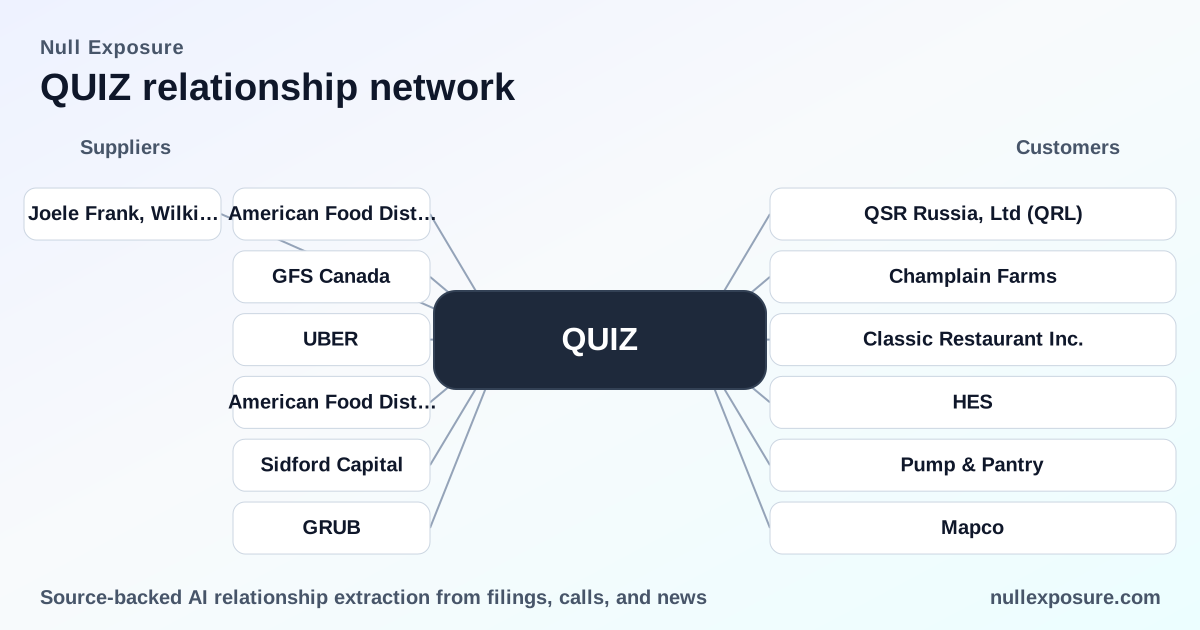
American Food Distributors LLC / American Food Distributors (multiple mentions) — Press accounts consistently identify American Food Distributors as a Quiznos-affiliated supply company through which the franchisor channeled restaurant supplies to franchisees; one report lists $225.3 million in 2011 revenue for the entity. A Denver Post story (2013) and later coverage (Globe and Mail, 2014; Chowhound, 2025) describe this practice as core to how the parent captured additional margin from operators. (Denver Post, 2013; The Globe and Mail, 2014; Chowhound, 2025)
-
GFS Canada — Canadian reporting documents allegations that franchisees were required to purchase all supplies from Michigan-based GFS Canada, with franchise plaintiffs claiming that Quiznos colluded with GFS to inflate prices. That allegation is a material governance flag where captive sourcing overlapped with cross-border supplier relationships. (The Globe and Mail, 2014)
-
UberEats (UBER) — Management commentary in 2019 noted distribution and discoverability benefits from appearing on delivery platforms such as UberEats; this is an example of QUIZ leveraging third-party digital channels to drive store-level sales rather than a vertically integrated supply relationship. (QSR Magazine, 2019)
-
GrubHub (GRUB) — As with UberEats, QSR Magazine coverage from 2019 references GrubHub as an important aggregator channel for brand reach, which affects same-store sales and franchise economics even though it is distinct from supply procurement. (QSR Magazine, 2019)
-
Sidford Capital — Local reporting during a 2020 franchise renewal noted that landlord Sidford Capital placed a Quiznos property on the market and characterized the location’s economics as “unsustainable,” underscoring real-estate and lease concentration risks that compound supplier and operational pressures at the store level. (BusinessDen, 2020)
-
Joele Frank, Wilkinson Brimmer Katcher — The Globe and Mail referenced the New York-based PR firm retained for crisis communications in the wake of bankruptcy filings and franchise disputes, a signal that corporate governance and reputational management required external specialist support during periods of supplier- and franchisee-related controversy. (The Globe and Mail, 2014)
What these relationships tell investors about contracting, concentration and criticality
Collectively, the supplier record paints a coherent picture of QUIZ’s operating posture:
-
Contracting posture: QUIZ historically enforced centralized purchasing, establishing binding obligations on franchisees that converted supply relationships into revenue-generating contracts for the parent company. That posture increased operating leverage but produced legal counterparty risk when franchise economics deteriorated.
-
Concentration: The repeated references to a small number of supply channels — notably American Food Distributors and GFS Canada — indicate high supplier concentration, which concentrates execution risk and regulatory scrutiny.
-
Criticality: Supplier links were not peripheral; they were critical to the franchising business model, because mandatory supply purchases were a direct source of incremental corporate profit and an input into franchisee margins.
-
Maturity and governance: Coverage shows the model persisted across multiple years and geographies, requiring sustained communications support (e.g., Joele Frank) and producing recurring litigation themes; that history signals mature but contested governance practices that investors must price into long-term cash flows.
Investment implications and risk checklist
For investors and operators, these findings support several actionable conclusions:
-
Valuation should discount for embedded litigation and supplier-concentration risk. Mandatory supply arrangements increase near-term cash receipts at the cost of ongoing legal and franchise attrition risk.
-
Operational recovery depends on de-risking procurement and landlord negotiation. Franchise-level economics are sensitive to both supply pricing and lease terms, evidenced by landlord behavior such as Sidford Capital’s re-marketing of properties in 2020.
-
Digital channels are incremental, not structural, margin drivers. Listings on platforms like UberEats and GrubHub improve demand but do not replace the structural profit derived from captive supply relationships.
Explore supplier exposure methodologies at Null Exposure
Final read: how to use this intelligence in diligence
When evaluating QUIZ or similarly structured franchisors, integrate supplier relationship signals into three parts of your diligence: legal (prior litigation and contractual terms with franchisees), commercial (supplier concentration and pricing leverage), and real-estate (lease sustainability and landlord actions). The supplier channel is a direct profit center and a direct liability — treat it as both when modeling cash flows and downside scenarios.
For practitioners who want the full mapping and source-level evidence to feed underwriting or portfolio monitoring, visit our home page and request the complete supplier report. Get the full supplier mapping on Null Exposure
Key takeaway: centralized, related-party supply relationships materially affected QUIZ’s margin structure and franchise economics; any valuation or operational plan must explicitly model this dual role of suppliers as revenue drivers and litigation vectors.