Quantumsphere Acquisition Corporation (QUMS): Supplier relationships and what they signal for investors
Quantumsphere Acquisition Corporation operates as a special-purpose acquisition company (SPAC) that monetizes by completing a business combination—typically capturing sponsor promote, transaction fees, and potential upside from post-merger equity. The company holds no operating revenue or gross profit and exists to identify and consummate a merger, share exchange, asset purchase, or similar transaction; its capital structure and supplier choices reflect that singular mission. Investors should treat QUMS as a transaction-focused vehicle rather than an operating enterprise. For a quick dive into supplier-risk profiling across similar vehicles, visit https://nullexposure.com/.
The business model in one paragraph: sponsors, trust cash and the economics that matter
As a SPAC listed on NASDAQ under the symbol QUMS, Quantumsphere’s economics derive from the successful identification and closing of a target company and the subsequent realization of sponsor economics and capital-market benefits for public shareholders. The company’s profile shows no revenue, no EBITDA, and a market capitalization around $115 million as of the latest quarter ending December 31, 2025, with typical SPAC share-price stability in the roughly $10 range (52‑week high/low: $10.23 / $9.92). Absent a completed business combination, the value proposition depends on management’s ability to source a credible target, control deal costs (notably legal and advisory fees), and preserve trust funds earmarked for the merger.
Why suppliers matter for a SPAC
Suppliers for a SPAC are concentrated and mission-critical: legal counsel, investment bankers, and transaction advisors enable regulatory compliance, due diligence, deal sourcing, and the negotiation and closing of a business combination. Because a SPAC’s lifecycle is short and binary (close a deal or liquidate/extend), supplier selection, contracting posture, and fee structure are directly tied to investor outcomes. A single, reputable legal advisor materially reduces execution risk and controls the cadence of regulatory filings and shareholder votes.
Every supplier relationship reported (one clear entry)
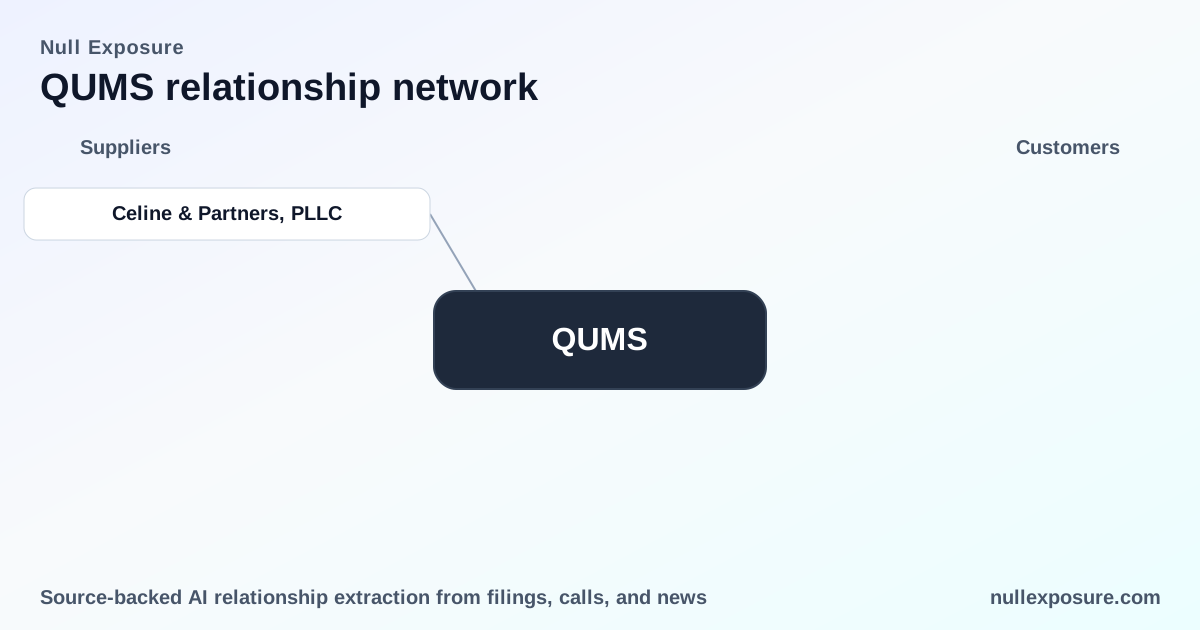
Celine & Partners, PLLC
Celine & Partners serves as legal counsel to Quantumsphere Acquisition Corporation, handling transaction documentation and regulatory matters associated with the SPAC process. According to a Globe and Mail post republishing GlobeNewswire on March 10, 2026, the firm is listed as Quantumsphere’s legal advisor in connection with the proposed transaction announcement. This relationship is explicitly noted in the public announcement dated March 2026.
What that single relationship tells investors
- Legal counsel is the pivotal supplier for a SPAC. The public record names Celine & Partners as Quantumsphere’s legal advisor, which is a core engagement given that legal work drives SEC filings, proxy statements, and regulatory clearances.
- Concentration is high and appropriate. The supplier list is intentionally narrow at this stage—SPACs run lean on suppliers until a target is identified—so reliance on one principal legal advisor is normal and not a red flag by itself.
- Execution risk is tethered to advisor capability. The credibility, experience, and bandwidth of Celine & Partners will materially affect the timeline and quality of any proposed combination.
Operational constraints and company-level signals
The available records do not include supplier-specific contractual constraints. At the company level, the following signals are important for supplier-risk assessment:
- Contracting posture: As a SPAC, Quantumsphere is likely to employ short-term, transaction-focused engagements rather than long-term service contracts—legal and advisory relationships are typically scoped to a single deal lifecycle.
- Concentration: Supplier concentration is inherently high; with only one advisor listed publicly, the company is dependent on a small set of external providers.
- Criticality: Services provided by legal counsel are mission-critical for filings, shareholder communication, and deal closing—delays or disputes with counsel directly threaten timeline and outcome.
- Maturity and scale: Quantumsphere reports no operating revenues and negative book value on a per-share basis, indicating early-stage maturity; supplier arrangements will be transactional and cost-sensitive.
Risk factors investors should weigh now
- Execution risk through supplier dependency: Because only the legal advisor is publicly listed, any operational friction with counsel or the need to re-engage a new adviser would increase costs and delay a deal.
- Fee transparency and alignment: SPACs often pay substantial fees to lawyers and bankers at deal close; investors should demand clarity on fee arrangements and escrow/trust consumption schedules.
- Sponsor incentives versus shareholder alignment: The economics that benefit sponsors post-close can diverge from public shareholders, particularly if legal and advisory costs reduce the trust value available at closing.
Governance, disclosure and what to watch in filings
Monitor SEC filings and press releases for:
- Identification of additional advisors (investment bankers, accounting firms).
- Detailed fee schedules and indemnification clauses with legal counsel.
- Changes to the board or management that could alter supplier selection or negotiation leverage. Quantumsphere’s company profile lists institutional ownership at approximately 57.8%, shares outstanding of 11,406,600, and a fiscal year-end in March—these governance and ownership signals influence sponsor discipline and the company’s ability to source reputable suppliers.
If you are evaluating counterparty risk or supplier concentration for portfolios exposed to SPACs, this pattern—lean supplier roster, high reliance on legal counsel, and transaction-timed engagements—is consistent across comparable vehicles. For deeper supplier-risk benchmarking and to see how this compares across peers, check https://nullexposure.com/.
Practical next steps for investors
- Request the latest Form 8-Ks and S-4/DEFM14A filings to review engagement letters and fee schedules with Celine & Partners and any other advisors.
- Quantify the expected impact of legal and advisory fees on the trust account and the pro-forma balance available to target-company equity holders post-close.
- Engage proxy advisory commentary and institutional holders—given 57.8% institutional ownership, sponsor behavior and supplier choices will be scrutinized by sophisticated stakeholders.
For a concise supplier-risk scorecard and ongoing monitoring of QUMS and other SPACs, visit https://nullexposure.com/ for continuous updates and comparative analysis.
Bottom line
Quantumsphere Acquisition Corporation is a transaction vehicle: its economic fortunes depend on deal execution and the performance of a very small set of external suppliers—most notably legal counsel. The public record identifies Celine & Partners, PLLC as the company’s legal advisor, a relationship that is essential for any successful combination and therefore central to investor due diligence. Review filings, demand fee transparency, and monitor institutional holder engagement to assess whether Quantumsphere’s supplier posture supports or undermines the company’s stated objectives.