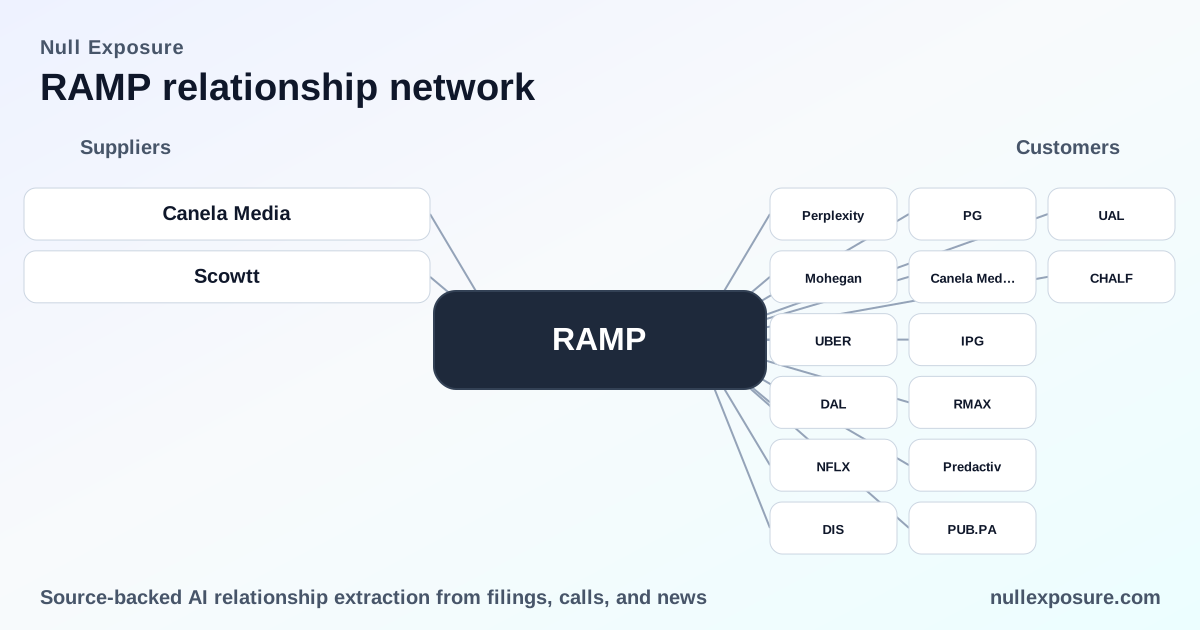
LiveRamp (RAMP): Supplier relationships that stitch identity into digital advertising
LiveRamp operates an enterprise data connectivity platform that links customer identifiers across marketing and analytics systems and charges customers through subscription and usage fees for identity resolution, data collaboration, and measurement services. The company monetizes by selling identity-based connectivity and related services to advertisers, publishers, and platforms, while outsourcing parts of its identity graph and cloud hosting — a mix that drives recurring revenue but exposes margins to third‑party cost dynamics.
If you are evaluating supplier relationships and counterparty risk for LiveRamp, start your diligence with a focused view on partner criticality and cost pass‑through: Explore more supplier intelligence on NullExposure.
How LiveRamp makes money and why partners matter
LiveRamp’s business is built on two commercial levers: subscription-style platform revenue for connectivity and professional services, and transactional fees tied to ad targeting and data collaborations. On the balance sheet this translates into steady top-line (Revenue TTM: $795.6M) and healthy gross profitability (Gross Profit TTM: $560.1M), while corporate valuation metrics (Market Cap ≈ $1.76B; EV/Revenue 1.73; EV/EBITDA 16.0) price in growth and margin leverage opportunities.
Partners are both customers and suppliers for LiveRamp: publishers and data providers expand addressability and audience reach, while specialist vendors deliver machine learning and identity signals. That dual role makes partner relationships a direct driver of monetization and an operational vector for cost pressure.
Operating posture, concentration and maturity — what investors should read into the constraints
Company disclosures list third‑party direct costs — including identity graph inputs, other data and cloud hosting — inside cost of revenue. This is a company‑level signal that shapes several operating characteristics:
- Contracting posture: LiveRamp is a service provider that integrates external identity and infrastructure vendors rather than owning every element end‑to‑end, so contracts are often multi‑party and include licensing and hosting terms.
- Concentration risk: Outsourced identity inputs and cloud hosting create concentration exposure if a small number of providers control critical inputs or pricing.
- Cost sensitivity and margin volatility: Because identity inputs and hosting are recorded in cost of revenue, changes in supplier pricing or consumption patterns translate directly to gross margin.
- Maturity and criticality: Established enterprise relationships (large advertisers, ad platforms) reflect a mature commercial go‑to‑market, while newer technology partners can be high‑impact but lower scale.
These traits imply diligence should emphasize contractual terms (duration, price floors, SLAs), supplier substitution options, and the extent to which LiveRamp can pass costs to buyers.
Partnerships to watch: Canela Media and Scowtt
Below are the supplier/partner relationships surfaced in recent market coverage. Each description is framed for an investor/operator deciding how these ties affect LiveRamp’s revenue profile and operational exposure.
Canela Media — expanding reach into Hispanic OTT audiences
LiveRamp formed a partnership with Canela Media to enable targeted marketing to U.S. Hispanic audiences across over‑the‑top (OTT) channels and through data collaboration mechanisms; the arrangement exposes LiveRamp to high‑value audience monetization opportunities in retail and media ecosystems. According to Sahm Capital reporting (Feb 19 and Feb 27, 2026), the collaboration covers more than 1,000 audience segments reaching over 30 million Hispanics, combining Canela’s deterministic audience signals with LiveRamp’s collaboration network. (Sources: Sahm Capital, Feb 19 & Feb 27, 2026.)
Scowtt — integrating predictive AI for privacy‑forward ad optimization
LiveRamp entered a technology partnership with Scowtt to embed Scowtt’s predictive AI models into LiveRamp’s platform for privacy‑focused advertising optimization, which enhances targeting capabilities while preserving identity controls. Sahm Capital noted the deal as a strategic move to deepen LiveRamp’s AI and retail media capabilities (Sahm Capital, Feb 27, 2026).
What these relationships mean for cash flow and risk
Both relationships reflect LiveRamp’s strategy of combining identity connectivity with third‑party intellectual property to accelerate addressability and improve advertising outcomes. The commercial upside is straightforward: better reach and AI-driven optimization convert into higher monetization per advertiser and stickier engagements.
The operational risk is equally tangible: because LiveRamp records identity inputs and cloud hosting costs in cost of revenue, these supplier relationships can increase variable costs at the gross‑margin line. Investors should track:
- Contract terms that lock in pricing or create revenue share versus fee models.
- Evidence of revenue uplifts tied to specific partnerships (e.g., revenue from retail media initiatives).
- The ability to substitute a supplier’s capabilities without service disruption.
Key takeaway: partnerships like Canela and Scowtt are revenue catalysts, but they also reinforce LiveRamp’s dependence on third‑party inputs that sit inside cost of revenue — a direct lever on gross margin.
Practical signals for commercial and operational diligence
When evaluating LiveRamp as a supplier or counterparty, prioritize these checks:
- Review SLA and termination provisions in partner contracts to assess switching risk.
- Quantify how much of identity and hosting spend is variable versus fixed to model margin sensitivity.
- Map partner concentration — is a small group providing most of the critical identity signals or cloud capacity?
These checks convert qualitative partner announcements into executable risk controls for investors and operator teams.
Explore more supplier intelligence on NullExposure — use the platform to pull contract language and supplier concentration snapshots during diligence.
Final assessment and next steps
LiveRamp’s partner strategy — illustrated by the Canela and Scowtt relationships — accelerates product value for advertisers and publishers while embedding third‑party cost structures within gross profit. The company’s financials show a platform with recurring revenue characteristics and attractive gross margins, but careful monitoring of supplier contracts and cost pass‑through is essential to forecast free cash flow accurately.
For investors and procurement teams, the priority is to convert press releases into contract and cost detail: confirm pricing mechanics, substitution options, and the share of partner‑driven revenue. That approach separates promotional noise from the commercial reality that determines margins and valuation.
Explore more supplier intelligence on NullExposure to convert relationship headlines into contract‑level insight and to quantify supplier concentration and cost exposure.