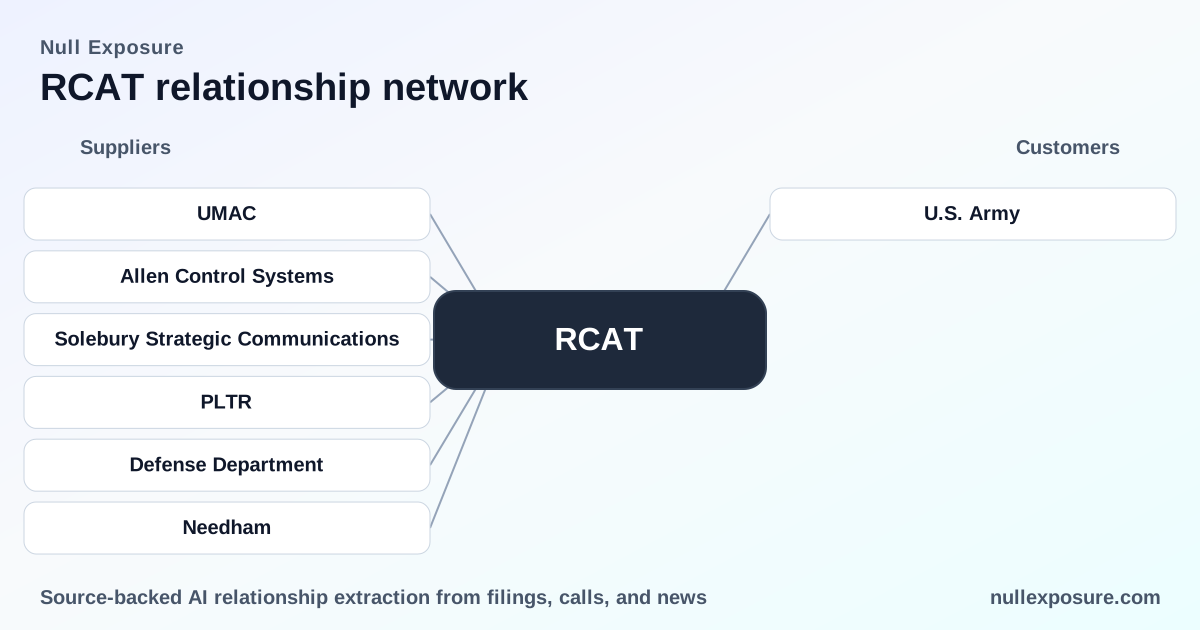
Red Cat (RCAT) supplier map — which partners move the needle for investors
Red Cat Holdings builds and sells unmanned systems, secure ISR platforms and integration services for commercial and defense customers, monetizing through product sales (drones, Blue Ops USVs), software integrations and program-level contracts. Revenue is currently concentrated and modest relative to market capitalization, so strategic supplier and partner wins—especially in counter‑drone and software integrations—are primary drivers of near‑term valuation momentum. For an at‑a‑glance view of supplier relationships and how they change Red Cat’s risk profile, read on or visit https://nullexposure.com/ for broader supplier intelligence.
A short guide to the relationships that matter now
Red Cat’s recent headlines center on three classes of partner activity: component suppliers (hardware), tactical integrations (counter‑drone and autonomy vendors), and market/contract signals (PR, investment banking, DoD program selection). Each relationship shifts either the product capability set (making the platform more attractive to buyers) or the company’s access to defense programs (increasing addressable contract value). These relationships are additive to product sales and are critical to converting R&D and flight tests into contract revenue.
Take a closer look at each named counterparty and why investors should care.
Relationship-by-relationship: concise investor notes
Unusual Machines (UMAC)
Red Cat placed motor orders with Unusual Machines, signaling a supplier relationship for drone components and potential scaling of production lines. According to a StockTwits report dated March 10, 2026, Unusual Machines announced motor orders from Red Cat.
Source: StockTwits news (Mar 10, 2026).
Allen Control Systems
Allen Control Systems joined Red Cat’s Red Cat Futures Initiative to integrate its Bullfrog AI‑powered autonomous counter‑drone and weapon station with Red Cat’s ISR platforms, starting with Blue Ops uncrewed surface vessels; this is a capability partnership that expands Red Cat’s coastal/maritime counter‑UAS offerings. Multiple outlets reported the announcement in early March 2026, including Benzinga and ASD News.
Sources: Benzinga (Mar 2026); ASD News (Mar 2, 2026).
Palantir (PLTR)
Red Cat completed flight testing of Palantir’s VNav software on its Black Widow drone (flight tests reported Oct 27, 2025), which highlights software integration that enhances navigation and mission autonomy — a value driver for defense customers. ASD News referenced the successful flight testing when reporting on Red Cat orders.
Source: ASD News (referencing Oct 27, 2025 flight testing).
Defense Department — Drone Dominance Initiative
Red Cat earned designation as one of 25 suppliers selected for Phase I competition under the Defense Department’s Drone Dominance Initiative, positioning the company to pursue program funds and prime/subcontract opportunities with DoD procurement channels. A news notice in early 2026 reported Red Cat’s inclusion among selectees.
Source: MEXC news (early 2026 report).
Solebury Strategic Communications
Solebury Strategic Communications is listed as Red Cat’s investor relations contact on a company press release announcing new orders for Black Widow drones, indicating the firm handles investor communications and message control around commercial wins. Red Cat’s IR contact details appeared in the company press release on the investor relations site.
Source: Red Cat investor relations press release (FY2026).
Needham
Coverage noted Needham’s investment‑banking ties to Red Cat and that the firm makes a market in RCAT shares, a signal about liquidity provision and prior IB engagement that can affect trading dynamics and distribution of analyst coverage. This was noted in commentary around earnings season and market reporting.
Source: TS2/Streetwise recap referencing Needham (Mar 2026).
What the constraints say about Red Cat’s operating model
A company‑level constraints excerpt indicates high supplier concentration and component criticality, and this should be treated as a signal about supply‑chain risk rather than a relationship-specific finding. The constraints note that roughly 80% of inventory comes from four vendors and that electronics and cameras are the most critical components, which implies Red Cat’s operations are vulnerable to vendor disruption and single‑sourced components. The same constraints file also reflects a broad supplier base (over 35 suppliers cited), suggesting scaled supplier coverage but concentrated spend.
From an investor perspective, translate those signals into operating characteristics:
- Concentration risk: Heavy spend with a small set of vendors increases negotiating leverage risk for suppliers and supply disruption risk for Red Cat; a single vendor issue could materially affect production cadence.
- Contracting posture: The company needs to convert capability partnerships (like ACS and Palantir) into durable supply contracts or program awards to mitigate supplier concentration.
- Criticality and maturity: Critical components (electronics, cameras) are high‑impact on delivery schedules; partnerships that reduce integration risk (software/hardware tested together) accelerate readiness for defense solicitations.
These are company‑level signals and not assigned to individual counterparties unless explicitly stated.
Visit https://nullexposure.com/ to see how supplier concentration and integration partnerships map to program‑level revenue scenarios for similar firms.
What investors should watch next
Red Cat’s value creation path runs through three levers: (1) converting integrations into repeatable contract revenue, (2) de‑risking supply concentration for critical components, and (3) leveraging DoD program designations into funded task orders. The Allen Control Systems integration directly increases the company’s product differentiation for maritime counter‑UAS customers; the Palantir flight test strengthens navigation credibility; motor orders from Unusual Machines are a tangible step toward scaling hardware deliveries.
Key risk vectors to monitor:
- Supply concentration for electronics and cameras that could delay deliveries or increase costs.
- Program conversion risk — being named in DoD initiatives is a pipeline event, not guaranteed revenue until task orders are awarded.
- Market liquidity and narrative control — Needham’s market‑making and Solebury’s investor relations shape market perception and trading behavior.
If you are evaluating RCAT as a supplier exposure or partner risk, prioritize disclosures of vendor terms and award announcements that move integrations into contracted programs.
Conclusion and actionable next steps
Red Cat’s recent supplier and partner activity is not cosmetic — these are capability and procurement signals that materially affect the company’s ability to win defense orders and scale product shipments. Investors should track conversion of integrations (Allen Control Systems, Palantir) into funded contracts and watch for supplier diversification around electronics and camera vendors.
For ongoing supplier intelligence and to monitor how these relationships evolve into contracted revenue, visit https://nullexposure.com/ and subscribe to supplier‑centric briefings. If you want a tailored supplier risk briefing for RCAT or comparable aerospace suppliers, start at https://nullexposure.com/ and request a custom mapping.