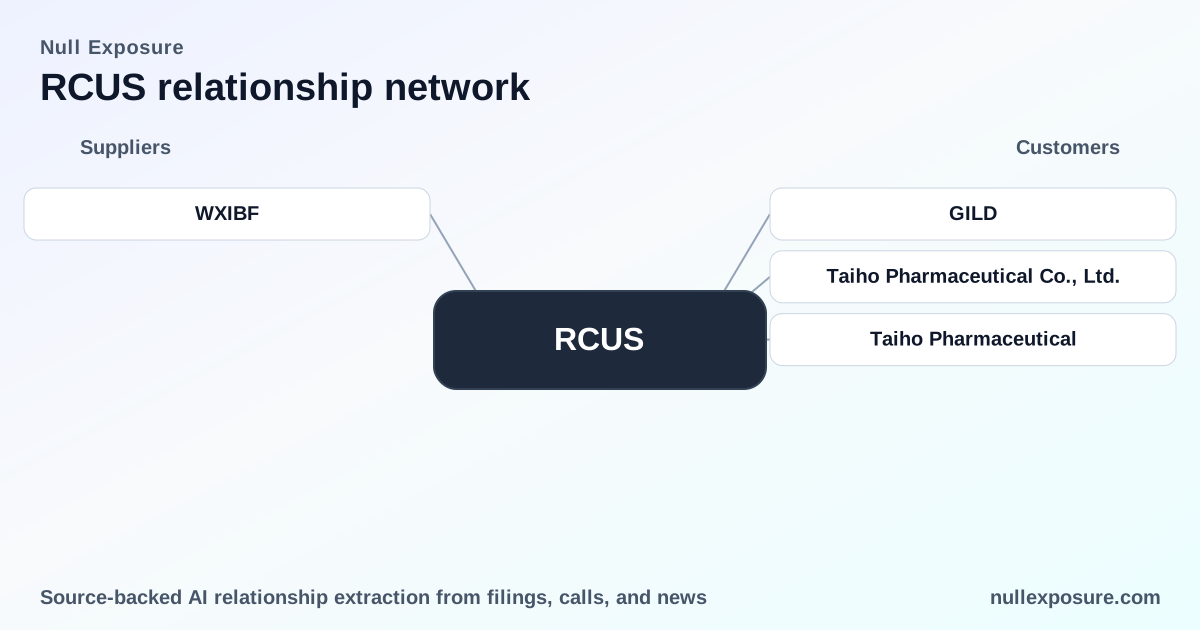
Arcus Biosciences (RCUS): Supplier profile and what the WuXi Biologics tie-up means for investors
Arcus Biosciences develops cancer therapies and monetizes by advancing clinical-stage assets toward regulatory approval and eventual commercialization or partnership/licensing revenues. The company does not own manufacturing capacity; instead it outsources production and clinical services, creating operational leverage to third-party suppliers that directly affects clinical timelines and commercial readiness. For investors evaluating counterparty risk, the single supplier relationships disclosed by Arcus are a primary governance and execution factor—monitor them alongside clinical milestones. Visit https://nullexposure.com/ for deeper supplier intelligence and ongoing monitoring.
Why the supplier story is material to RCUS investors
Arcus is a clinical-stage biotech that combines promising oncology candidates with high operational dependency on external manufacturers and service providers. The company’s own filings describe a supply chain built on framework agreements where contract manufacturers will provide API and drug product “on a project‑by‑project basis.” That contracting posture delivers flexibility, but two other signals change the risk calculus:
- Concentration: Arcus says several investigational products are covered by single‑source suppliers for the foreseeable future, creating a clear single‑point-of-failure for trial supply and potential launches.
- Limited in‑house capability: Arcus explicitly states it does not and will not operate manufacturing facilities, reinforcing permanent reliance on partners for manufacturing scale-up and commercial supply.
Together, these characteristics make supplier relationships both strategically critical and a near-term operational constraint for the company’s ability to hit development and commercialization milestones. Learn more about assessment frameworks and counterparty due diligence at https://nullexposure.com/.
The WuXi Biologics relationship — what investors must know
Arcus discloses a direct manufacturing relationship with WuXi Biologics (inferred symbol WXIBF). According to Arcus’ FY2024 Form 10‑K, “WuXi Biologics, located in China, is currently our sole manufacturer of zimberelimab and domvanalimab.” The same filing also references a WuXi PD‑1 Agreement under which Arcus is obligated to appoint WuXi as the exclusive manufacturer of certain drug substance for a specified period, subject to exceptions. (Source: Arcus Biosciences FY2024 Form 10‑K, 2024 filing.)
This relationship is consequential: WuXi is serving as the manufacturer for two of Arcus’ core assets, and exclusivity clauses increase switching friction should supply disruptions or quality issues arise. The FY2024 disclosure is the definitive primary-source statement of that arrangement.
What the exclusivity and manufacturer role mean in practice
- The exclusive manufacturing language tied to the “WuXi PD‑1 Agreement” elevates WuXi to a strategic vendor rather than a simple vendor-of-convenience; contractual exclusivity constrains Arcus’ ability to dual-source quickly if capacity or quality issues emerge. (Source: Arcus FY2024 10‑K.)
- At the same time, Arcus’ broader disclosure that many of its contracts are “generally cancellable on 30 days’ notice” signals contractual flexibility in non‑material obligations, which partially offsets concentration risk but does not eliminate single-source exposure for investigational products. (Source: Arcus FY2024 10‑K.)
Contracting posture, concentration, criticality and maturity — the constraints that shape risk
Arcus’ disclosure set includes multiple constraint signals that describe how the company manages supplier relationships:
- Contracting posture: Arcus is structuring supply through framework agreements that allocate project‑by‑project supply needs to contract manufacturers. This approach supports program flexibility and variable demand but increases execution risk if partners cannot scale rapidly. (Company-level signal; Arcus FY2024 10‑K.)
- Concentration and criticality: The company admits that investigational products will generally be covered by single‑source suppliers for the foreseeable future, creating high criticality for those counterparties relative to Arcus’ development timelines. This is a company-level risk statement that drives the importance of the WuXi relationship. (Company-level signal; Arcus FY2024 10‑K.)
- Maturity of supply chain: Arcus describes limited manufacturing arrangements today and no in‑house manufacturing plans, which indicates an early-stage, dependent supply chain that must scale and mature alongside any commercial success. (Company-level signal; Arcus FY2024 10‑K.)
- Manufacturer role (relationship-specific): Under the WuXi PD‑1 Agreement, Arcus is obligated to appoint WuXi Biologics as exclusive manufacturer of certain drug substance for a defined period, making that supplier relationship contractually entrenched for the affected products. (Relationship-specific signal; Arcus FY2024 10‑K.)
These constraints combine to create a profile of a company that has chosen outsourcing for capital efficiency and speed but accepted concentration risk and reliance on partner execution as trade-offs.
All supplier relationships disclosed in the available record
- WuXi Biologics (inferred WXIBF): Arcus identifies WuXi as the sole manufacturer for zimberelimab and domvanalimab, with exclusivity under the referenced WuXi PD‑1 Agreement for certain drug substance supply. (Arcus FY2024 Form 10‑K.)
This is the only supplier relationship named in the supplier-scope results provided; it therefore carries outsized importance for Arcus’ near-term operational risk profile. (Arcus FY2024 10‑K.)
Investor takeaways and action points
- Primary risk is single-source manufacturing. WuXi is the only named manufacturer for two lead assets and is contractually elevated by exclusivity language; any disruption in that relationship would directly threaten clinical supply and time-to-market. (Arcus FY2024 10‑K.)
- Contractual flexibility coexists with concentration. Framework agreements and 30‑day cancellability of many contracts provide Arcus with tactical flexibility, yet the company simultaneously discloses single-source coverage for investigational products—creating a tension between agility and operational fragility. (Arcus FY2024 10‑K.)
- Operational monitoring is essential. Investors should track WuXi’s capacity, regulatory history, and China‑U.S. logistics or trade developments as leading indicators for Arcus’ execution risk, and review future filings for any de‑risking (dual-sourcing) language or manufacturing transfers. For ongoing supplier analysis and alerts, visit https://nullexposure.com/.
Final perspective
Arcus’ outsourcing model conserves capital and streamlines development, but it concentrates execution risk in named suppliers—most prominently WuXi Biologics for two core assets. For investors, the company’s clinical and commercial prospects are therefore tightly coupled to third‑party manufacturing performance and contract evolution. Monitor upcoming filings for any changes to the WuXi arrangement or evidence of diversification in supply sources. If you evaluate counterparty exposure for biotech portfolios, integrate supplier disclosures into milestone risk models and sign up for supplier monitoring at https://nullexposure.com/.