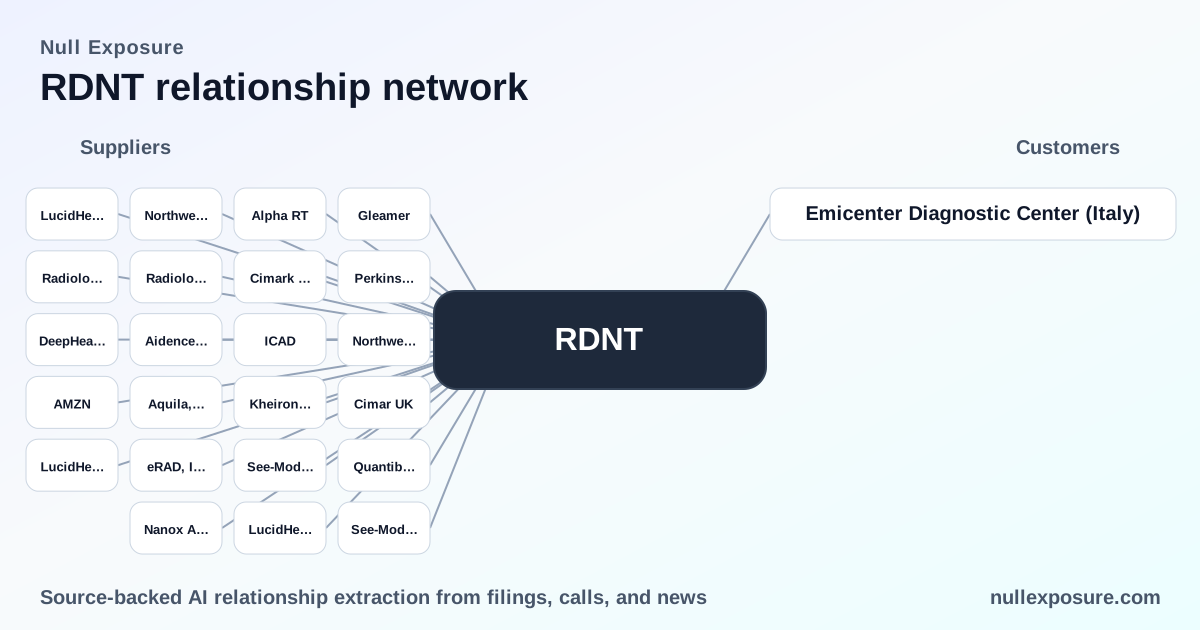
RDNT: RadNet’s supplier footprint, deal cadence, and what buyers should know
RadNet, Inc. operates the largest network of outpatient diagnostic imaging centers in the U.S. and monetizes through fee-for-service imaging, contracted professional interpretation, and an increasingly strategic digital health stack that it builds both organically and by acquisition. Revenue comes from imaging volume and recurring contracts with physician groups and payors, while margin expansion is driven by scale in equipment utilization and cross-selling digital radiology tools. If you evaluate supplier and partner exposure for RadNet, the company’s 2025–26 activity shows a clear acquisition-led strategy to internalize imaging software, AI, and remote scanning capabilities while continuing to add local imaging center assets. For a centralized view of supplier intelligence, see https://nullexposure.com/.
What investors and operators need to know first
RadNet’s recent transactions reveal two complementary plays: buy clinical scale (imaging centers and regional practices) to grow fee revenue, and buy technology (AI, cloud imaging, remote scanning) to control cost and capture long-term digital economics. This combination increases recurring revenue and reduces third-party dependency on key imaging software providers, but it also concentrates near-term cash flow risk into M&A execution and integration.
- Typical supplier engagements are long-term and capital intensive: leases for imaging centers run 5–15 years with renewal options extending total terms to 10–35 years, and equipment financing schedules continue through 2029 in disclosed notes. This creates durable landlord and OEM relationships and a sizable committed service spend (minimum payments cited at ~$35.4 million in 2025).
- RadNet runs a hybrid procurement posture: direct purchases from OEMs like GE, Philips and Siemens for hardware, and aggressive M&A for software vendors and AI. That dual approach reduces single-vendor lock-in for equipment but increases integration and maintenance obligations for acquired software.
Explore comprehensive supplier profiles and deal flow at https://nullexposure.com/.
Deal cadence and strategic themes
RadNet’s FY2026 activity is heavy: multiple tuck-ins of AI and cloud vendors, several buyouts of imaging center groups, and consolidation of a digital health subsidiary, DeepHealth, which is being commercialized internationally. The company is executing a verticalization strategy—owning the scanner fleet, the software that orchestrates exams, and the AI that augments reads. That makes supplier relationships simultaneously strategic and internalization targets.
Relationships and recent deal flow — plain-English summaries
- Gleamer — RadNet agreed to acquire Paris-based radiology AI firm Gleamer in a deal valued up to $269.3 million, strengthening its clinical AI portfolio. Source: Radiology Business, March 2026.
- Perkins Coie — Law firm Perkins Coie advised RadNet on its acquisition of Radiology Regional (a LucidHealth division), serving as legal counsel on the transaction. Source: Perkins Coie press release, March 2026.
- Northwest Radiology Network, P.C. — RadNet purchased outpatient imaging assets from Northwest Radiology, entering Indiana while leaving the 18 radiologists as contracted professional-service providers. Source: GlobeNewswire and DotMed, February–March 2026.
- Cimar UK / Cimark UK — RadNet paid roughly $33 million to add a cloud-based imaging solutions provider to its tech stack in November (reported as Cimark/Cimar UK), expanding its cloud imaging capabilities. Source: Radiology Business, March 2026.
- Quantib BV — Quantib’s prostate product is noted in commercial listings distributed by third parties referenced alongside RadNet’s ecosystem; the mention links RadNet’s partners to established European AI vendors. Source: Finviz coverage of ECR 2026, March 2026.
- See-Mode, Inc. / See-Mode Technologies — See-Mode ultrasound AI is referenced as part of the industry supplier mix and prior RadNet purchases; RadNet previously acquired See-Mode for ultrasound AI capabilities. Source: Radiology Business and Finviz, March 2026.
- Alpha RT — RadNet previously bought remote MRI solutions provider Alpha RT (reported purchase ~$5 million), reflecting investment in remote-scanner solutions. Source: Radiology Business, March 2026.
- iCAD — RadNet’s earlier acquisition of iCAD (breast AI) for about $103 million is part of its consolidation of breast imaging AI capabilities. Source: Radiology Business, March 2026.
- Kheiron Medical Technologies — Kheiron (breast AI) was acquired in a smaller transaction (~$1 million) and folded into RadNet’s AI portfolio. Source: Radiology Business, March 2026.
- LucidHealth / LucidHealh (typo variants in reports) — Private-equity-backed LucidHealth sold 13 imaging centers (Radiology Regional) and other assets to RadNet; the deal added about $100 million in annualized revenue. Source: Radiology Business and MarketScreener, January–March 2026.
- Radiology Regional / Radiology Regional Center, P.A. — Acquired by RadNet from LucidHealth on January 6, 2026; this purchase materially expands RadNet’s Florida footprint. Source: MarketScreener and Radiology Business, January–March 2026.
- DeepHealth — DeepHealth is a wholly owned RadNet subsidiary; RadNet is its largest user with TechLive deployment across 400+ scanners and the platform achieved CE marking and AWS Marketplace listing. Source: Radiology Business and GlobeNewswire, February–March 2026.
- Amazon Web Services (AWS) — DeepHealth listed TechLive in AWS Marketplace to simplify procurement and deployment, leveraging AWS infrastructure for global scale. Source: GlobeNewswire, February 2026.
- Aidence B.V. — Aidence lung-nodule and reporting products are listed among vendors distributed by partners in the same market segment cited alongside RadNet’s digital health expansion. Source: Finviz (ECR 2026 coverage), March 2026.
- Aquila, Inc. — Mammography Insights by Aquila is cited as part of the clinical AI and vendor ecosystem referenced in ECR 2026 coverage. Source: Finviz, March 2026.
- eRAD, Inc. — eRAD’s viewer product is mentioned within partner distribution channels that intersect with RadNet’s DeepHealth commercialization. Source: Finviz, March 2026.
- Nanox AI, Ltd. — Nanox products are named among distributed solutions in DeepHealth partner listings; the mention places RadNet in a broader vendor network for novel imaging technologies. Source: Finviz, March 2026.
- Northwest Radiology — Separate media notes confirm RadNet’s acquisition of six freestanding centers from the long-standing Indianapolis practice for an undisclosed sum and retention of local physician contracts. Source: Radiology Business and ITN Online, March 2026.
(Note: several vendor names such as See-Mode, iCAD, Kheiron, Alpha RT and Cimark/Cimar UK are referenced multiple times across different press pieces; the entries above correspond to each reported mention and its deal context.)
Contracting posture and operational constraints — what this implies for suppliers and investors
RadNet’s operating model is defined by long-term real estate and equipment commitments (leases and equipment notes extend multiple years), material recurring service spend (minimum vendor maintenance commitments ~ $35.4 million in 2025), and a mix of direct OEM purchases and financed equipment. This means:
- Supplier contracts are typically long-duration and critical to throughput; downtime or failed maintenance contracts hit utilization and revenue directly.
- Integration risk is elevated as RadNet internalizes software vendors—this reduces external supplier margin but increases operational responsibility for software support and regulatory compliance.
- Geographic concentration is North America, but DeepHealth’s CE marking and AWS listing signal deliberate expansion of the digital health arm into Europe and cloud channels.
- Maturity profile is mixed: imaging center operations are mature and capital-intensive, while digital health assets are earlier-stage growth engines that require R&D and regulatory investment.
Investment implications and next steps
RadNet is executing a vertical strategy that converts third-party software spend into owned intellectual property and recurring SaaS-like revenue, while simultaneously purchasing imaging centers to scale fee-based revenue. For suppliers, that means negotiating durability and integration terms; for investors, monitor integration KPIs, equipment maintenance spend, and DeepHealth commercial traction in AWS Marketplace and Europe.
For a full supplier exposure dashboard and ongoing monitoring of RadNet’s partner moves, visit https://nullexposure.com/. If you’re evaluating supplier risk or M&A counterparty exposure for RDNT, start with our homepage at https://nullexposure.com/ and request the RadNet supplier pack tailored for investors and operators.