TheRealReal Supplier Landscape: Brand Relationships and Risk Signals for Investors
TheRealReal operates a consignment-based online marketplace for authenticated luxury goods, monetizing primarily through commission on sales, selective direct purchases, and ancillary services such as authentication and fulfillment. Revenue scales with gross merchandise value (GMV) sourced from a large base of individual consignors and a mix of high-profile designer inventory, while operating leverage depends on authentication, logistics, and repeat consignor behavior. For a strategic read on supplier exposure and commercial dependencies, start your diligence with a focused supplier-risk view at https://nullexposure.com/.
How REAL sources inventory and what that means for margins and risk
REAL’s operating model is straightforward: it accepts items on consignment from thousands of individuals and businesses, authenticates and lists those items, then collects a percentage of the sale when items move. The company’s supplier posture is decentralized and retail-facing rather than built on exclusive brand supply agreements, which makes inventory breadth a competitive strength but also injects variability in quality and origin.
Key operating constraints readers should treat as company-level signals:
- Counterparty mix skewed to individuals — Most inventory is acquired from individual consignors, which reduces bargaining cost but increases variation in provenance and authentication workload.
- Geographic concentration in North America — Substantially all long-lived assets and revenue are tied to the United States, concentrating geopolitical, regulatory and consumer demand risk domestically.
- High supplier stickiness and materiality — Over 80% of GMV in 2024 came from repeat consignors, making supplier retention material to revenue continuity and margin predictability.
- Dual relationship roles — REAL operates both as a seller (it purchases and resells inventory in certain situations) and as a service provider (shipping and authentication partners are critical to execution).
- Active, mature consignment base — Repeat consignor behavior signals an established supply pipeline rather than nascent one-off sourcing.
These constraints imply a contracting posture that is low concentration on any single brand but high dependency on the consignment channel, with critical operational exposure in authentication and fulfillment processes.
The brand relationships you need to know (what the press reports)
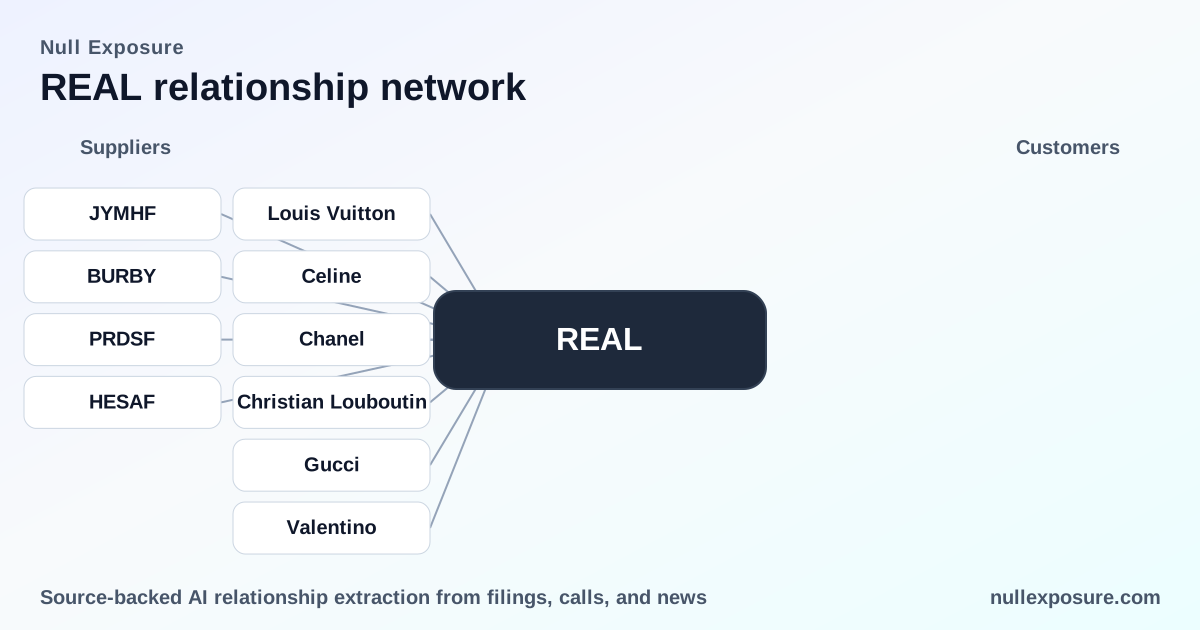
Below are every brand relationship flagged in the source results, with a concise plain-English summary and source reference.
- Louis Vuitton — TheRealReal lists and sells Louis Vuitton pieces on its platform as part of its designer inventory mix; this was noted in a March 2026 Finviz industry roundup that enumerated the designers present on REAL’s marketplace. Source: Finviz news (March 10, 2026), https://finviz.com/news/315862/heres-what-analysts-think-about-the-realreal-real.
- Celine — Celine items are sold through REAL’s consignment flow and figure in the company’s luxury assortment described by market reporting. Source: Finviz news (March 10, 2026), https://finviz.com/news/315862/heres-what-analysts-think-about-the-realreal-real.
- Chanel — Chanel appears frequently in REAL’s listings and has been singled out both as a source of high-value consigned goods and a party referenced in past authentication disputes; press coverage has specifically linked Chanel items to authenticity litigation. Sources: Finviz news (March 10, 2026) and San Francisco Standard reporting on operations and litigation (Feb 16, 2023), https://finviz.com/news/315862/heres-what-analysts-think-about-the-realreal-real and https://sfstandard.com/2023/02/16/the-realreal-shutters-san-francisco-flagship-store-lays-off-hundreds/.
- Christian Louboutin — Christian Louboutin is listed among the designers whose goods are resold on REAL’s marketplace in industry coverage summarizing the company’s product mix. Source: Finviz news (March 10, 2026), https://finviz.com/news/315862/heres-what-analysts-think-about-the-realreal-real.
- Gucci — Gucci pieces are sold via REAL’s consignment channels and are part of the platform’s core luxury SKU assortment referenced by analysts. Source: Finviz news (March 10, 2026), https://finviz.com/news/315862/heres-what-analysts-think-about-the-realreal-real.
- Valentino — Valentino labels are present in REAL’s inventory, per the same industry summary that lists top designer partnerships and consigned brands. Source: Finviz news (March 10, 2026), https://finviz.com/news/315862/heres-what-analysts-think-about-the-realreal-real.
- Jimmy Choo — Jimmy Choo appears among the designer names sold on REAL’s platform, as captured in market commentary on the company’s merchandising mix. Source: Finviz news (March 10, 2026), https://finviz.com/news/315862/heres-what-analysts-think-about-the-realreal-real.
- Burberry — Burberry was included in the list of prominent brands the company sells through its marketplace and was cited in the same Finviz summary of REAL’s product assortment. Source: Finviz news (March 10, 2026), https://finviz.com/news/315862/heres-what-analysts-think-about-the-realreal-real.
- Prada — Prada goods are resold on REAL’s marketplace and are part of the high-end designer cohort mentioned in market reporting. Source: Finviz news (March 10, 2026), https://finviz.com/news/315862/heres-what-analysts-think-about-the-realreal-real.
- Hermès — Hermès items are also traded on REAL’s platform and were listed among top designers in analyst-facing summaries of the company’s inventory. Source: Finviz news (March 10, 2026), https://finviz.com/news/315862/heres-what-analysts-think-about-the-realreal-real.
Each of these brand mentions indicates catalog breadth rather than formal supply agreements; the press coverage treats them as constituent inventory sources rather than exclusive partnerships.
If you want a consolidated supplier-risk report or model-ready exposure matrix for REAL, begin your review at https://nullexposure.com/ to download analyst-oriented sourcing intelligence.
Why the brand set and consignment posture matter to investors
There are three investment-relevant implications from the relationship map and operating constraints:
- Scale with variability: Selling many high-end brands gives REAL access to premium pricing and customer demand elasticity, but because inventory comes largely from individuals, supply is variable and dependent on consignor behavior rather than formal account replenishment.
- Authentication is a central operational risk: Publicized disputes over authentication—most notably involving Chanel in prior litigation—show that reputational and legal risk is structural, not incidental, and requires ongoing investment in vetting and returns management. Source: San Francisco Standard (Feb 16, 2023), https://sfstandard.com/2023/02/16/the-realreal-shutters-san-francisco-flagship-store-lays-off-hundreds/.
- Concentration on repeat consignors is a strength and a vulnerability: Over 80% GMV from repeat consignors creates operational predictability, but it also creates counterparty concentration that is material to revenue trajectory if consignor behavior or platform economics change.
Closing recommendation and next steps for investors
TheRealReal’s supplier relationships reflect a broad, retail-sourced inventory strategy that drives gross margins through access to designer brands but places operational emphasis on authentication, shipping, and consignor retention. For investors evaluating supplier-side risk, prioritize diligence on authentication controls, consignor churn metrics, and shipping-provider stability.
To get a tailored supplier-risk summary and model inputs for REAL, visit https://nullexposure.com/ and request the supplier exposure pack. For a comparative view across platforms and a deeper supplier-contracting analysis, return to https://nullexposure.com/ for analyst tools and briefings.
Key takeaway: REAL’s business monetizes scale of consigned luxury but is simultaneously exposed to authentication, consignor concentration, and U.S.-centric demand dynamics—risks that should be priced into valuation and scenario modeling.