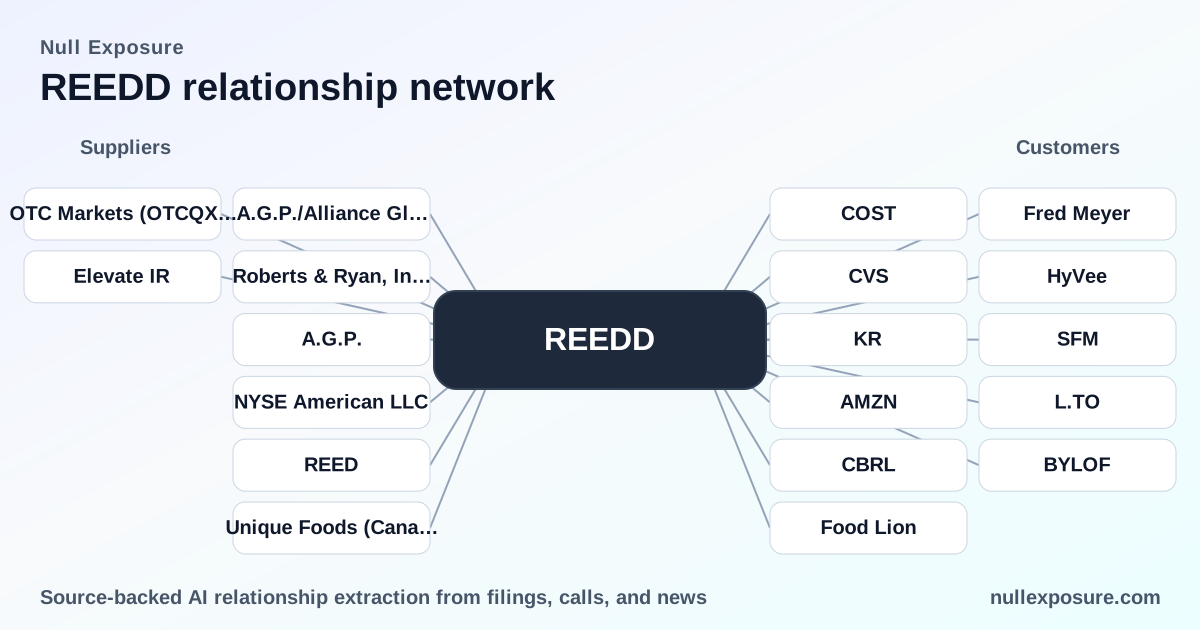
Reed’s, Inc. (REEDD) — supplier relationships that shape distribution and capital access
Reed’s, Inc. manufactures and distributes natural ginger-based beverages and monetizes primarily through retail and wholesale product sales supported by third‑party distribution partnerships; the company supplements working capital and market visibility through equity financings and a 2025 uplisting to NYSE American. For investors and operators, the critical vectors are retail distribution reach in North America and continued access to capital markets via underwriting and investor‑relations partners. Explore more company profiles and counterparty intelligence at https://nullexposure.com/.
How Reed’s makes money and where these relationships matter
Reed’s core revenue engine is product placement in grocery and specialty channels, with margin outcomes driven by distribution terms and retailer penetration. Equity markets activity in FY2025—an uplisting and private placement—reflects a parallel monetization strategy: raising capital to fund growth and stabilize operations. Distribution partners are revenue‑critical; underwriters and IR firms are capitalization‑critical.
Counterparties that matter — each relationship, plainly stated
- A.G.P./Alliance Global Partners — Acted as the sole book‑running manager on Reed’s FY2025 offering, positioning AGP as the lead underwriter responsible for syndication and pricing execution for that raise. According to Reed’s press release posted on Yahoo Finance (March 10, 2026), AGP led the deal and carried primary placement responsibility.
- Roberts & Ryan, Inc. — Served as a co‑manager on the same FY2025 offering, providing secondary underwriting distribution support and syndicate coverage. The co‑manager role is documented in the company announcement on Yahoo Finance (March 10, 2026).
- A.G.P. (as reported separately) — Independent coverage noted A.G.P. as sole bookrunner for the planned NYSE‑American transaction, underscoring the firm’s exclusive execution role in the capital raise. Renaissance Capital reported these deal terms in their IPO/transaction coverage (March 10, 2026).
- NYSE American LLC — Reed’s common stock was approved for listing and began trading on NYSE American on December 5, 2025, establishing a new primary market venue for liquidity and investor access. The NYSE American listing and effective date are recorded in Reed’s uplisting announcement (GlobeNewswire/Yahoo Finance, November 2025 / March 2026 disclosures).
- OTC Markets’ OTCQX Best Market (OTC Markets) — Prior to the NYSE American listing, Reed’s traded on OTCQX and continued there until market close on or about November 20, 2025; trading on OTCQX terminated upon the NYSE American listing. The company’s filings and press release noted the OTCQX transition and termination (GlobeNewswire and Yahoo Finance, November 2025).
- Unique Foods (Canada) Inc. — Acts as Reed’s distribution partner into Loblaws supermarkets in Canada, providing direct retail access to one of Canada’s largest grocery chains and creating a concentrated channel for Canadian sales. Reed’s announced that distribution arrangement via Unique Foods in a GlobeNewswire release (March 15, 2023).
- Elevate IR — Serves as Reed’s investor‑relations contact and outreach partner, listed by name in multiple company disclosures; Elevate IR manages investor communications, which is material for market perception and capital‑raising efficiency. Elevate IR contact details appear in Reed’s press releases (September 16, 2025 and March 10, 2026).
- GlobeNewswire — Functions as the distribution platform for Reed’s formal corporate disclosures (e.g., uplisting announcement and placement closings), establishing the official public record for company communications. The company used GlobeNewswire for its November 18, 2025 uplisting announcement and other material releases.
What these relationships signal about Reed’s operating model
- Contracting posture: Reed’s relies on third‑party distributors and retail relationships for market reach and uses external investment banks and IR firms for capital access and investor communication; the company does not internalize large national distribution networks.
- Concentration risks: The Canadian distribution pathway through Unique Foods to Loblaws indicates geographic and counterparty concentration in that market, which concentrates execution risk if a single distributor or retail chain changes terms.
- Criticality: Distribution partners and retail listings are operationally critical—loss of shelf placement or distributor coverage would immediately constrain revenues—while underwriters and IR providers are financially critical for recurring capital raises and market liquidity.
- Maturity and market posture: The FY2025 uplisting to NYSE American signals a strategic push toward broader investor visibility and liquidity, consistent with a small but public consumer packaged‑goods operator maturing its capital markets footprint. Company disclosures show this transition activity concentrated in late 2025 and early 2026.
Explore Reed’s supplier and market mapping in greater depth at https://nullexposure.com/.
Risks and operational implications for investors and operators
- Distribution dependency is the primary operational risk. A single named Canadian distributor to a major supermarket chain concentrates execution; procurement and logistics managers should treat this as a negotiated chokepoint for SKU placement and reorder cadence.
- Capital access has been active but episodic. The FY2025 financing and uplisting required a lead bookrunner and co‑manager, demonstrating the company’s dependence on market windows and advisor relationships to raise equity. Underwriter selection and IR execution will materially affect future financing costs.
- Market visibility is improving but financial disclosure granularity in public feeds is limited. Reed’s uplisting enhances transparency, but operational diligence should prioritize retailer-level sell‑through, margin terms with distributors, and working‑capital arrangements rather than headline liquidity alone.
Practical takeaways for relationship managers and investors
- Prioritize verification of Canadian distribution contracts with Unique Foods and retail SLAs with Loblaws; these documents determine revenue stability.
- Treat A.G.P./Alliance Global Partners and Roberts & Ryan as the prime gateway for future equity raises—underwriter continuity will reduce execution risk.
- Maintain active engagement with Elevate IR and monitor company press releases (GlobeNewswire) for timely disclosure of covenant events, placements, or distribution changes.
For an actionable walkthrough of Reed’s supplier map and capital relationships, visit https://nullexposure.com/ and request the supplier intelligence brief.
Conclusion and next steps
Reed’s operates at the intersection of retail distribution and capital‑markets execution: distribution partners drive near‑term revenue, while underwriters and IR firms enable capital to support growth. Operators should focus on reducing concentration and securing alternative distribution routes; investors should watch underwriting relationships and disclosure cadence as liquidity and financing indicators.
If you want a tailored counterparty risk brief or portfolio‑level aggregation of supplier exposure, start here: https://nullexposure.com/.