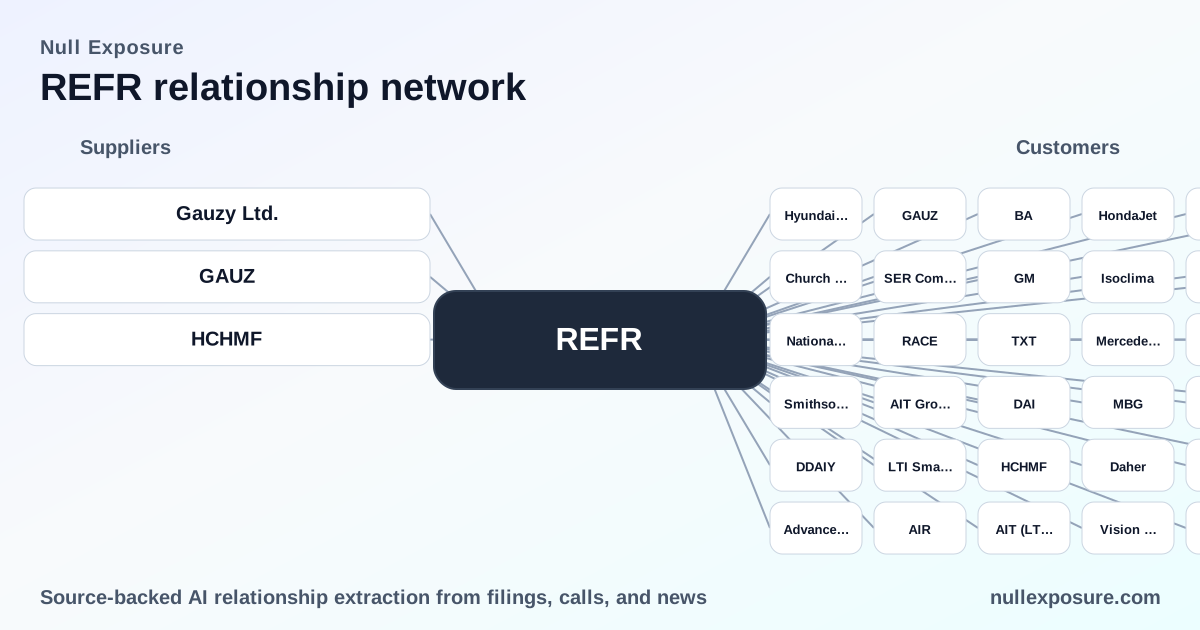
Research Frontiers (REFR): Licensing the Light — how SPD film sells through partners
Research Frontiers develops and licenses SPD (suspended particle device) light‑control technology and monetizes primarily through licensing fees, royalties, and partner co‑development agreements with manufacturers of SPD film and finished smart‑glass systems. The company is a small-cap, niche IP licensor with modest revenue (Revenue TTM $1.12M) and negative operating performance, which makes partner execution and licensee scale the dominant drivers of value. For investors evaluating supplier relationships, the core question is whether licensees can convert technology into volume and recurring royalties; Research Frontiers itself does not operate large manufacturing lines.
If you’re tracking supplier risk or looking to position around governance of SPD supply chains, start with the company site and licensing disclosures at the firm level: https://nullexposure.com/.
How Research Frontiers actually makes money and why partners matter
Research Frontiers controls the SPD technology that governs the optical behavior of its smart‑glass product family and licenses that IP to manufacturers rather than operating mass‑production plants. The income profile is therefore concentrated: modest upfront license fees and ongoing royalties or revenue shares when partners produce SPD film or system kits. That structure creates two important investor realities:
- Revenue growth and margin improvement are dependent on licensee manufacturing scale and commercial traction, not on Research Frontiers building factories itself.
- Counterparty relationships are strategically critical — a small number of productive licensees can swing the company’s top line materially because the corporate revenue base is small relative to the potential addressable market.
Financial context underscores the leverage: Market capitalization is approximately $33.98M, Revenue TTM is $1.12M, and operating/EBITDA metrics are negative (Operating Margin TTM -10.73; EBITDA -$2.12M), which places a premium on successful partner commercialization to justify valuation multiples. Learn more about product and licensing dynamics at the company overview hub: https://nullexposure.com/.
Supplier relationships and partner footprints you must track
Gauzy Ltd.
Research Frontiers has a multi‑faceted relationship with Gauzy. The company’s filings reference a 2018 announcement in which Gauzy said it would produce SPD‑Smart light‑control film for the SPD‑SmartGlass industry, establishing Gauzy as a manufacturing presence for the technology. A later commercial disclosure confirms a deeper operational tie: a GlobeNewswire release (October 27, 2025) described a co‑developed retrofit SPD‑SmartGlass system launched jointly, and identified Gauzy as a Research Frontiers partner and shareholder, and the manufacturer of SPD film. (Source: Research Frontiers 2024 Form 10‑K; GlobeNewswire press release, October 27, 2025.)
Hitachi Chemical
Research Frontiers’ 2024 Form 10‑K documents an earlier manufacturing licensee relationship with Hitachi Chemical, noting that Hitachi Chemical began producing its initial SPD‑Smart light‑control film on a factory line in early 2007. That highlights the long lead time for commercialization cycles and the company’s reliance on third‑party manufacturers to convert IP into product. (Source: Research Frontiers 2024 Form 10‑K.)
What these relationships imply about risk, concentration, and contracting posture
Company‑level signals — drawn from the business model and the relationship footprint — describe a licensing‑centric, partner‑dependent operating model:
- Contracting posture: Research Frontiers is a licensor/IP owner; its principal commercial agreements are license contracts and co‑development arrangements rather than vendor procurement relationships. This creates recurring but highly variable revenue tied to partner production and sales cycles.
- Concentration risk: With a small revenue base and a handful of named manufacturing partners, counterparty concentration is material — production or commercial setbacks at a key licensee will have an outsized financial effect.
- Criticality of the partners: Because the company does not mass‑produce SPD film itself, manufacturing partners are operationally critical; they are the gatekeepers to scale and royalty realization.
- Maturity and commercialization timeline: References to production going back to 2007 and commercial co‑developments in 2025 indicate a technology that is technically mature but subject to slow, incremental adoption cycles in building retrofit and OEM markets.
These signals collectively define a company with high dependency on partner execution, moderate technology maturity, and a licensing revenue pattern that amplifies counterparty outcomes.
If you want a single place to monitor partner releases and license notices, bookmark the company index at https://nullexposure.com/.
Investment implications — what investors should weigh now
For investors and operators assessing supplier and investment risk, the practical takeaways are straightforward:
- Upside requires licensee scale. Any meaningful improvement in top‑line or profitability will come from licensees converting pilot projects into high‑volume production and recurring royalties.
- Governance and shareholder alignment matter. The GlobeNewswire note that Gauzy is both a partner and a shareholder changes the incentives and integration possibilities — that dynamic can accelerate coordination but also concentrates counterparty exposure.
- Financial fragility is real. Small revenue, negative gross profit and operating losses mean the company is cash‑sensitive; investors should monitor cash runway, royalty receipts, and any partner purchase orders or multi‑year supply contracts.
- Valuation reflects optionality, not current cash flows. High price‑to‑sales and elevated forward multiples imply the market is pricing expected partner success rather than present earnings. Key numeric signals: Price/Sales TTM ~30.31, Price/Book ~22.66, Forward P/E 94.34, and institutional ownership under 15% — all indicators of a thinly followed small cap with binary operational catalysts.
Practical monitoring checklist for due diligence
Focus your monitoring on a few high‑leverage items:
- Quarterly royalty disclosures and license fee receipts.
- Public announcements from named manufacturing partners (product launches, capacity expansions).
- Any formal supply agreements or binding purchase commitments.
- Insider and strategic investor activity (noting insider ownership of ~15.4% and institutions ~14.2%).
For continual supplier and partner signal tracking, see the company hub: https://nullexposure.com/.
Bottom line and next steps
Research Frontiers is a classic IP‑licensing micro‑cap: value depends on partner commercialization, not on internal manufacturing scale. Gauzy and Hitachi Chemical are the explicit manufacturing ties disclosed in the company’s filings and recent commercial announcements, and those relationships will drive near‑term top‑line outcomes. Investors should treat counterparty execution as the primary risk and catalyst vector.
To dig deeper into partner disclosures and track new supplier developments, use the company resource page at https://nullexposure.com/. If you need a targeted supplier risk report or monitoring feed for REFR partner activity, start here: https://nullexposure.com/.